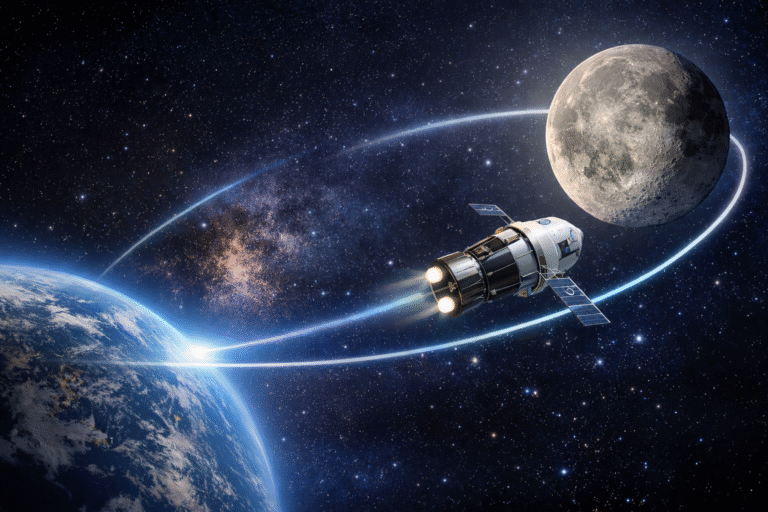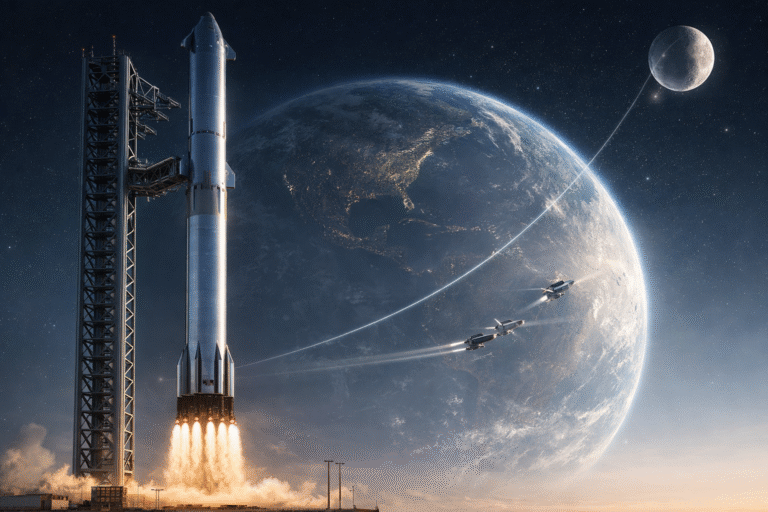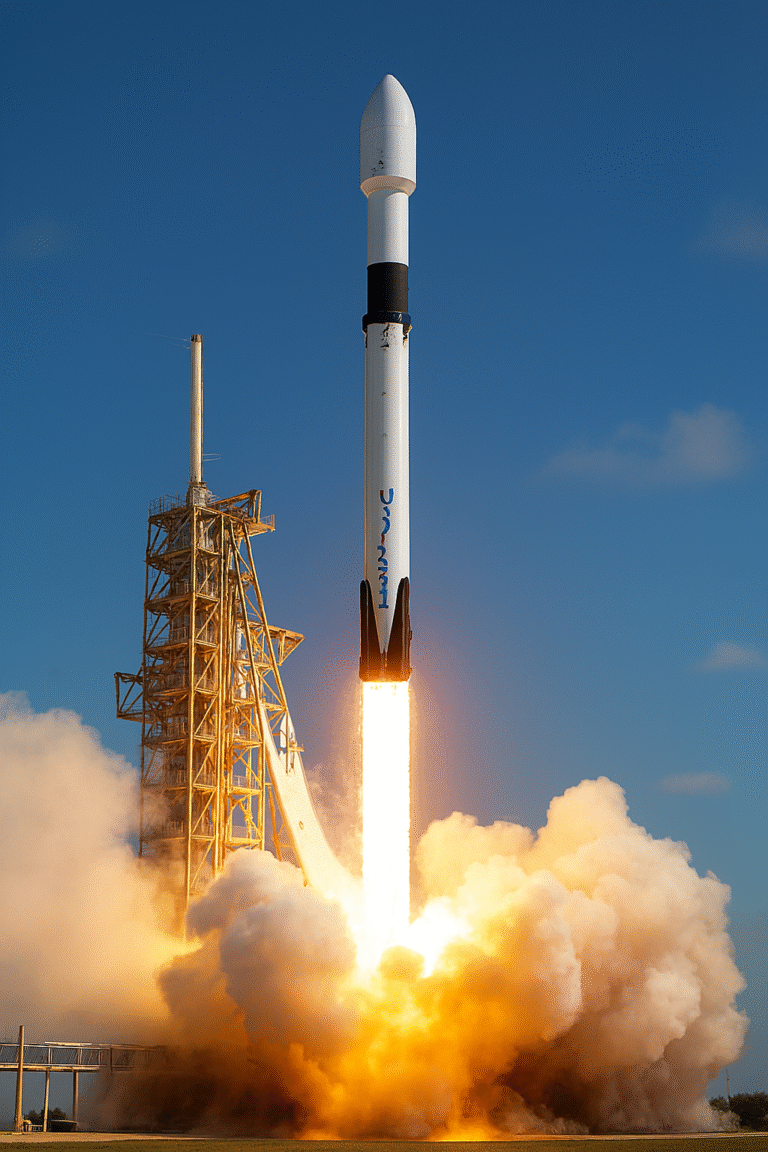


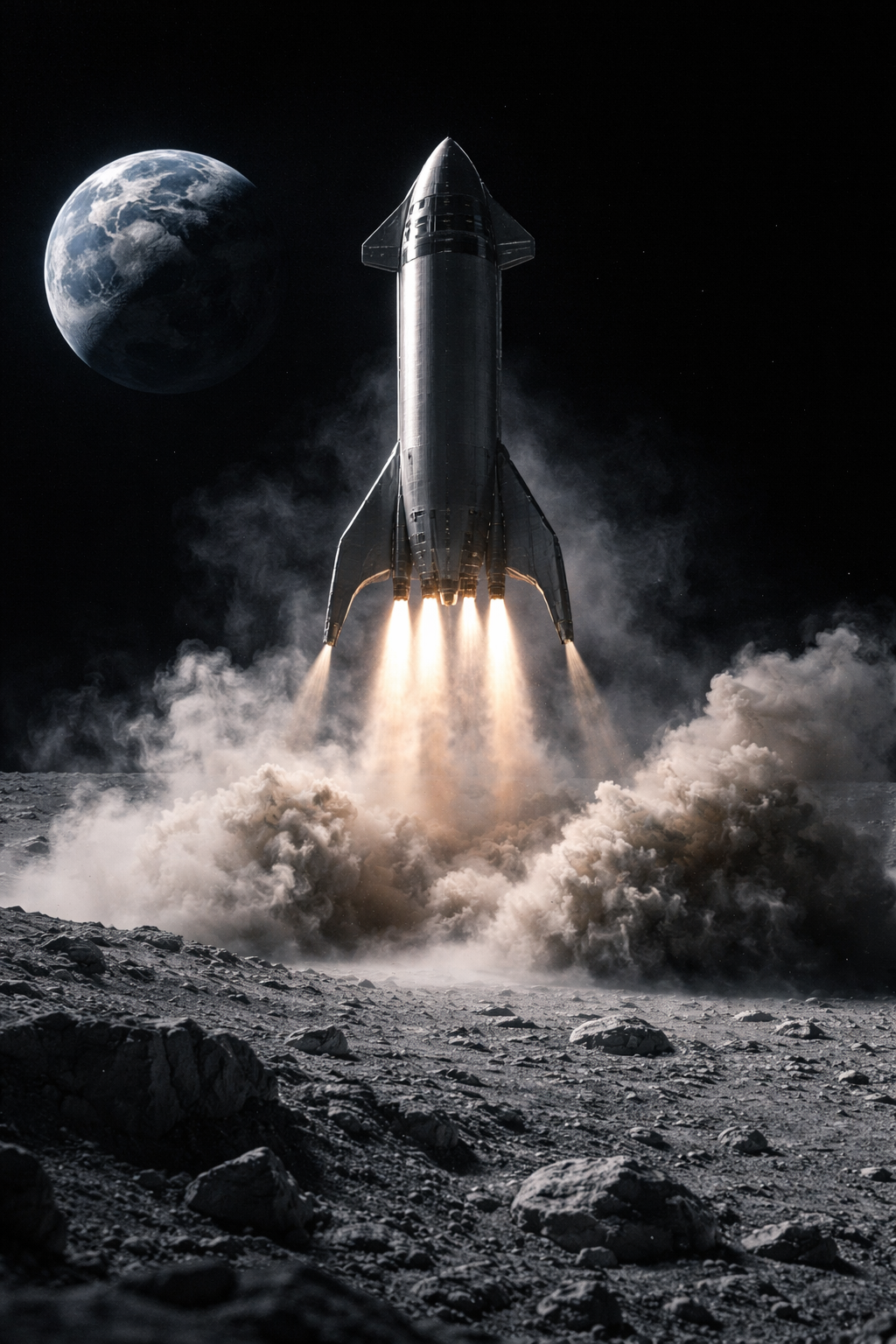
Starship Moon ambitions are pushing humanity closer to a permanent return to the lunar surface—but an invisible danger from the past threatens to derail this historic mission. Can SpaceX safely land the tallest and most powerful spacecraft ever built on the Moon, or will dangerous lunar dust turn this bold dream into a nightmare?
This is not just a technical debate. The answer could decide the future of NASA’s Artemis program, long-term Moon bases, and even the path toward Mars.
Starship Moon and the Challenge of Landing in 1/6th Gravity
At first glance, the Moon’s weak gravity sounds like good news. With only one-sixth of Earth’s gravity, a spacecraft weighs far less, making descent theoretically easier. However, when it comes to the Starship Moon landing, lower gravity introduces unexpected risks rather than simple solutions.
Starship is dramatically larger than any lunar lander before it. Its powerful Raptor engines were designed to handle Earth and Mars operations, not delicate landings on fragile lunar soil. In low gravity, engine exhaust doesn’t dissipate quickly—it spreads outward violently, interacting directly with the Moon’s surface.
This makes the landing phase one of the most dangerous moments of the entire mission.
Why Lunar Dust Makes the Starship Moon Landing Extremely Risky
Lunar dust is not ordinary dust. It is razor-sharp, highly abrasive, and electrically charged. During the Apollo missions, astronauts struggled with dust damaging seals, scratching visors, and infiltrating spacecraft systems—even with much smaller landers.
For the Starship Moon vehicle, the danger multiplies. Engine plumes could blast lunar regolith at extreme speeds, potentially:
- Damaging the spacecraft itself
- Destabilizing the landing surface
- Threatening nearby equipment and future habitats
NASA studies warn that uncontrolled dust clouds could travel kilometers across the lunar surface, making repeated landings near a base nearly impossible.
How SpaceX Plans to Protect the Starship Moon Lander from Dust Damage
SpaceX is not ignoring these concerns. Engineers are actively testing ways to reduce surface interaction during descent. One approach involves slowing the Starship Moon vehicle higher above the surface and minimizing thrust near touchdown.
Another long-term solution may include prepared landing zones—areas of the Moon reinforced with compacted or sintered regolith to resist erosion. NASA has also funded plume–surface interaction research to better understand how rocket exhaust behaves in low gravity.
Lessons from Apollo That Shape the Starship Moon Design
Apollo taught engineers that lunar dust is a mission-critical threat, not a minor inconvenience. Modern data, AI simulations, and advanced materials now allow SpaceX to design smarter systems—but the challenge remains unprecedented due to Starship’s sheer scale.
Starship Moon Mission Impact on NASA’s Artemis Program
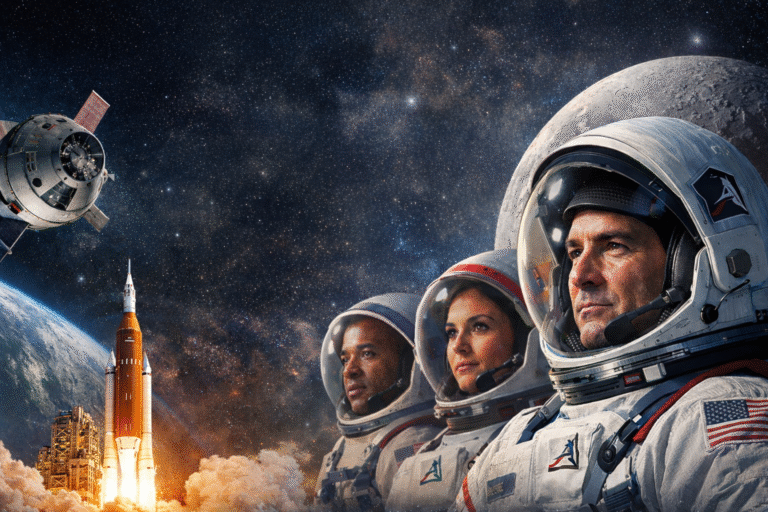
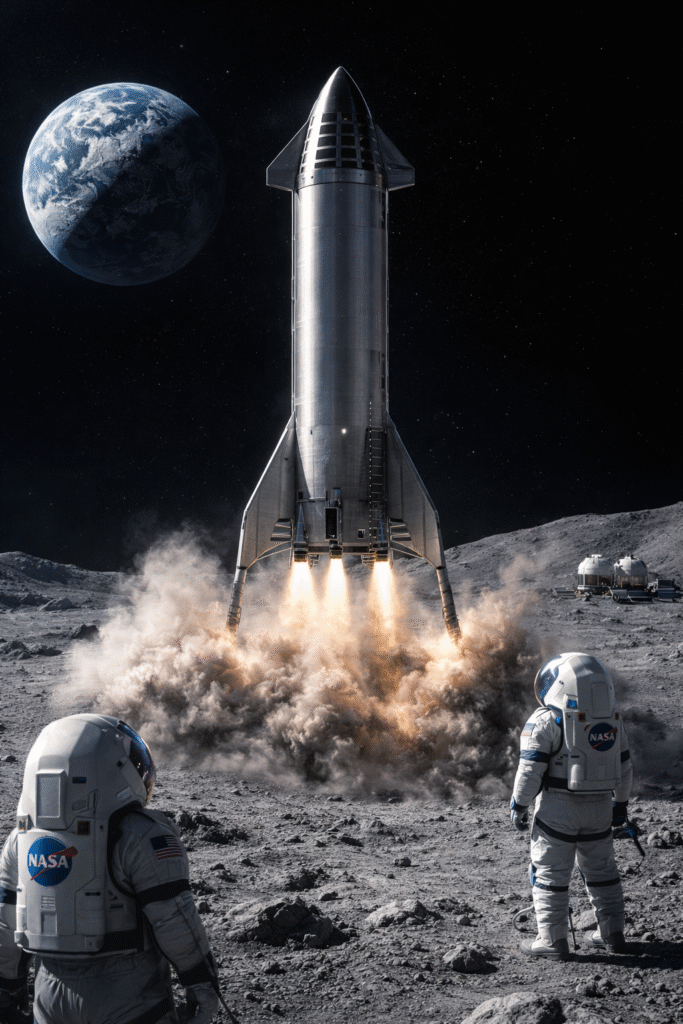
NASA’s Artemis III mission depends directly on the success of the Starship Moon Human Landing System. If Starship cannot land safely without damaging the environment or itself, Artemis timelines could face serious delays.
This matters beyond space agencies. Artemis is driving global collaboration, private investment, and new technology development. A successful Starship Moon landing would validate reusable deep-space vehicles and dramatically lower the cost of lunar exploration.
Can Starship Moon Technology Support Future Lunar Bases?
The Moon is not the final destination—it’s a testbed. If the Starship Moon system proves reliable, it could enable large-scale cargo delivery, habitat construction, and even lunar industry.
From a human perspective, this means new technologies developed for dust mitigation, autonomous landing, and materials science could later benefit life on Earth. Historically, space exploration has accelerated innovation in medicine, energy, and communications.
Failure, however, would force a major rethink of how humans land large spacecraft on airless worlds.
Final Thoughts: A Bold Risk with Historic Rewards
The Starship Moon mission represents one of the riskiest engineering challenges of our time. Lunar dust is real, dangerous, and unforgiving—but so is human ambition.
If SpaceX succeeds, humanity gains a reusable gateway to the Moon and beyond. If it fails, the lessons learned will still shape the future of spaceflight.
🚀 What’s your take? Is lunar dust the biggest hidden threat to the Artemis era, or will SpaceX engineer its way past history’s toughest obstacle? Share your thoughts, comment below, and follow for the latest spaceflight updates.
FAQs
Can Starship Moon really land safely on the Moon?
It is possible, but success depends on controlling engine thrust and managing lunar dust interaction.
Why is lunar dust so dangerous?
It is sharp, abrasive, and electrostatically charged, making it harmful to both equipment and astronauts.
Has Starship Moon been tested on the Moon yet?
No. All testing so far has been Earth-based and orbital.
Will lunar dust affect future Moon bases?
Yes, unmanaged dust could damage habitats and instruments.
Does this affect Mars missions?
Yes. Lessons from Starship Moon landings will improve future Mars landing systems.