


Spaceflight history usually moves in chapters measured by decades. One breakthrough every few years. One record at a time. Then 2025 happened—and SpaceX tore that rulebook apart.
By the final quarter of 2025, SpaceX had conducted 167 orbital launches in a single calendar year. That number alone would have sounded absurd just a few years ago. For context, the entire world combined managed fewer than 90 orbital launches in 2010. In 2025, one private company nearly doubled that—by itself.
This wasn’t just a busy year. It was a structural shift in how humanity reaches space.

To understand why 167 launches matters, you have to step back. The previous global record for total orbital launches by all countries stood at 223 launches in 2023. SpaceX alone now accounts for roughly three out of every four launches from U.S. soil, and well over half of all Western orbital launches worldwide. That concentration of capability is unprecedented in the history of spaceflight.
And it wasn’t driven by experimental flights or symbolic missions. These launches were operational, revenue-generating, and mission-critical.
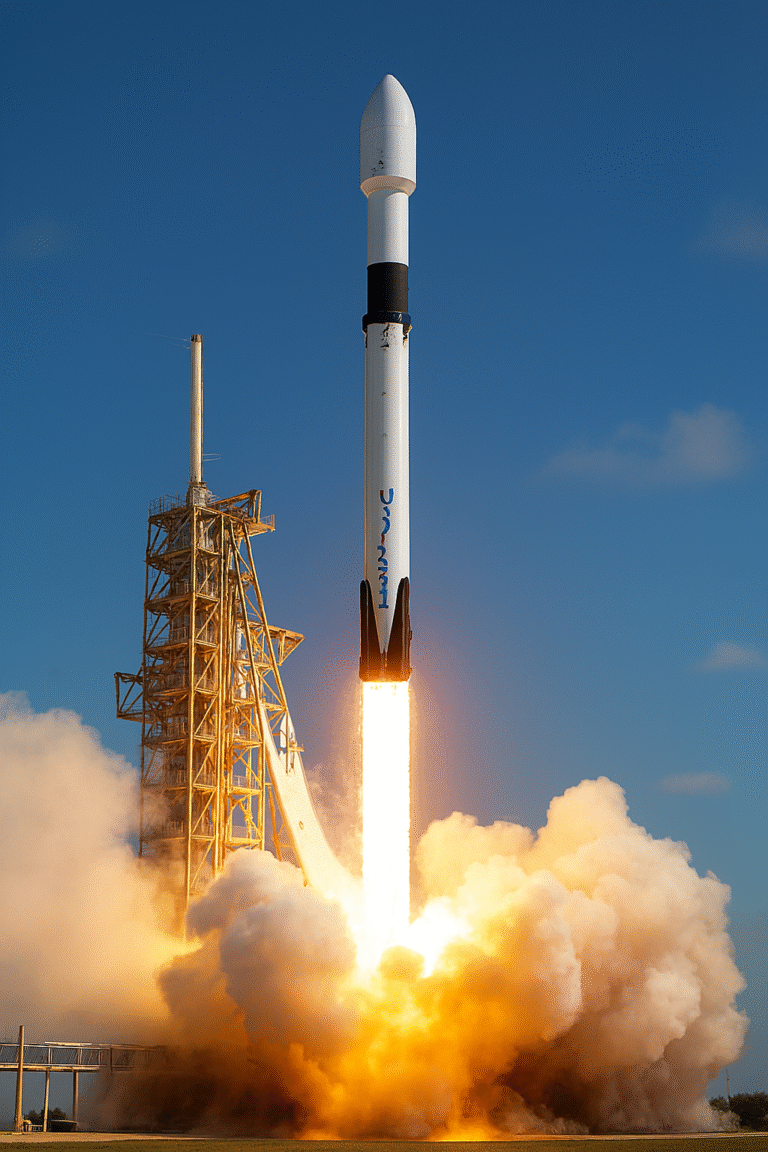
At the heart of this cadence is Falcon 9.
In 2025, Falcon 9 flew well over 140 times, maintaining a launch rhythm that often exceeded three launches per week. No orbital-class rocket in history has ever approached this tempo. The Space Shuttle, at its peak, flew nine times in a year. Soyuz, the workhorse of the Soviet and Russian space program, typically averaged 15 to 20 launches annually.
Falcon 9 didn’t just break records—it rendered old benchmarks irrelevant.
Reusability is the obvious headline, but the numbers reveal how deep the transformation goes. Many Falcon 9 boosters flying in 2025 were on their 15th, 18th, and even 20th missions. One booster crossed the 25-flight mark, something that would have been dismissed as fantasy during the Shuttle era.
Each reused booster saves an estimated $30–40 million in manufacturing costs and months of production time. Multiply that across more than a hundred flights, and SpaceX didn’t just launch more rockets—it fundamentally altered the economics of access to orbit.
Then there’s Starlink.
Roughly two-thirds of SpaceX’s 2025 launches were dedicated to Starlink missions. By year’s end, the Starlink constellation surpassed 7,500 operational satellites, delivering high-speed internet to more than 70 countries. Launching at this pace allowed SpaceX to refresh satellites faster, improve bandwidth, and lower latency—something no competitor could match without similar launch control.
This vertical integration is the quiet revolution. SpaceX isn’t waiting for launch customers. It is the customer.
But Falcon 9 alone doesn’t explain 167 launches.
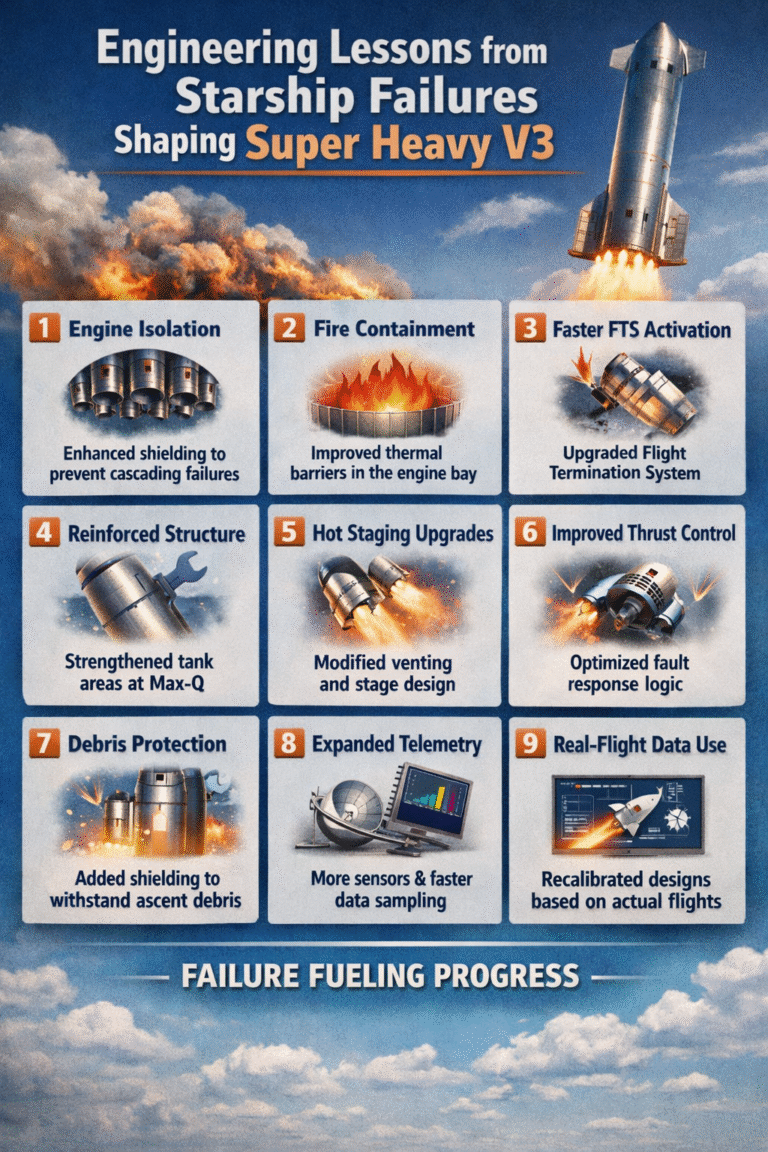
2025 also marked a turning point for Starship. While still in its test and early operational phase, Starship flew multiple integrated missions this year, including long-duration orbital tests and payload deployment demonstrations. Each successful flight validated systems designed not for dozens of launches—but hundreds per year in the future.
Even before full operational deployment, Starship began absorbing missions that would have required multiple Falcon 9 flights, hinting at a future where launch manifests shrink in number but grow massively in capability.
This is where the story becomes bigger than SpaceX.
A launch cadence of 167 flights in one year doesn’t just benefit one company. It reshapes the entire space ecosystem. Satellite manufacturers can plan constellations without waiting years for rides. Governments gain rapid-response launch capability. Scientific missions can fly sooner, cheaper, and with more redundancy.
Space has shifted from “rare access” to routine logistics.
And reliability hasn’t suffered. In 2025, Falcon 9 maintained a mission success rate above 99%, even at record-breaking flight rates. That combination—high cadence and high reliability—is something no previous launch system has ever achieved. Historically, increased flight rates came with increased risk. SpaceX inverted that relationship.
There’s also a geopolitical angle that can’t be ignored.
With global launch capacity under strain and geopolitical tensions affecting international cooperation, SpaceX effectively became the backbone of Western access to orbit. NASA, the U.S. Space Force, commercial operators, and international partners all relied on a launch system that could respond in days instead of months.
In practical terms, SpaceX launched more payload mass to orbit in 2025 than most spacefaring nations have launched in their entire histories.
And this wasn’t driven by government mandate.
It was driven by iteration.
SpaceX didn’t wait for perfect designs. They flew, learned, reused, and flew again. Turnaround times for Falcon 9 boosters dropped to less than three weeks, with some fairings reused within days. What once required massive refurbishment teams now resembles airline-style operations.
That mindset—treating rockets as operational vehicles rather than expendable machines—is the real legacy of 2025.
When historians look back, they won’t just say SpaceX launched 167 times. They’ll say this was the year spaceflight crossed the threshold from exceptional to industrial.
The year launch stopped being the bottleneck.
The year orbit became accessible on demand.
And the year the rest of the world realized the space age had quietly shifted gears while no one was looking.
If this deep dive changed how you see modern spaceflight, share it with someone who still thinks rockets are rare, fragile events. Because 2025 proved something extraordinary: space is no longer the destination—it’s the infrastructure. 🚀