

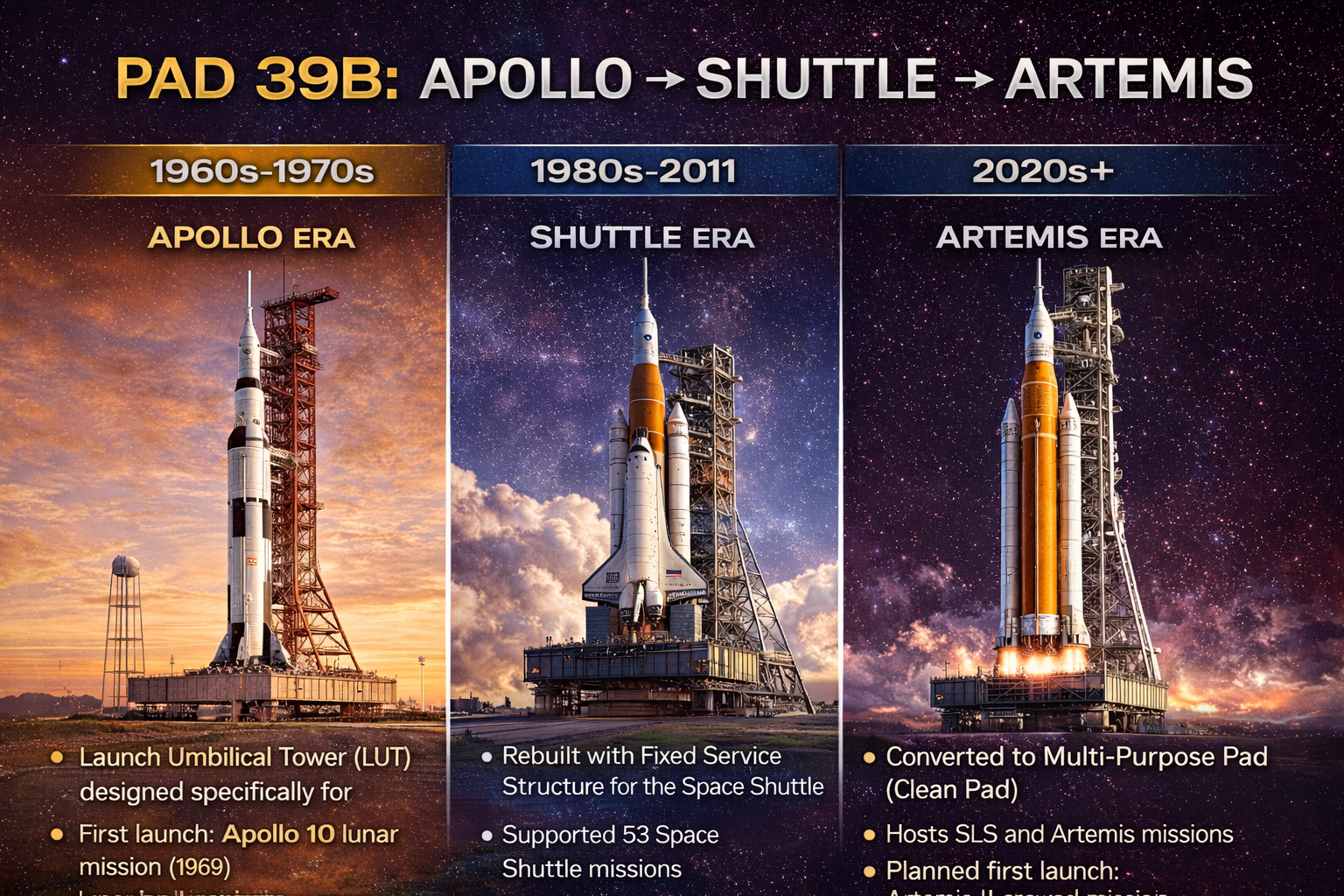
On the northern edge of NASA’s Kennedy Space Center, surrounded by marshland and scrub that hasn’t changed much since the 1960s, stands Launch Complex 39B. To casual visitors, it may look like a modern steel structure rising above the Florida horizon. But for spaceflight history, Pad 39B is something far more powerful: a bridge between eras.
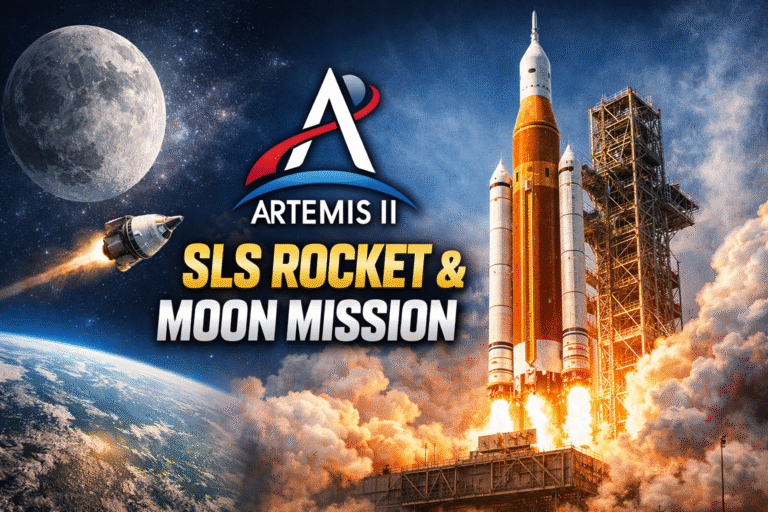
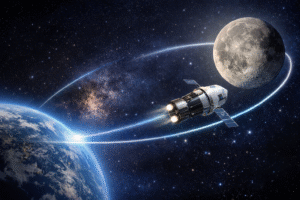
It is the same ground that once shook under the thunder of Saturn V rockets carrying Apollo astronauts to the Moon. Decades later, it is now preparing to send a new generation of explorers outward aboard Artemis II, humanity’s first crewed mission back into deep space since the Apollo era.
Pad 39B is not just hosting Artemis II. It is part of the mission itself.
Born for the Moon: Pad 39B in the Apollo Era
Launch Complex 39 was built in the early 1960s for a single purpose: to support the massive Saturn V rocket. At the time, nothing like it had ever existed. The pad had to withstand launch forces unlike anything engineers had previously experienced, with more than 7.5 million pounds of thrust erupting beneath the rocket at liftoff.
Pad 39B, along with its sister pad 39A, was designed to be as flexible as possible. Rockets were assembled miles away inside the Vehicle Assembly Building and rolled to the pad atop a crawler transporter. This approach minimized time on the pad and allowed NASA to service multiple missions efficiently.
During the Apollo program, Pad 39B supported uncrewed Saturn V test flights, including Apollo 4 and Apollo 6, missions that validated the rocket before humans ever stepped aboard. The pad itself became a proving ground, enduring intense acoustic energy, extreme heat, and shockwaves that rippled across the Florida coastline.
The Space Shuttle Years and a New Role
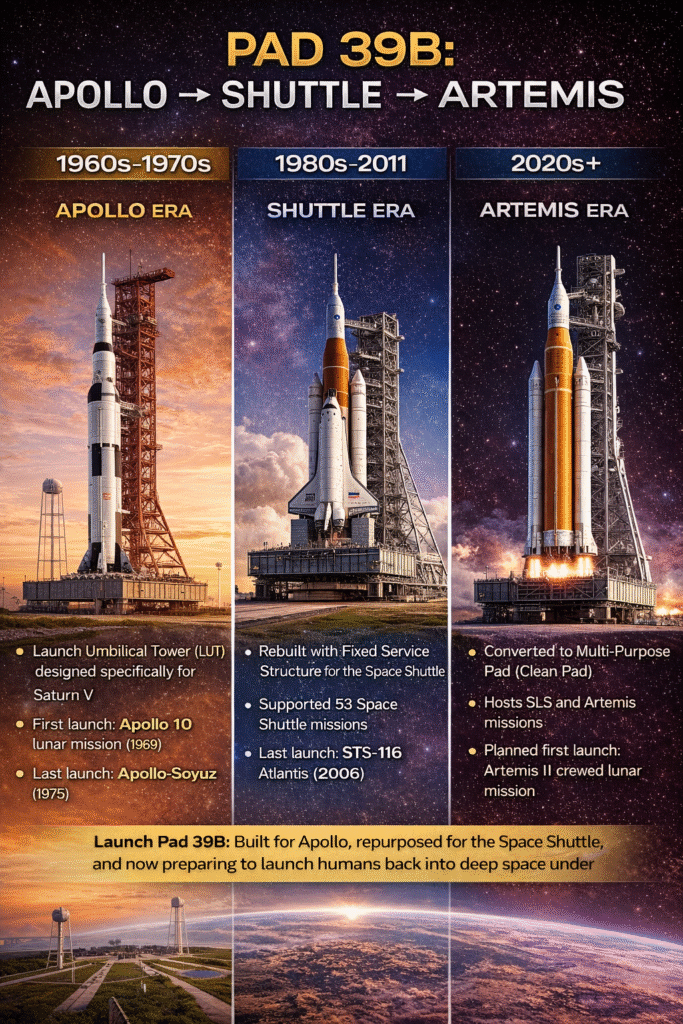
When Apollo ended and NASA pivoted toward the Space Shuttle program, Pad 39B adapted once again. The towering Saturn V launch umbilical tower was dismantled, replaced by structures designed for the winged orbiters.
For more than three decades, Pad 39B served as one of the Shuttle program’s primary launch sites. It supported missions to build and supply the International Space Station and became associated with some of the most iconic moments in spaceflight history.
But the Shuttle era also changed NASA’s philosophy. Launch pads were no longer dedicated to a single rocket design. Flexibility became a priority — a theme that would define Pad 39B’s future.
Reinventing Pad 39B for Artemis
After the Shuttle’s retirement, NASA made a bold decision. Instead of heavily customizing Pad 39B for a single vehicle, the agency chose to transform it into a “clean pad”, stripped of permanent structures tied to specific rockets.
This redesign allows Pad 39B to support multiple launch systems over time, starting with the Space Launch System (SLS). Massive mobile launch towers now carry most of the vehicle-specific infrastructure, rolling into place only when needed.
The result is a launch pad that is simpler in appearance but far more adaptable than anything NASA used during Apollo or Shuttle operations.
Preparing Pad 39B for Artemis II
For Artemis II, Pad 39B plays a critical role long before launch day arrives. Once the SLS rocket and Orion spacecraft are stacked inside the Vehicle Assembly Building, the entire launch vehicle — standing over 320 feet tall — is rolled out to the pad on the crawler-transporter.
At Pad 39B, technicians connect power, data, and environmental systems through the mobile launcher. The pad’s flame trench and water deluge system are tested repeatedly, ensuring they can handle the immense forces generated at liftoff.
Unlike Apollo-era launches, Artemis II involves weeks of integrated testing at the pad, including countdown rehearsals and fueling simulations. Every valve, sensor, and umbilical connection must work perfectly before astronauts are cleared to board.
The Sound and Fury of an SLS Launch
When Artemis II launches, Pad 39B will experience forces not seen since the Saturn V era. The SLS rocket generates nearly 8.8 million pounds of thrust at liftoff, making it the most powerful rocket ever flown.
The pad’s sound suppression system will release hundreds of thousands of gallons of water in under a minute, reducing acoustic energy that could damage the rocket or its payload. Even with these protections, the launch will be felt miles away, echoing across the Florida coast much as Apollo launches once did.
For spectators and engineers alike, Artemis II will feel like a return to a forgotten scale of spaceflight.
Human Spaceflight Returns to Pad 39B
Perhaps the most symbolic aspect of Artemis II is that astronauts will once again depart Earth from Pad 39B. Since the final Shuttle mission launched from this pad in 2006, no humans have left Earth from this location.
Artemis II changes that.
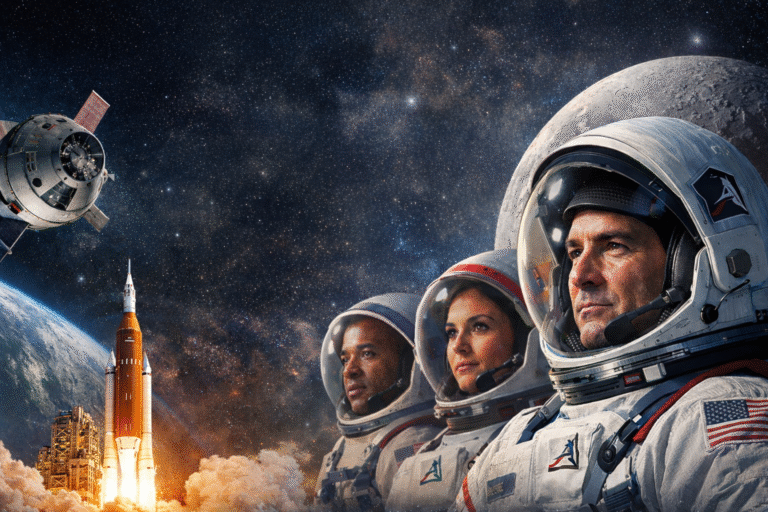
As the crew rides the elevator up the mobile launch tower and crosses the access arm into Orion, they will be following a path walked by Apollo-era astronauts more than half a century ago. The surroundings may look different, but the moment carries the same weight — a commitment to exploration beyond Earth orbit.
Why Pad 39B Matters for the Future
Pad 39B is not just a launch site for Artemis II. It is a long-term asset for NASA’s exploration strategy. As Artemis missions evolve toward lunar landings, space stations in lunar orbit, and eventually Mars-bound spacecraft, Pad 39B is designed to evolve with them.
Its clean-pad philosophy means future rockets, upgrades, and new architectures can be accommodated without rebuilding from scratch. In that sense, Pad 39B represents a lesson learned from decades of spaceflight: adaptability is as important as power.
From Apollo’s Footprints to Artemis’ First Steps
Pad 39B has watched humanity reach for the Moon once before. It has endured decades of reinvention, political shifts, and technological revolutions. Now, as Artemis II prepares to launch, the pad stands ready for its most meaningful role yet — helping carry humans back into deep space.
The rocket may be new, the spacecraft modern, and the mission goals broader, but the message is familiar. From the same stretch of Florida coastline where Apollo began, humanity is once again preparing to leave Earth behind.
Frequently Asked Questions: Launch Pad 39B and Artemis II
What is Launch Pad 39B?
Launch Pad 39B is a historic launch complex at NASA’s Kennedy Space Center in Florida. It was originally built in the 1960s for the Apollo program and Saturn V rocket, later modified for the Space Shuttle, and is now used for NASA’s Artemis missions with the Space Launch System (SLS).
Why is Pad 39B important for Artemis II?
Pad 39B is where NASA will launch Artemis II, the first crewed mission of the Artemis program. It marks the return of human spaceflight from this pad for the first time since the Space Shuttle era and connects the Apollo legacy directly to modern lunar exploration.
Did Apollo missions launch from Pad 39B?
Yes. Pad 39B supported several Apollo-era Saturn V missions, including uncrewed test flights such as Apollo 4 and Apollo 6. These missions were critical in proving the Saturn V before astronauts were sent to the Moon.
Was Pad 39B used during the Space Shuttle program?
Pad 39B was extensively used during the Space Shuttle era. After Apollo, the pad was reconfigured to support Shuttle launches and remained active for decades, including missions to help build and service the International Space Station.
How is Pad 39B different today compared to Apollo and Shuttle times?
Today, Pad 39B operates as a “clean pad,” meaning it has minimal permanent structures. Most rocket-specific equipment is mounted on mobile launch platforms. This design allows the pad to support different launch vehicles over time, starting with NASA’s Space Launch System.
What rocket will launch Artemis II from Pad 39B?
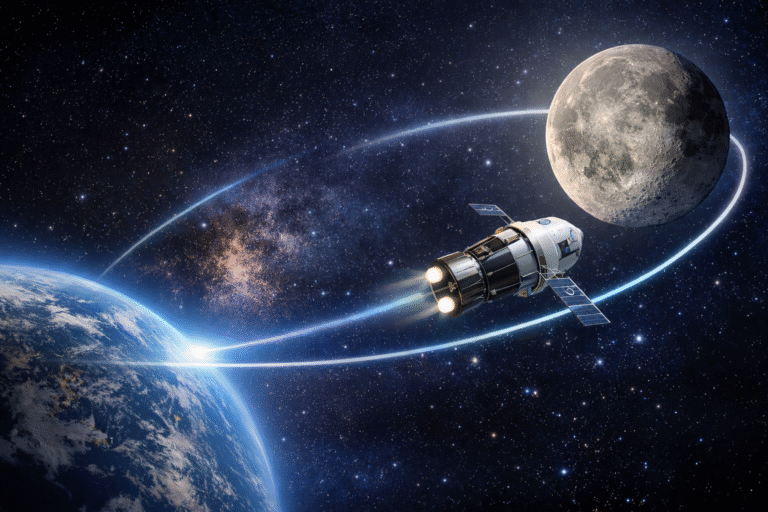
Artemis II will launch aboard NASA’s Space Launch System (SLS) Block 1 rocket, the most powerful launch vehicle currently in operation. It will carry the Orion spacecraft and a four-astronaut crew on a lunar flyby mission.
When was the last human launch from Pad 39B?
The last crewed launch from Pad 39B occurred in 2006 during the Space Shuttle program. Artemis II will be the first mission in nearly two decades to carry astronauts from this historic launch site.
How powerful will the Artemis II launch be from Pad 39B?
At liftoff, the SLS rocket will generate approximately 8.8 million pounds of thrust, making it the most powerful rocket ever flown. The launch will produce sound and vibration levels comparable to, or exceeding, those of the Saturn V during Apollo.
Can the public watch an Artemis II launch from Pad 39B?
Yes. Like previous major NASA launches, Artemis II will be viewable from designated public viewing areas around Kennedy Space Center and the Space Coast, with live coverage provided by NASA and media outlets.
Will Pad 39B be used for future Artemis missions?
Pad 39B is designed as a long-term asset for NASA’s exploration program. It is expected to support future Artemis missions beyond Artemis II, including later crewed lunar missions and potentially other heavy-lift vehicles in the future.
How does Pad 39B connect Apollo and Artemis?
Pad 39B physically and symbolically links NASA’s past and future. It launched Saturn V rockets during Apollo and now supports SLS for Artemis, making it one of the few places on Earth where human journeys to the Moon began — and are beginning again.