

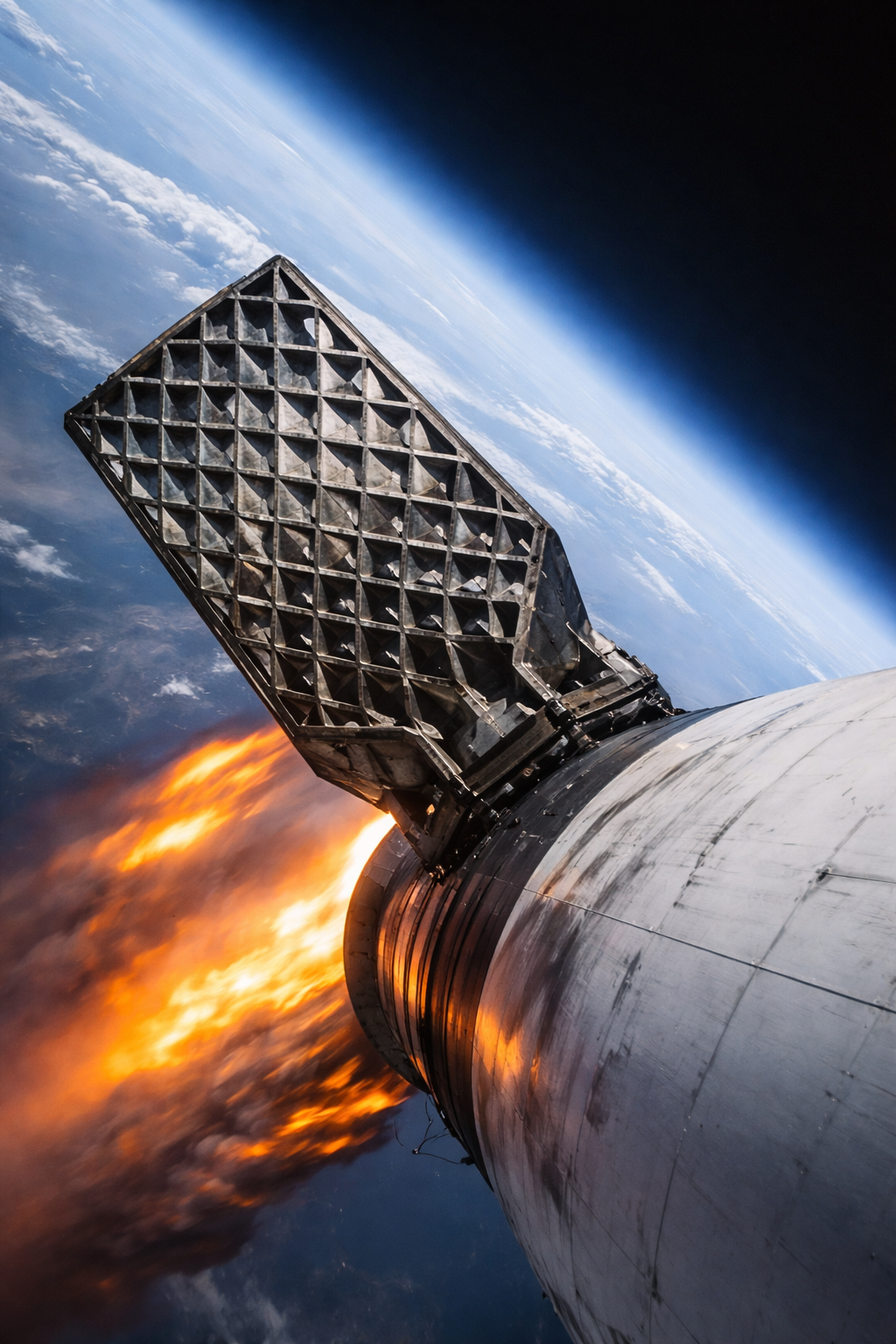
What allows a 70-meter rocket to fall from space, face temperatures hotter than molten lava, and still land safely on a drone ship?
The answer lies in one of SpaceX’s most underrated innovations: Falcon 9 grid fins.
During atmospheric re-entry, Falcon 9 experiences temperatures exceeding 1,000°C, intense aerodynamic forces, and violent turbulence. Yet, time after time, the rocket remains controllable and lands with pinpoint accuracy. Let’s explore how grid-fin design helps manage extreme heat and aerodynamic stress, and why this technology has transformed spaceflight forever.
🚀 What Happens During Falcon 9 Re-Entry?
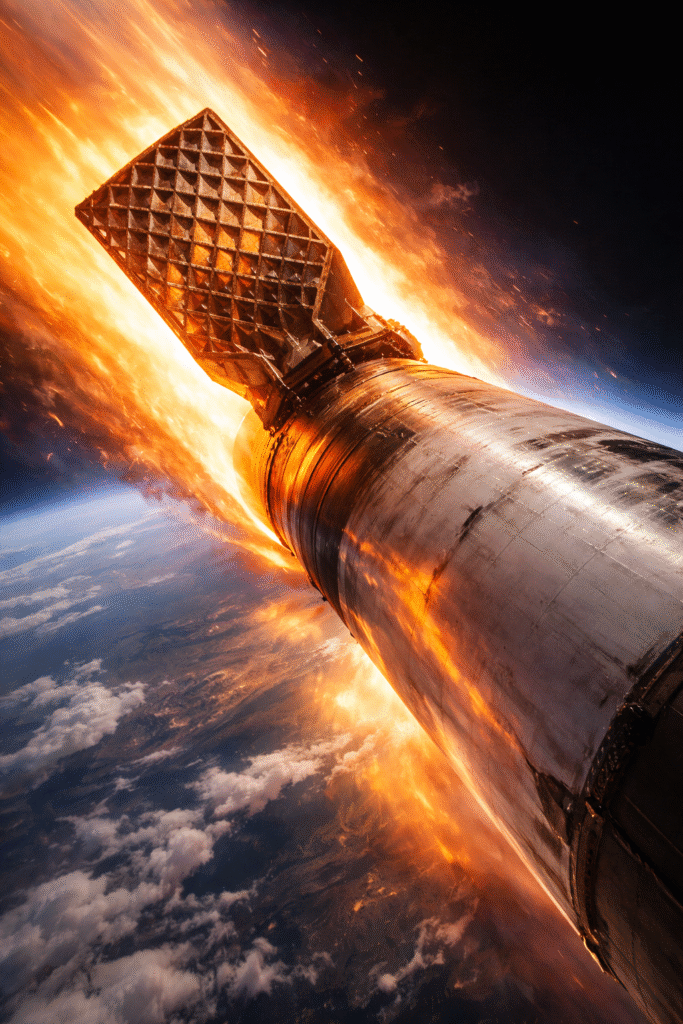
When Falcon 9’s first stage returns from space, it slams into Earth’s atmosphere at hypersonic speeds—often over Mach 10. This phase is one of the most dangerous moments of any space mission.
During re-entry, the booster must survive:
- Extreme aerodynamic heating (above 1,000°C)
- Rapid deceleration forces
- Unstable airflow and turbulence
- Precise guidance toward a landing target smaller than a football field
This is where grid fins become mission-critical.
🧠 What Are Grid Fins?
Grid fins are lattice-like control surfaces mounted near the top of Falcon 9’s first stage. Unlike traditional aircraft wings, they look like metal waffles—and for good reason.
Key characteristics of grid fins:
- Perforated, lattice structure
- Deploy during atmospheric descent
- Act like steering paddles, not wings
- Designed for supersonic and hypersonic airflow
SpaceX initially used aluminum grid fins, but they were later replaced with titanium grid fins to handle extreme heat.
👉 Internal link suggestion:
Read more about Falcon 9 reusability technology on our SpaceX section.
🔥 How Grid Fins Handle Temperatures Above 1,000°C
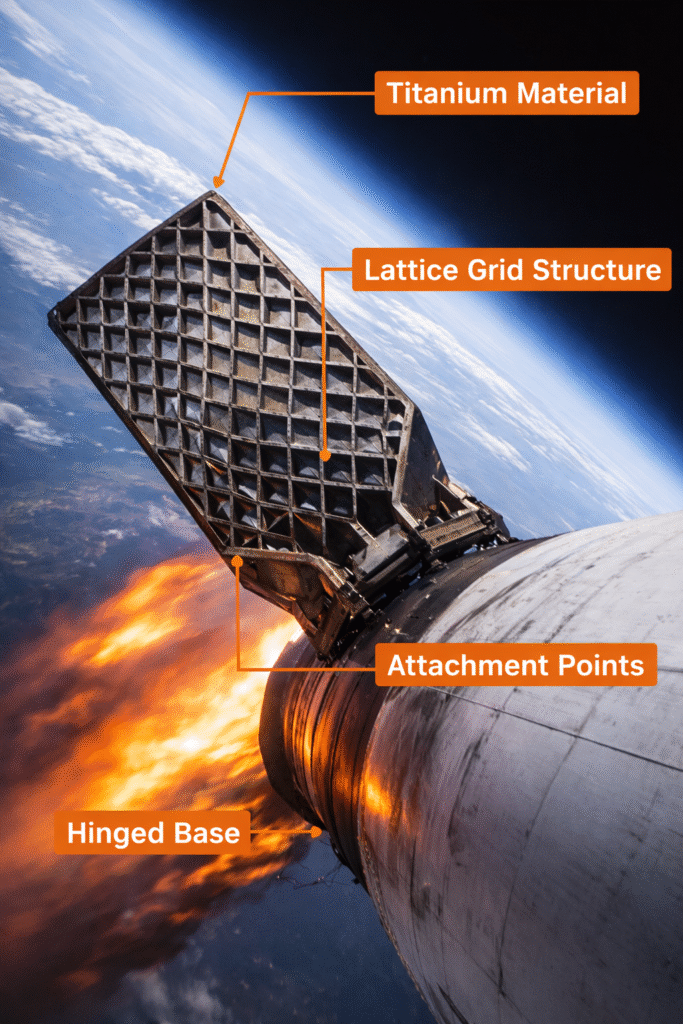
1. Titanium Material = Heat Resistance
Modern Falcon 9 grid fins are made from solid titanium, which:
- Maintains structural strength at extreme temperatures
- Does not require heat shielding
- Can survive repeated re-entries without replacement
Unlike aluminum fins that melted or warped, titanium fins are reusable dozens of times, saving millions of dollars per launch.
2. Open Lattice Design Reduces Heat Load
The grid structure allows hot air to pass through, rather than slam into a solid surface.
This design:
- Reduces thermal stress
- Prevents shockwave buildup
- Minimizes heat concentration
Think of it like holding your hand out of a car window versus spreading your fingers—the airflow behaves very differently.
🌪️ How Grid Fins Control Aerodynamic Forces
Grid fins don’t generate lift like wings. Instead, they provide precise control authority during chaotic airflow conditions.
They help Falcon 9 by:
- Stabilizing the booster during hypersonic descent
- Controlling roll, pitch, and yaw
- Steering the rocket toward its landing zone
- Reducing reliance on fuel-consuming thrusters
Even when airflow becomes turbulent and unpredictable, grid fins maintain effectiveness—something traditional fins cannot do at such speeds.
📌 Why Traditional Fins Would Fail Here
Conventional aircraft-style fins struggle because:
- Shockwaves form at supersonic speeds
- Control surfaces lose effectiveness
- Heat buildup becomes unmanageable
Grid fins, however:
- Work efficiently across subsonic to hypersonic speeds
- Maintain control even in disturbed airflow
- Are compact and structurally robust
👉 External link suggestion:
Learn more about hypersonic aerodynamics from NASA’s official aerospace research resources.
🌍 Why This Matters to Everyday People
You might wonder: How does this affect my life?
The answer is cost, access, and innovation.
Grid fins enable:
- Rocket reusability → cheaper launches
- Lower satellite deployment costs
- Affordable internet services like Starlink
- Faster scientific research and global connectivity
Without grid fins, Falcon 9 landings would be nearly impossible—making reusable rockets unreliable and expensive.
📊 Key Benefits of Falcon 9 Grid Fin Technology
- 🔥 Survive temperatures above 1,000°C
- ♻️ Enable rapid reusability
- 🎯 Improve landing accuracy
- 💰 Reduce launch costs
- 🚀 Make frequent space missions possible
This single innovation plays a massive role in SpaceX’s dominance of the global launch market.
🔮 The Future of Grid Fin Technology
SpaceX’s grid-fin success has influenced:
- New rocket designs worldwide
- Hypersonic vehicle research
- Reusable launch systems beyond Earth orbit
As rockets become more reusable and missions more frequent, grid fins may become the standard for atmospheric re-entry control.
📣 Final Thoughts: Small Design, Massive Impact
Falcon 9’s grid fins may look simple, but they represent one of the smartest engineering solutions in modern spaceflight. Surviving 1,000°C heat while guiding a falling rocket back to Earth is no small feat.
What do you think—are grid fins the most underrated space technology of our time?
👇 Drop your thoughts in the comments, share this article with fellow space enthusiasts, and follow our website for more SpaceX insights, rocket science breakdowns, and space news explained simply 🚀