Could humanity’s most powerful rocket be just weeks away from another giant leap toward Mars? On Christmas Eve, while much of the world was celebrating with family and lights, SpaceX quietly marked a massive achievement that could reshape the future of spaceflight.
The confirmation of SpaceX Super Heavy stacking Starship Flight 12 marks a decisive shift from preparation to execution as SpaceX accelerates its next-generation launch timeline.
A Christmas Eve Moment That Shook the Space World
SpaceX Super Heavy Stacking Starship Flight 12 Signals a Historic Turning Point
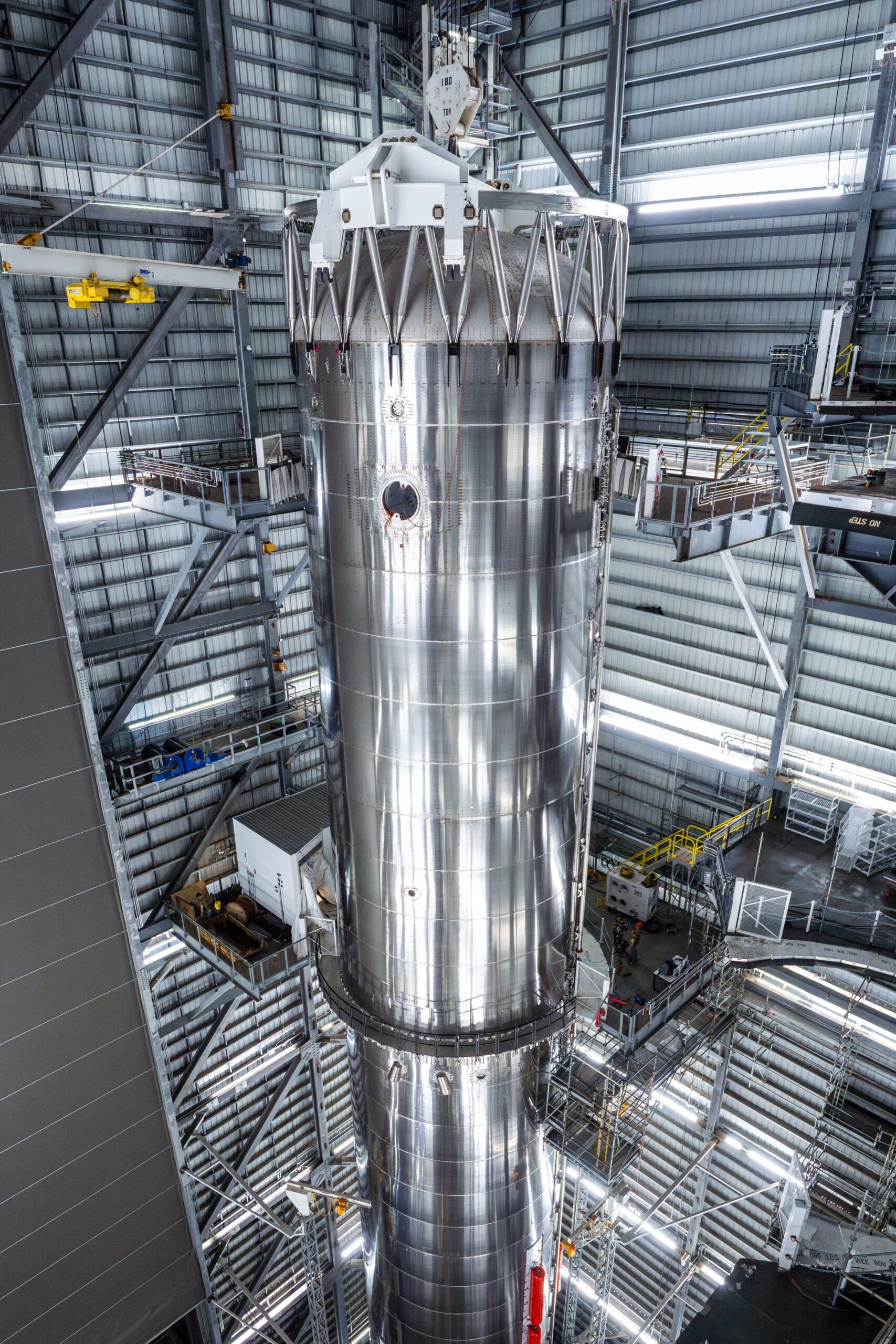
On December 24, SpaceX dropped a single image on X (formerly Twitter) that instantly electrified the global space community. The photo showed a fully stacked Super Heavy booster—the first stage of the Starship megarocket—standing tall inside the high bay at Starbase, Texas. The caption was short but powerful: “Stacking complete.”
That simple phrase signaled something enormous. This Super Heavy booster is the one assigned to Starship Flight 12, the next major test in SpaceX’s rapid iteration campaign. While SpaceX has not yet announced an official launch date, the company has confirmed that the flight is expected in Q1 of this year, placing it just around the corner.
The moment SpaceX Super Heavy stacking Starship Flight 12 was confirmed, spaceflight analysts began comparing it to previous pre-launch milestones that preceded major breakthroughs.
For space enthusiasts, engineers, and even everyday people who follow SpaceX casually, this was more than just a holiday post. It was a sign that Starship development is accelerating—fast.
Why Super Heavy Stacking Is a Big Deal
For engineers and analysts, SpaceX Super Heavy stacking Starship Flight 12 represents a rare glimpse into how close the world’s most powerful rocket is to operational maturity. The Super Heavy booster is not just another rocket stage. It is the most powerful first-stage booster ever built, designed to generate an astonishing ~17 million pounds (75 meganewtons) of thrust at liftoff using 33 Raptor engines. For comparison, NASA’s Saturn V—still legendary—produced about 7.6 million pounds of thrust.
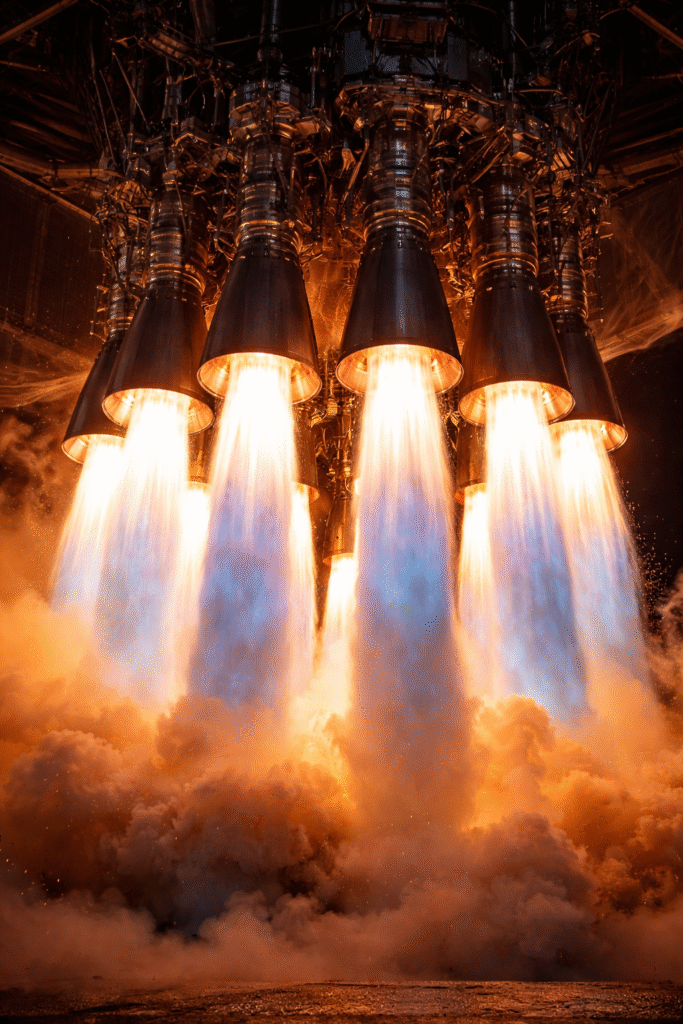
Stacking the booster means structural integration, engine installation, and major validation steps are already complete. It signals that SpaceX is transitioning from hardware preparation to final testing phases.
This matters because Starship is not designed for one-off missions. It is built to be fully reusable, dramatically lowering the cost of access to space. That single design philosophy could transform satellite launches, lunar missions, and eventually, human settlement on Mars.
What Makes Flight 12 Especially Important
Starship Flight 12 comes after a series of increasingly ambitious test flights. Each launch has pushed boundaries—higher altitudes, longer engine burns, complex hot-stage separation, and controlled splashdowns.
This upcoming flight is expected to further validate:
- Booster performance during ascent
- Improved engine reliability of Raptor 3 variants
- Structural resilience during Max-Q (maximum aerodynamic pressure)
- Refinements in reusability systems
Although SpaceX hasn’t publicly confirmed the exact test objectives, Flight 12 is widely expected to move closer to operational readiness, a critical step before Starship can support NASA’s Artemis Moon missions and future Mars plans.
You can read more about SpaceX’s long-term Starship vision directly on the official SpaceX Starship page.
Technical Discussion
From structural integration to engine alignment, SpaceX Super Heavy stacking Starship Flight 12 highlights how rapidly SpaceX is refining its reusable heavy-lift architecture.
How This Impacts Real Lives on Earth
At first glance, a rocket stacking in South Texas may feel distant from daily life. But the implications are closer than you think.

Starship aims to lower launch costs to below $10 million per flight, compared to hundreds of millions for traditional heavy-lift rockets. That cost reduction could mean:
- Cheaper global internet via next-generation satellite networks
- Faster disaster monitoring and climate observation
- More affordable space-based research in medicine and materials
- New jobs and innovation ecosystems around space technology
For students, engineers, and creators, this progress opens doors to careers that didn’t exist a decade ago. For the rest of us, it accelerates technologies that eventually trickle into everyday life.
NASA has already selected Starship as the Human Landing System (HLS) for the Artemis program, reinforcing its importance to national and international space goals. Learn more about that partnership on NASA’s Artemis overview.
A Quiet Confidence Before the Next Giant Leap
What makes this moment especially fascinating is SpaceX’s tone. No flashy announcement. No countdown. Just a photo and two words. That quiet confidence reflects a company deeply focused on execution rather than hype.
Stacking complete means the hardware is ready. The next chapters—testing, rollout, and launch—are no longer theoretical. They are imminent.
As we head into the first quarter of the year, Starship Flight 12 could become one of the most watched test launches in modern spaceflight history.
Final Thoughts: Why You Should Care
This isn’t just a SpaceX story. It’s a human progress story. Every successful step toward a fully reusable super-heavy rocket brings us closer to a future where space is not rare, remote, or reserved for a few.
In hindsight, SpaceX Super Heavy stacking Starship Flight 12 may be remembered as the quiet but critical step that pushed Starship from experimental testing toward real-world missions.
If Starship succeeds, history will remember these quiet stacking moments as the turning points.
👉 What do you think Flight 12 will achieve? Will this be the breakthrough Starship needs? Share your thoughts, comment below, and don’t forget to follow for real-time space updates.
❓ Frequently Asked Questions (FAQs)
Q1. What is Super Heavy in the Starship system?
Super Heavy is the first-stage booster of SpaceX’s Starship rocket, responsible for lifting the spacecraft off Earth using 33 Raptor engines.
Q2. When is Starship Flight 12 expected to launch?
SpaceX has not announced an exact date, but the launch is expected in Q1 of this year.
Q3. Why is Starship important for NASA?
NASA selected Starship as the lunar lander for the Artemis program, which aims to return humans to the Moon and later reach Mars.
Q4. How powerful is Starship compared to other rockets?
Starship is the most powerful rocket ever built, producing nearly twice the thrust of Saturn V.
Q5. Will Starship flights become routine in the future?
If full reusability is achieved, Starship flights could become frequent and affordable, similar to commercial aviation today.
Stay curious. Space is getting closer than ever. 🌌🚀
 jakartamitul