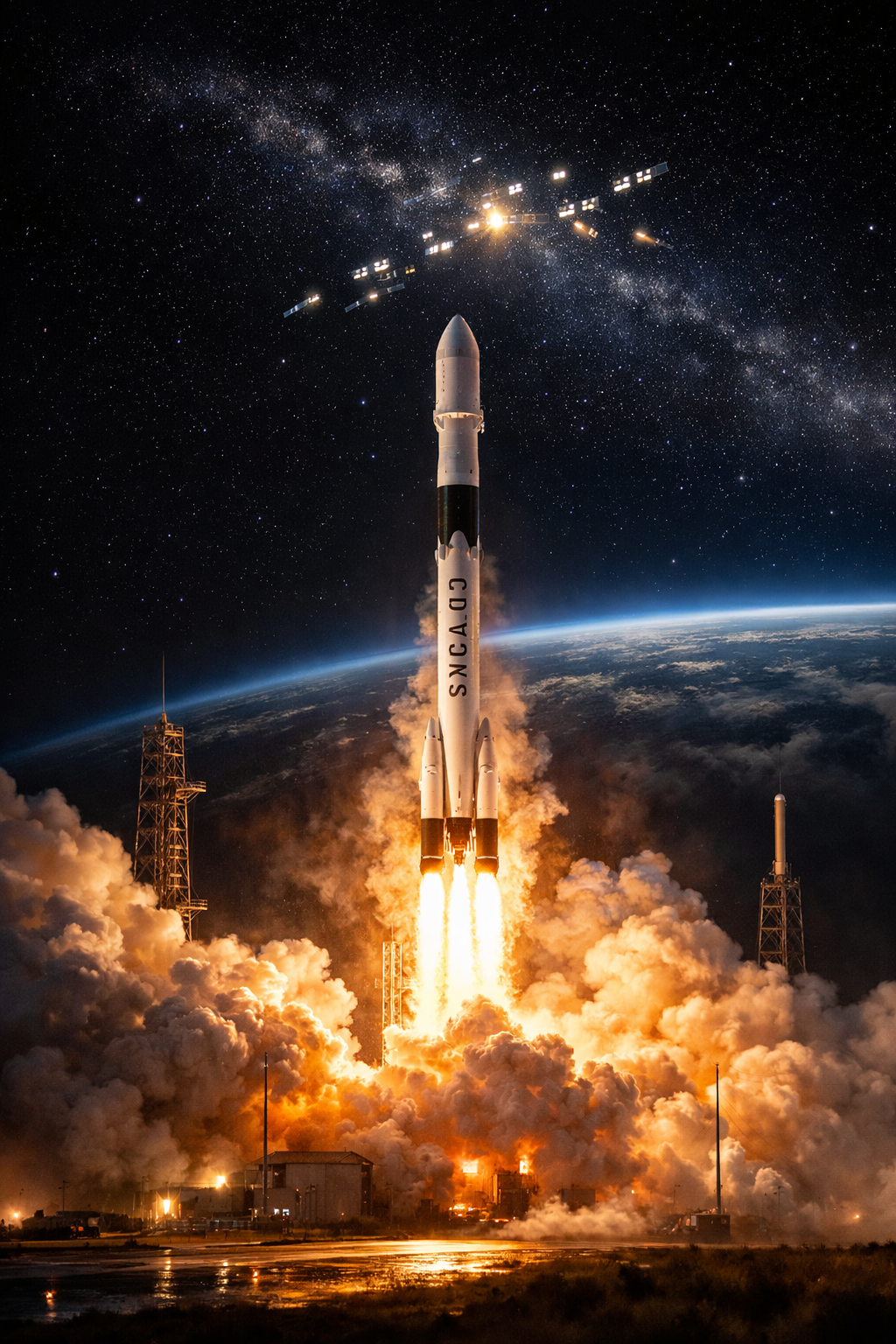
Can a single rocket launch change how millions experience the internet in 2026? SpaceX believes the answer is yes—and its first Starlink mission of the year just proved why.
SpaceX has started 2026 on a remarkably strong and positive note, launching the first batch of Starlink satellites of the year aboard a brand-new Falcon 9 rocket. The mission lifted off at 1:48 a.m. EST on Sunday, January 4, from Space Launch Complex 40 at Cape Canaveral Space Force Station in Florida, marking another confident step in the company’s ambitious plan to blanket Earth with high-speed internet.
What makes this launch especially notable is not just the timing or the payload—but what it signals about SpaceX’s pace, reliability, and long-term vision for global connectivity.
A Fresh Falcon 9 and a Fast, Flawless Ascent
The Falcon 9 booster used for this mission was brand new, a deliberate move by SpaceX to expand its active fleet while maintaining its aggressive launch cadence. Carrying 29 Starlink satellites, designated Starlink Group 6-88, the rocket roared into the night sky right on schedule.
Just nine minutes after liftoff, the satellites reached low Earth orbit (LEO)—a testament to the precision and maturity of SpaceX’s launch operations. About one hour later, all 29 satellites were successfully deployed.
Shortly after deployment, SpaceX confirmed the milestone in a post on X (formerly Twitter), stating:
“Deployment of 29 Starlink satellites confirmed.”
That simple sentence carries massive implications for internet users worldwide.

Why This Starlink Launch Actually Matters to You
It’s easy to see rocket launches as distant, spectacular events—but Starlink missions directly affect everyday life. With each new batch of satellites, SpaceX strengthens its ability to deliver low-latency, high-speed broadband to regions where traditional infrastructure struggles or simply doesn’t exist.
For people in rural areas, remote villages, islands, disaster-prone zones, and developing regions, Starlink isn’t just another internet service—it’s often the only viable connection to education, healthcare, online work, and emergency communication.
As more satellites join the constellation, users can expect:
- Improved connection stability
- Faster speeds during peak hours
- Reduced latency for gaming, video calls, and remote work
If you’re interested in how satellite internet works, you may also want to explore our internal guide on how Starlink satellites deliver high-speed internet from space, which explains the technology in simple terms.
SpaceX’s 2026 Momentum Is Already Building
Launching the first Starlink mission of 2026 so early in the year sends a clear message: SpaceX has no intention of slowing down.
This mission also reflects SpaceX’s unique advantage—vertical integration. By building its own rockets, engines, satellites, and even ground infrastructure, the company can iterate faster than any competitor. The use of a new Falcon 9 booster ensures fleet expansion while previously flown boosters continue supporting other missions.
For broader context, NASA has also acknowledged the growing importance of commercial launch providers. You can read more about this shift toward private spaceflight on NASA’s official website, which highlights how companies like SpaceX are reshaping access to orbit.
A Bigger Picture: Space, Speed, and Society
Beyond internet access, Starlink plays a growing role in emergency response and global resilience. From supporting communications during natural disasters to enabling connectivity in conflict zones, satellite internet is increasingly becoming a critical utility—much like electricity or clean water.
This latest launch strengthens SpaceX’s ability to provide that service at scale. And as the constellation grows, competition in the satellite broadband market will likely intensify, potentially leading to lower costs and better service for users worldwide.
What Comes Next?
With dozens of launches planned for 2026, this Starlink mission is just the beginning. Future launches are expected to include upgraded satellites with enhanced capabilities, further improving coverage and performance.
If you’re following SpaceX closely, this mission also sets the tone for upcoming Falcon 9, Falcon Heavy, and Starship-related milestones throughout the year.
Final Thoughts: A Strong Start With Real-World Impact
SpaceX’s first Starlink launch of 2026 isn’t just a routine mission—it’s a powerful reminder of how quickly space technology is becoming part of everyday life. From remote classrooms to global businesses, the impact of these 29 satellites will be felt far beyond Earth’s orbit.
💬 What do you think about SpaceX’s rapid Starlink expansion?
Do you see satellite internet as the future of global connectivity, or do you have concerns about it? Share your thoughts, comment below, and don’t forget to follow our page for the latest space and rocket science updates.
Frequently Asked Questions (FAQs)
Q1: What is Starlink Group 6-88?
Starlink Group 6-88 refers to a specific batch of 29 Starlink satellites launched together into low Earth orbit as part of SpaceX’s expanding internet constellation.
Q2: Why did SpaceX use a new Falcon 9 booster for this launch?
Using a fresh booster helps SpaceX grow its reusable rocket fleet while maintaining a high launch frequency across multiple missions.
Q3: How long after launch were the satellites deployed?
The satellites reached orbit about nine minutes after liftoff and were deployed approximately one hour later.
Q4: How does this launch benefit everyday users?
Each new Starlink launch improves network capacity, speed, and reliability—especially for users in remote or underserved regions.
Q5: Will Starlink speeds improve in 2026?
Yes, as more satellites are added, users can expect better performance, reduced congestion, and more consistent connectivity.
If you found this article insightful, share it with fellow space enthusiasts and stay tuned for more in-depth coverage of SpaceX, Starlink, and the future of space exploration
 jakartamitul