
When SpaceX’s Starship lifts off, it doesn’t just rise into the sky—it roars. The Starship liftoff noise is so intense that it can shake buildings, rattle windows, and be felt deep in the ground miles away. Experts estimate that the Starship liftoff noise exceeds 150 decibels, putting it among the loudest sounds ever produced by a machine on Earth. That deafening moment lasts only seconds, but it has sparked serious questions about environmental safety, wildlife disruption, and the impact on nearby communities.
How Loud Is Starship at Liftoff—Really?
To understand the scale, let’s put 150 decibels into perspective. A jet engine at takeoff is around 140 dB. A rock concert near the speakers reaches about 120 dB. Starship, however, is believed to cross 150–160 dB at close range, placing it among the loudest controlled events ever created by humans.
This extreme noise comes from the simultaneous firing of 33 methane-fueled Raptor engines, producing nearly 17 million pounds of thrust. The sound waves generated are so powerful that they don’t just travel through the air—they physically shake the ground, structures, and even the atmosphere itself.
SpaceX engineers anticipated this. That’s why the company built a massive water deluge system at Starbase in Texas, designed to dump hundreds of thousands of liters of water per minute beneath the launch mount. The goal is to absorb acoustic energy, reduce vibrations, and protect both the rocket and nearby infrastructure.
Why Rocket Noise Matters Beyond the Launch Pad
Rocket noise is not just a technical curiosity; it has real-world consequences. Extremely loud sound waves can affect wildlife, nearby communities, and fragile ecosystems. During early Starship test flights, residents near Boca Chica reported rattling windows, shaking homes, and temporary hearing discomfort.
Wildlife experts have raised concerns about birds, sea turtles, and other species living near launch sites. Sudden exposure to intense acoustic energy may disrupt migration patterns, nesting behavior, and communication among animals. These concerns have already influenced regulatory decisions by agencies like the U.S. Fish and Wildlife Service and the FAA. Environmental experts are now closely monitoring Starship liftoff noise to understand how repeated launches could affect wildlife behavior, nesting patterns, and long-term habitat stability.
From a human health perspective, prolonged exposure above 85 dB can cause hearing damage. While Starship launches are brief and controlled, critics argue that repeated launches—especially if Starship flies weekly or even daily in the future—could increase cumulative environmental stress.
How Powerful Is Starship Liftoff Noise Compared to Other Rockets?
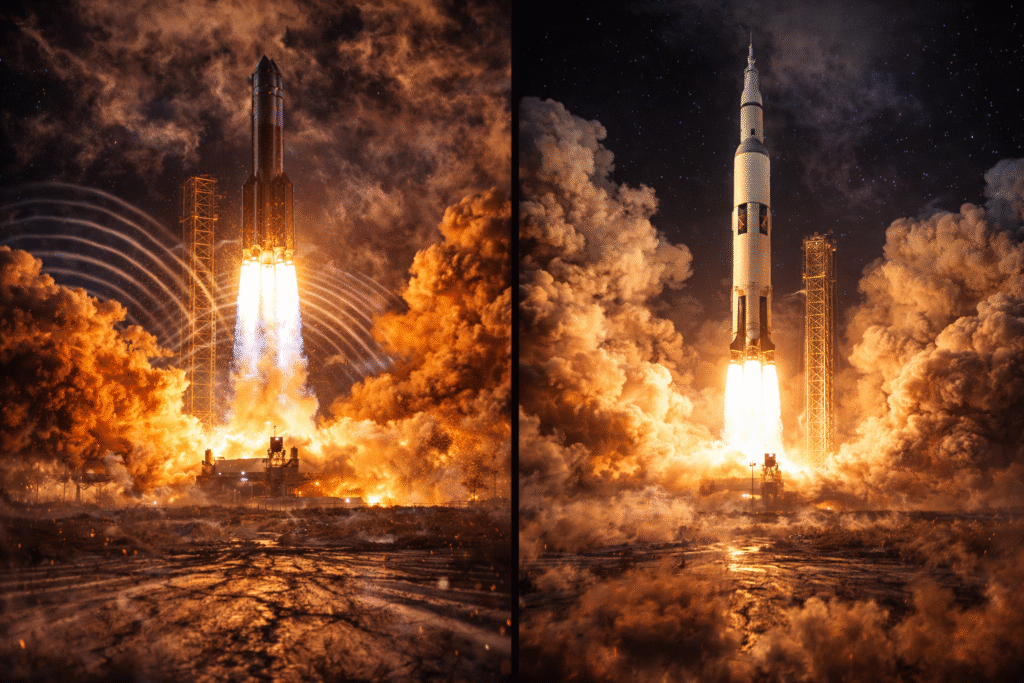
Surprisingly, Starship may rival or even exceed the legendary Saturn V, which launched Apollo astronauts to the Moon. Saturn V generated around 204 dB at the source, but due to measurement differences and distance, comparisons are complex. What’s clear is that Starship belongs in the same category of historic, extreme acoustic events.
The difference today is context. Saturn V launched in a less environmentally regulated era. Starship operates in a world where environmental impact assessments, community feedback, and sustainability matter more than ever.
SpaceX’s Response: Innovation Over Ignorance
SpaceX argues that noise is a known and manageable side effect of pushing technological boundaries. The company is actively improving sound suppression systems, reinforcing launch infrastructure, and refining engine ignition sequences to reduce peak acoustic loads.
More importantly, Starship is designed to be fully reusable, potentially reducing the environmental cost per launch compared to disposable rockets. Fewer rockets built, fewer materials consumed, and more efficient access to space could offer long-term benefits that outweigh short-term noise concerns.
For readers interested in rocket engineering, you can explore how sound suppression works in modern launch systems in our internal guide on Falcon 9 launch acoustics. For external context, NASA’s deep dive into rocket noise and vibration effects provides valuable scientific background.
Why This Matters to Everyday People
Even if you live thousands of kilometers from Starbase, Starship’s noise debate affects you. Starship aims to enable cheaper satellite launches, global internet coverage, Moon missions under NASA’s Artemis program, and eventually human missions to Mars. These goals could reshape communication, science, and global connectivity.
At the same time, communities near launch sites deserve transparency, safety, and environmental responsibility. The Starship noise issue forces an important question: How do we balance rapid technological progress with environmental stewardship?
The Future of Loud Rockets
As Starship moves closer to operational status, launches will become more frequent. That makes noise mitigation not optional, but essential. Advanced flame diverters, improved water deluge systems, and even offshore launch platforms may play a key role in reducing environmental impact.
Starship’s roar is both terrifying and thrilling—a sound that represents humanity’s ambition to become a multiplanetary species. Whether that sound becomes acceptable or controversial will depend on how responsibly it’s managed.
Final Thoughts
Starship’s liftoff noise is undeniably extreme, but it’s also a signal of unprecedented innovation. The real challenge lies in ensuring that this progress does not come at the cost of ecosystems or communities. As SpaceX continues to iterate, the world will be listening—quite literally.
What do you think? Is Starship’s deafening roar a necessary price for space exploration, or a warning sign we should take more seriously? Share your thoughts, comment below, and join the conversation 🚀
Frequently Asked Questions (FAQs)
How many decibels is Starship at liftoff?
Estimates suggest over 150 dB near the launch pad, making it one of the loudest rockets ever built.
Can Starship noise damage hearing?
At close range, yes. That’s why exclusion zones and safety protocols are strictly enforced during launches.
Does Starship noise harm wildlife?
Studies suggest intense, sudden noise can disrupt wildlife, which is why environmental monitoring is ongoing.
Is Starship louder than Falcon 9?
Yes. Falcon 9 is loud, but Starship’s 33 engines produce significantly more acoustic energy.
Will SpaceX reduce Starship’s noise in the future?
SpaceX is actively improving sound suppression systems and exploring offshore launches to limit environmental impact.
 jakartamitul