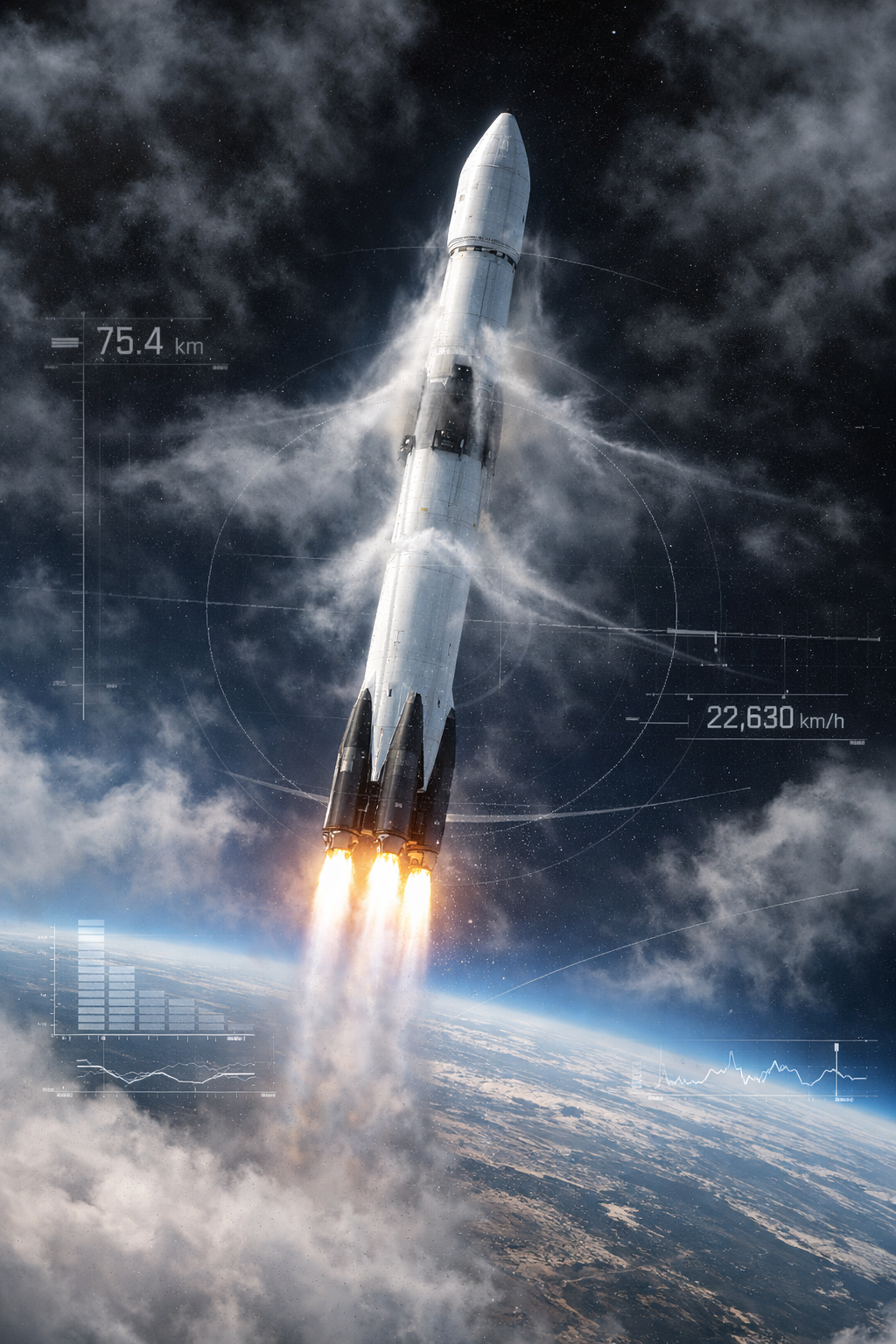
Falcon 9 Max-Q is the most dangerous and carefully managed moment of every SpaceX launch, even more stressful than liftoff itself. During this phase, the rocket deliberately throttles down its engines while racing through Earth’s atmosphere at extreme speed.
That’s exactly the reality for SpaceX’s Falcon 9, which deliberately slows down on purpose during one of the most intense moments of flight: Max-Q.
This article dives deep into why Falcon 9 throttles down during Max-Q and approximately at what altitude Max-Q occurs, explained in a clear, conversational way that even non-engineers can enjoy. If you’ve ever watched a SpaceX launch and heard the callout “Throttle down… Max-Q”, this is the story behind that tense moment.
What Exactly Is Max-Q—and Why Is It So Dangerous?
Max-Q stands for maximum dynamic pressure, and it represents the point during ascent when the rocket experiences the greatest aerodynamic stress. It’s not about speed alone, and it’s not about altitude alone—it’s the brutal combination of both.
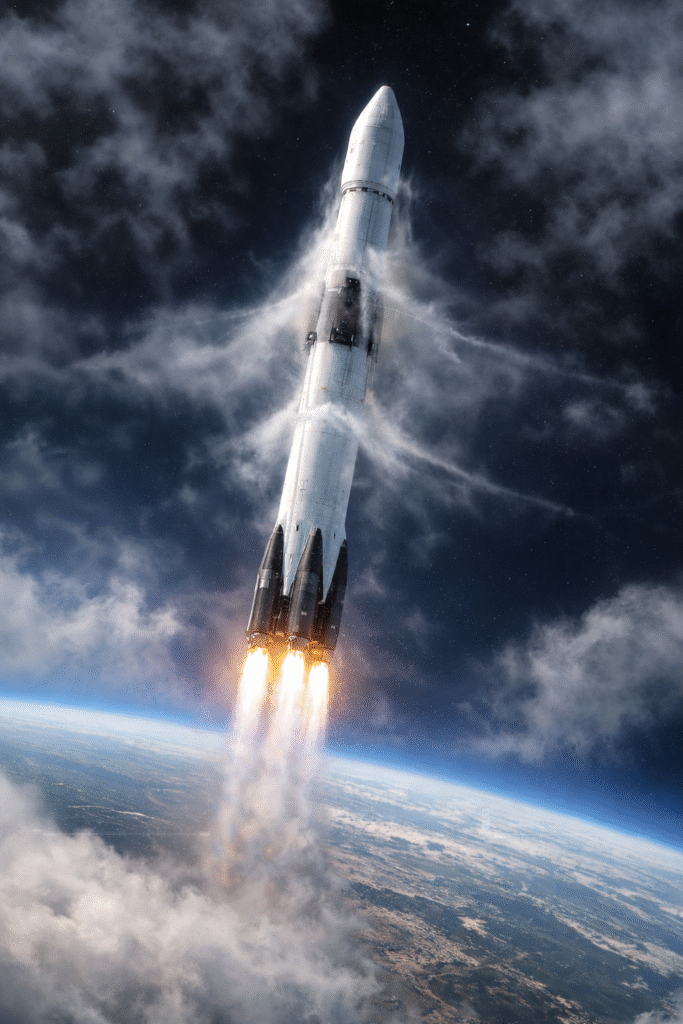
“Falcon 9 rocket cutting through vapor and shockwaves at Max-Q, engines throttled, Earth’s curvature below, space above.”
As Falcon 9 climbs through the atmosphere, it accelerates rapidly while air density is still relatively high. The faster the rocket moves through thick air, the greater the force pushing against its structure. At a certain moment, those forces peak. That peak is Max-Q.
This is when the rocket is under maximum strain, like a race car hitting top speed in a narrow tunnel while the walls squeeze inward.
Why Falcon 9 Throttles Down During Max-Q
Falcon 9 throttles down during Max-Q for one simple reason: survival.
If the Merlin engines continued firing at full thrust during this phase, the aerodynamic pressure could exceed structural limits. That doesn’t mean the rocket would explode instantly—but even small structural damage at this stage could compromise the entire mission.
By reducing engine thrust briefly, Falcon 9 lowers its acceleration, which reduces the aerodynamic load acting on the vehicle. This keeps stresses within safe margins while the rocket continues climbing toward thinner air.
Once Falcon 9 passes Max-Q and atmospheric density drops sharply, the engines throttle back up again. You’ll often hear SpaceX announcers say, “Vehicle is through Max-Q”—a subtle but critical milestone that signals the rocket has cleared its most physically punishing phase.
This throttle-down strategy isn’t a weakness. It’s a smart, deliberate design choice that reflects how modern rockets prioritize reliability over brute force.
At What Altitude Does Max-Q Occur?
For Falcon 9, Max-Q typically occurs between 70 and 80 kilometers above Earth’s surface. That’s roughly 43 to 50 miles high, well above commercial aircraft but still deep within Earth’s atmosphere.
The exact altitude can vary slightly depending on payload mass, launch trajectory, and atmospheric conditions. Heavier payloads may push Max-Q a bit lower, while lighter missions may experience it slightly higher. But across most Falcon 9 missions, that 70–80 km window remains remarkably consistent.
Interestingly, Falcon 9 is still accelerating aggressively at this point. Even though the rocket hasn’t reached orbital velocity yet, it’s moving fast enough through dense air to create extreme pressure loads.
NASA and SpaceX both monitor Max-Q closely because it’s one of the key indicators of ascent health.
(External reference: NASA launch dynamics overview – nasa.gov)
Why Max-Q Matters Beyond Rocket Science
Max-Q isn’t just a technical curiosity—it’s a lesson in engineering discipline.
For everyday people, this concept shows how progress isn’t always about pushing harder. Sometimes, success depends on knowing when to slow down. SpaceX’s approach to Max-Q reflects a broader philosophy that applies far beyond spaceflight: managing peak stress moments carefully can prevent catastrophic failure later.
This is especially important for SpaceX’s rapid-launch cadence. Falcon 9 launches dozens of times per year, carrying satellites, scientific instruments, and astronauts. Throttling down during Max-Q helps protect reusable boosters, lowering refurbishment costs and making space more accessible.
If you’re following SpaceX closely, you’ll notice how consistent Max-Q handling has become part of Falcon 9’s legendary reliability.
(Internal link suggestion: Read more on Falcon 9 reusability here: /falcon-9-reusability-explained)
Is Max-Q Still a Challenge for Modern Rockets?
Absolutely—and that’s the surprising part.
Even with advanced materials, real-time telemetry, and computer-controlled engines, Max-Q remains one of the most stressful moments of any launch. No amount of software can change atmospheric physics. Rockets still have to pass through thick air at high speed, and that reality hasn’t changed since the earliest days of spaceflight.
What has changed is how precisely companies like SpaceX manage that moment. Falcon 9’s engines can throttle with extreme accuracy, adjusting thrust hundreds of times per second if needed. That capability is a major reason SpaceX has achieved such a high launch success rate.
Final Thoughts: Slowing Down to Win the Race
Falcon 9 throttling down during Max-Q may look counterintuitive, but it’s one of the smartest moves in modern rocketry. By easing off the throttle at around 70–80 km altitude, SpaceX protects the rocket at its most vulnerable moment—then pushes hard once the danger has passed.
It’s a reminder that even in spaceflight, timing matters as much as power.
👉 Did you know Max-Q was the most dangerous part of a launch? Share this article with fellow space fans and drop your thoughts in the comments—would you trust a rocket that never slowed down?
Frequently Asked Questions (FAQs)
Why is Max-Q dangerous for rockets?
Because it combines high speed with dense atmospheric air, creating extreme aerodynamic pressure on the vehicle.
Does every rocket throttle down at Max-Q?
Most modern rockets do, but the exact throttle profile varies depending on design and mission requirements.
Can a rocket fail at Max-Q?
Yes. Structural weaknesses or miscalculations during Max-Q can lead to mission failure, which is why it’s closely monitored.
Is Max-Q the same for Falcon Heavy and Starship?
The concept is the same, but the altitude and pressure levels differ due to vehicle size and flight profile.
Why does SpaceX announce Max-Q during live launches?
Because clearing Max-Q is a major milestone that indicates the rocket has survived its most intense stress phase.
If you enjoyed this deep dive, stay tuned—because every launch has a hidden story written in physics.
 jakartamitul