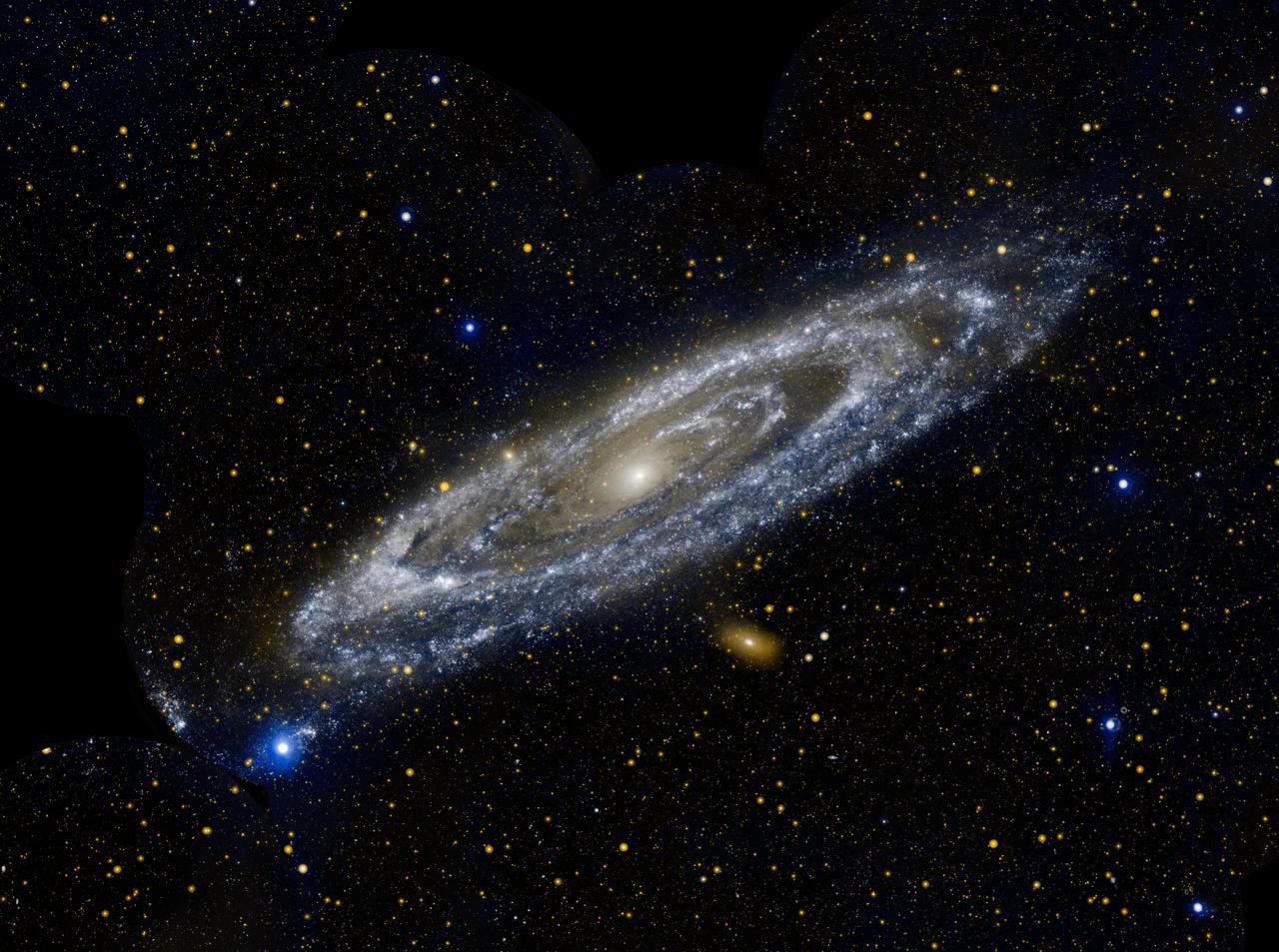
From the dazzling explosion of The Big Bang to the present moment, our universe has unfolded a breathtaking cosmic saga spanning nearly 13.8 billion years. It’s a story of stars igniting, galaxies coalescing, and life emerging on at least one pale blue dot. But as with all stories, there’s an ending. What does science tell us about the ultimate fate of everything? What will actually happen on the ‘last day’ of the universe? While the timeline is unfathomably distant, cosmologists have put forth several compelling, and sometimes terrifying, theories about how our cosmic drama will conclude. Join us on a journey to the extreme future, exploring the scientific predictions for the universe’s final act.
Understanding the universe’s end requires a brief look at its beginning and evolution. The Big Bang set everything in motion, creating space, time, and matter. Since then, the universe has been continuously expanding. The interplay of this expansion, gravity, and the mysterious forces of dark matter and dark energy will ultimately dictate its demise. Will it end with a bang, a whimper, or something else entirely?
The Prevailing Theory: The Big Freeze (Heat Death)
Currently, the most widely accepted theory for the universe’s ultimate fate is the Big Freeze, also known as Heat Death. This scenario paints a picture not of dramatic collapse or violent tearing, but of a slow, inexorable fade into cold, dark emptiness.
Expansion and the Fate of Stars
The universe’s expansion isn’t just happening; it’s accelerating, driven by dark energy. As space expands, galaxies move further apart, eventually becoming so distant that their light will never reach us. Future civilizations, trillions of years from now, might look up at a sky devoid of other galaxies, believing their own to be the entire cosmos.
Meanwhile, within galaxies, stars will continue their life cycles. Small stars like our Sun will become white dwarfs, slowly cooling over immense timescales. More massive stars will explode as supernovae, leaving behind neutron stars or black holes. Eventually, all stellar fuel will be exhausted. Star formation will cease. The last red dwarf stars, which burn their fuel incredibly slowly, might flicker out hundreds of trillions of years from now, leaving the universe cloaked in permanent twilight.
Black Holes Reign Supreme (and Eventually Evaporate)
After all the stars have died, black holes will be the dominant celestial objects. They will slowly consume any remaining matter, growing ever larger. However, even black holes are not eternal. Stephen Hawking theorized that black holes emit a faint thermal radiation, now known as Hawking radiation. This process causes them to slowly lose mass and energy, eventually evaporating entirely.
The smallest black holes would evaporate first, relatively quickly. Supermassive black holes, however, would take an unimaginably long time – perhaps 10100 (a 1 followed by 100 zeros) years – longer than the universe has existed by many orders of magnitude. Imagine the scale: a black hole with the mass of the Sun would take 1067 years to evaporate. A supermassive black hole at the center of a galaxy could take 10100 years. After these last behemoths have winked out of existence, nothing but fundamental particles and faint radiation would remain.
The Ultimate Chill: A Universe of Nothingness
In the Big Freeze scenario, the universe reaches a state of maximum entropy. This means all energy becomes evenly distributed, making it unusable for work. There would be no temperature differences, no gradients, and therefore no processes – no light, no heat, no motion. The universe would be a uniform, incredibly cold (a fraction of a degree above absolute zero) sea of photons, neutrinos, electrons, and positrons, too far apart to interact. It would be a state of ultimate thermodynamic equilibrium, an eternal, silent, and desolate void. This is the Heat Death of the universe.
Other Cosmic Endgames: Less Likely, But Still Fascinating
While the Big Freeze is the frontrunner, other theories offer alternative, equally dramatic, or even more violent conclusions. These often depend on different assumptions about the nature of dark energy or fundamental physics.
The Big Crunch: A Reversal of Fate?
For a long time, the Big Crunch was a leading contender for the universe’s end. This theory posited that if the total amount of matter and energy in the universe (including dark matter and dark energy) exceeded a critical density, gravity would eventually halt the expansion and pull everything back together. It would be the reverse of The Big Bang.
Galaxies would rush towards each other, colliding and merging. Stars would be compressed, temperatures would rise dramatically, and space itself would shrink. Eventually, all matter and energy would be crushed back into an incredibly hot, dense singularity, much like the state before The Big Bang. While elegant and leading to theories like the Big Bounce (a cyclic universe where a crunch leads to a new bang), current observational data, particularly the accelerating expansion, makes the Big Crunch highly unlikely.
The Big Rip: Tearing Apart Reality
In stark contrast to the Big Freeze’s slow decay or the Big Crunch’s collapse, the Big Rip is a spectacularly violent end. This theory suggests that if dark energy continues to strengthen or if its nature (specifically, its equation of state) changes, its repulsive force could become so powerful that it overwhelms all other fundamental forces.
Initially, dark energy would tear apart galaxy clusters, then individual galaxies. Next, stars and planets would be ripped apart, followed by atoms themselves. Even the fabric of spacetime would be shredded, leaving behind nothing but unbound elementary particles unable to interact. This entire process would culminate in a finite amount of time, with the final moments being incredibly rapid and destructive. However, current data suggests that while dark energy is accelerating expansion, it’s not strong enough to cause a Big Rip. Its strength appears constant.
Vacuum Decay: A Quantum Bubble of Doom
This is arguably the most unsettling and speculative of the cosmic doomsday scenarios. It relies on the concept of a ‘false vacuum.’ Quantum field theory suggests that the universe might exist in a ‘false vacuum’ state, which is stable but not truly the lowest possible energy state. If a bubble of ‘true vacuum’ (a lower energy state) were to spontaneously nucleate somewhere in the universe, it would expand at nearly the speed of light.
As this bubble expands, it would fundamentally change the laws of physics within its boundaries, potentially destroying all existing structures – atoms, molecules, life, and even the fundamental forces – in an instant, without any warning. Everything inside the bubble would be instantly reconfigured or cease to exist as we know it. The good news is there’s no evidence this is imminent, and it’s purely theoretical.
The Immense Time Scales Involved
It’s crucial to remember that these events are not on humanity’s immediate horizon. We are talking about cosmic timescales that defy human comprehension. The Big Freeze, for example, stretches into hundreds of trillions of years before the last stars die, and then vastly longer for black holes to evaporate – far, far longer than the universe has currently existed. The universe is just getting started, cosmologically speaking. Our Sun has another 5 billion years of life, and our planet likely has several billion years of habitability left.
The Enduring Quest for Answers
While the ultimate fate of the universe is still a subject of active research and debate, the journey to understand it profoundly shapes our understanding of cosmic evolution, fundamental physics, and our place within this grand narrative. Each new observation, from the expansion rate to the properties of dark energy, refines our models and brings us closer to a more definitive answer. For now, the universe continues its majestic, accelerating expansion, offering an ever-unfolding spectacle.
Key Takeaways
- The Universe’s Expansion is Key: The ongoing, accelerating expansion driven by dark energy is the dominant factor in current end-of-universe theories.
- The Big Freeze (Heat Death) is Most Likely: This theory predicts a slow, cold fade into maximum entropy, with stars dying, black holes evaporating, and the universe becoming an empty, desolate void.
- Other Theories Exist: The Big Crunch (collapse), Big Rip (cosmic tearing), and Vacuum Decay (spontaneous physical law change) offer alternative, though less likely, scenarios.
- Unfathomable Time Scales: The universe’s end is trillions upon trillions of years away, dwarfing the current age of the cosmos.
- Dark Energy’s Role is Crucial: The nature and behavior of dark energy are central to determining which cosmic endgame will ultimately prevail.
- Science Continues to Explore: Our understanding is constantly evolving with new observations and theoretical advancements.
Conclusion
The concept of the universe’s last day might seem daunting, even melancholic. Yet, exploring these grand cosmic finales is a testament to humanity’s insatiable curiosity and our capacity for scientific inquiry. From the slow fade of the Big Freeze to the violent rending of the Big Rip, each theory offers a glimpse into the ultimate consequences of the universe’s fundamental laws. While the ‘last day’ is billions of years in our distant future, understanding these possibilities enriches our appreciation for the vibrant, dynamic, and intricate universe we inhabit today. Let these incredible insights not instill fear, but rather a profound sense of wonder and a renewed motivation to continue exploring, learning, and cherishing the fleeting, beautiful existence within this cosmic tapestry. What cosmic mysteries will you explore next?
FAQ
When is the ‘last day’ of the universe expected to occur?
The ‘last day’ is not a single event but a gradual process unfolding over unimaginably vast cosmic timescales. According to the leading Big Freeze (Heat Death) theory, the universe’s ultimate demise will stretch into hundreds of trillions of years before the last stars die, and potentially 10100 years or more for the final black holes to evaporate. This timeline is vastly longer than the universe has currently existed (13.8 billion years).
Which theory for the universe’s end is most widely accepted by scientists?
Based on current observational data, particularly the accelerating expansion of the universe driven by dark energy, the Big Freeze (or Heat Death) is the most widely accepted and probable theory for the universe’s ultimate fate. It predicts a slow, cold, and dark end as all energy dissipates and becomes uniformly distributed.
Will humanity or any life survive until the end of the universe?
While our solar system has about 5 billion years left, and life on Earth will undoubtedly cease long before the universe’s ultimate end, the question of whether any form of intelligent life could theoretically survive far into the Big Freeze is a topic of speculative scientific thought. Such life would need to be incredibly adaptable, possibly evolving into non-biological forms, and harnessing energy sources far beyond our current comprehension to persist in a dying cosmos. However, in the vast, cold emptiness of the true ‘last day,’ even this becomes physically impossible.
What role does Dark Energy play in the universe’s ultimate fate?
Dark energy plays a pivotal role. It is the mysterious force responsible for the accelerating expansion of the universe. If dark energy continues its current behavior, it will lead to the Big Freeze. If its properties were to change (e.g., become stronger or behave differently), it could lead to the Big Rip, tearing everything apart. Conversely, if dark energy’s influence were to wane or reverse, the Big Crunch could become a possibility (though current evidence doesn’t support this).
Could the universe restart itself in a ‘Big Bounce’ scenario?
The Big Bounce is a theoretical model proposing that the universe undergoes an infinite series of expansions and contractions, where a Big Crunch (collapse) leads to a new Big Bang (expansion). This creates a cyclic universe, avoiding a true ‘end.’ However, for the Big Bounce to occur, the universe would first need to experience a Big Crunch, which current observations of accelerating expansion make highly improbable. Therefore, while a fascinating concept, it is not supported by present data.
 jakartamitul