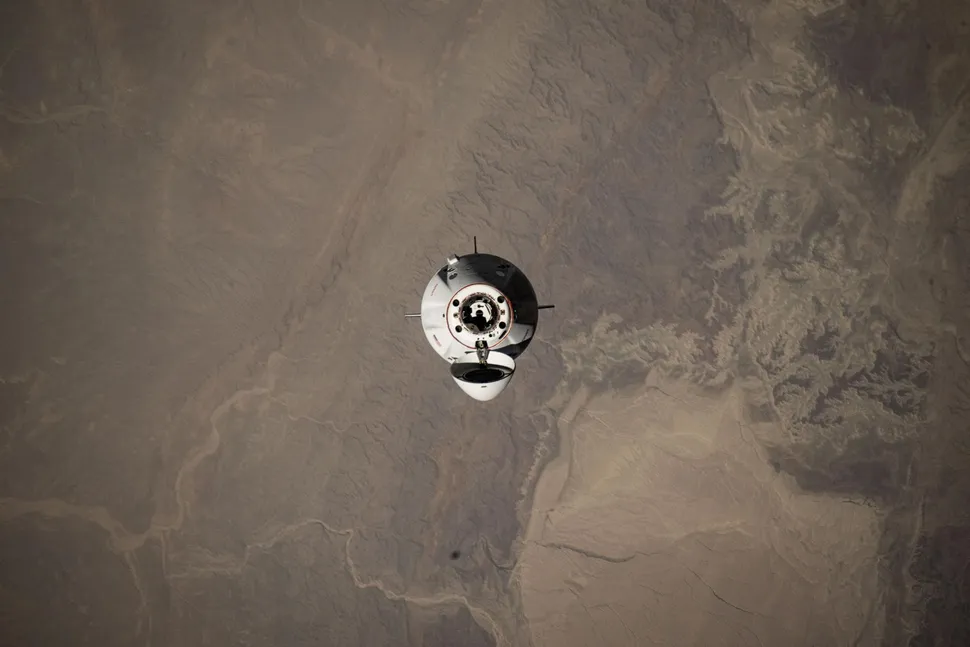
Did you know that astronauts now travel to space in a fully autonomous, reusable spacecraft — and they just did it again on August 1, 2025? SpaceX’s latest mission, Crew-11, lifted off from NASA’s Kennedy Space Center in Florida, marking yet another successful chapter in the company’s groundbreaking partnership with NASA through the Commercial Crew Program.
As the 11th operational crewed mission to the International Space Station (ISS) aboard a SpaceX Dragon spacecraft, Crew-11 isn’t just another spaceflight. It’s a glimpse into the future of sustainable, cost-effective human space exploration.
Let’s break down what makes this mission so important — not just for science, but for all of us here on Earth.
🛰️ What Happened on August 1, 2025?
On the morning of August 1, four astronauts climbed aboard SpaceX’s Crew Dragon capsule and launched into low Earth orbit (LEO), heading toward the ISS, which orbits about 260 miles (418 km) above our planet.
This marked:
- 🚀 SpaceX’s 11th crewed mission for NASA under the Commercial Crew Program
- 🧑🚀 A continued demonstration of reliable access to the ISS from U.S. soil
- 🌍 A testament to the growing importance of reusable spacecraft in making space more accessible
🚀 What Is the SpaceX Dragon Spacecraft?
SpaceX’s Dragon spacecraft is not your average space capsule. It’s a fully autonomous orbital vehicle designed to safely transport astronauts and cargo to and from the ISS — and soon, other low Earth orbit destinations.
Key features of the Dragon spacecraft:
- ♻️ Reusable Design: Built to withstand multiple reentries, reducing the cost of missions
- 🧠 Autonomous Operation: Capable of navigating and docking with the ISS with minimal human input
- 🧳 Crew and Cargo Ready: Can carry up to six passengers, but NASA missions typically carry four astronauts along with equipment and scientific experiments
- 📆 Extended Docking Capability: Designed to remain docked at the ISS for months, supporting long-duration missions
Dragon launches atop the Falcon 9 rocket, another reusable marvel by SpaceX, whose first stages are routinely recovered and reused, pushing down the costs of access to space.
🌌 Why the Crew-11 Mission Matters
This mission isn’t just a routine flight. Here’s why it’s a major milestone:
1. Redefining Space Travel
With every Crew Dragon mission, SpaceX is proving that reusable, autonomous vehicles are the new normal. This drastically reduces costs and increases the frequency of missions — essential for future Mars ambitions and commercial space stations.
2. Supporting Science in Space
The astronauts aboard Crew-11 are not just passengers — they’re researchers. They’ll be conducting dozens of experiments related to health, materials science, biology, and more, many of which have direct applications here on Earth.
3. Strengthening the U.S. Role in Space
By launching from Florida, the U.S. maintains independent access to space, a strategic and scientific necessity in a world where space is becoming more contested and commercially valuable.
4. Training for the Next Frontier
Each mission prepares astronauts, engineers, and mission planners for more ambitious projects — including the Artemis missions to the Moon and future human flights to Mars.
🧠 How This Affects You
You might be wondering: “Why should I care about astronauts heading to the ISS?”
Here’s how space missions like Crew-11 impact everyday life:
- 💡 Tech Spin-Offs: Innovations in microgravity often lead to medical devices, water purification systems, and even better Wi-Fi.
- 🌍 Global Collaboration: These missions strengthen international partnerships, including collaborations with ESA, JAXA, and others.
- 👩🔬 STEM Inspiration: Every successful launch inspires the next generation of scientists, engineers, and explorers — maybe even your kids.
🔗 Related Reads and Resources
- 📘 NASA’s Commercial Crew Program Overview
- 📘 How the SpaceX Dragon Works (SpaceX)
- 🧪 Latest ISS Science Missions
📣 Final Thoughts: The Future Is Reusable, Autonomous, and Already Here
SpaceX’s Crew-11 mission is more than a space launch — it’s a turning point in human spaceflight. As we look to a future filled with Moon bases, Mars missions, and orbiting research labs, missions like this are paving the way.
💬 What excites you most about the future of space travel?
 jakartamitul