What mechanisms are used in Falcon 9’s second stage to ensure stable orbital insertion of payloads?
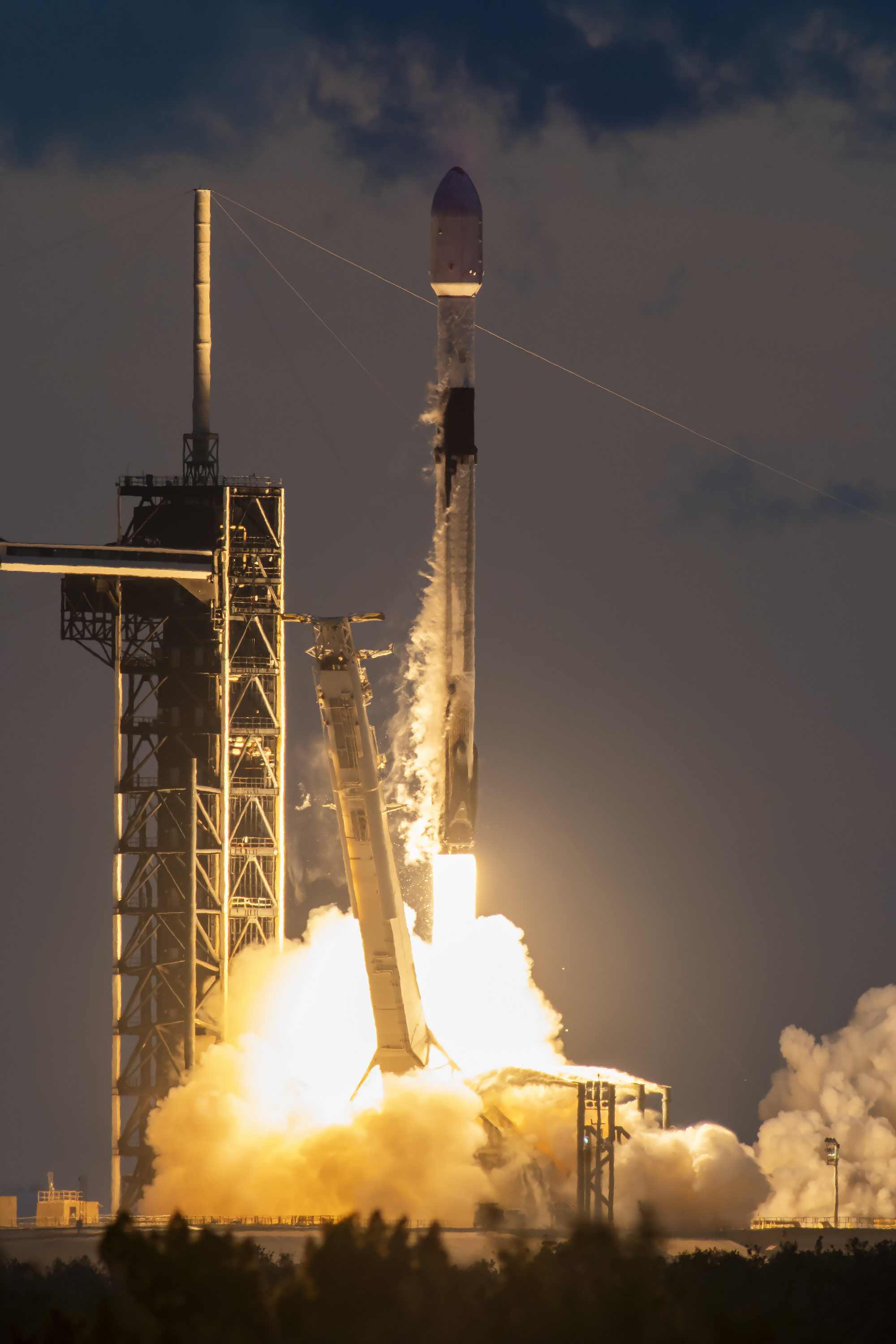
Precision in Orbit: Mechanisms Behind Falcon 9’s Second Stage for Stable Payload Insertion 🌟
Hello, space aficionados! 🚀 Today, we’re delving into the marvels of space engineering by exploring the Falcon 9’s second stage, an incredible component designed to ensure the stable orbital insertion of payloads. With its versatility and precision, Falcon 9 has become a reliable workhorse for delivering satellites, supplies to the ISS, and even crewed missions. Let’s break down how this powerful rocket accomplishes its goals!
The Falcon 9’s second stage is powered by the Merlin Vacuum (MVac) engine, which optimally operates in the vacuum of space. It can produce approximately 98,000 pounds of thrust, a feat crucial for placing payloads into their intended orbits. But how does this second stage maintain stability and accuracy during the critical insertion phase? 🤔
Firstly, guidance and control systems play a crucial role in ensuring that the payload reaches its designated orbit. Falcon 9 employs a sophisticated inertial navigation system combined with Global Positioning System (GPS) technology to track its trajectory with astonishing precision. During the ascent, real-time telemetry data is continuously relayed back to mission control, allowing for adjustments to be made if required. The onboard computers can process thousands of readings per second, ensuring that Falcon 9 performs flawlessly. 📡
Next, let’s talk about the role of the interstage and payload fairing. The interstage connects the first and second stages and is designed to endure extreme aerodynamic forces. Once the first stage has completed its burn and separation, the interstage allows the second stage to ignite and propel payloads into orbit. Meanwhile, the payload fairing—made of lightweight composite materials—protects the payload from atmospheric pressure and thermal swings until reaching the desired altitude, at which point the fairing is jettisoned. This ensures that the payload’s insertion remains uncontaminated by environmental factors.
Another essential mechanism is the gimbal system of the MVac engine. The ability to pivot slightly—in a controlled manner—enables Falcon 9 to adjust its flight path mid-burn. This gimbaling capability allows for fine-tuned corrections, significantly increasing accuracy when inserting payloads into their intended orbits. This is particularly important for missions involving multiple satellites, as precise positioning can reduce the risk of collision during deployment. 🌌
Finally, the second stage’s burn duration is carefully calculated based on the payload's specific requirements and targeted orbit. For instance, typical second-stage burns can range from six to ten minutes, depending on whether the mission is sending a payload to LEO, geosynchronous transfer orbit, or beyond. Accurate timing of these burns is vital to ensure that the rocket doesn’t push the payload too far or fall short. ⏲️
In conclusion, Falcon 9’s second stage employs a blend of advanced guidance systems, precise engineering, and cutting-edge technology to guarantee stable orbital insertion of payloads. As SpaceX continues to innovate and expand its mission capabilities, the Falcon 9 remains an outstanding example of how we can successfully explore and utilize space. 🌍✨
Thanks for joining me in this exploration of rocket science! Keep your eyes on the stars and your minds on the mission ahead. #Falcon9 #SpaceX #OrbitalInsertion #RocketScience
image credit: SpaceX