What if Starship’s forward flaps failed mid-descent—how would its autonomous landing algorithms adjust for stability?
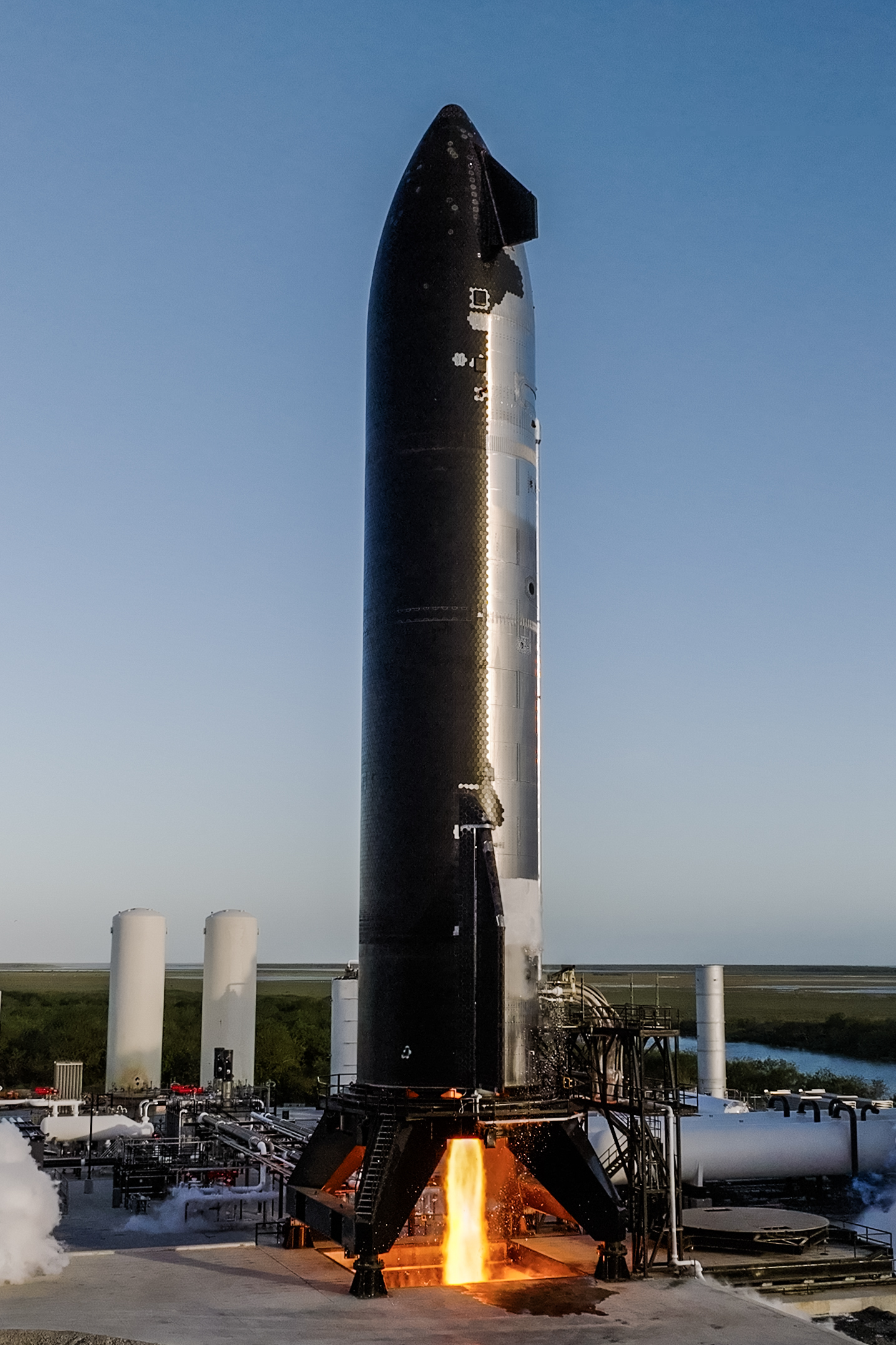
Hello, Space Explorers! 🌌
As we dream about interplanetary travel aboard SpaceX's Starship, one intriguing scenario captures the imagination: what if the forward flaps failed mid-descent? With the ambitious goal of carrying up to 100 metric tons of cargo to orbit, the stability of Starship during landing is paramount. Let's dive into how its advanced autonomous landing algorithms would handle such a critical situation! 🚀
Greetings, Tech Enthusiasts!
Starship uses a combination of aerodynamic surfaces, including its forward and aft flaps, to steer and stabilize during descent. These surfaces play a pivotal role in controlling pitch and roll. Under normal conditions, with the capability to adjust attitude within seconds, the system is designed to leverage these flaps for a smooth landing. However, any failure during descent poses an intriguing challenge—especially when you consider Starship's speed of over 7,500 km/h at atmospheric entry! 🌪️
What’s Up, Future Astronauts?
Here’s where SpaceX’s robust algorithm shines! The landing system is equipped with a sophisticated suite of sensors, including IMUs (Inertial Measurement Units) and LIDAR, providing real-time data on its orientation and stability. If a failure occurs, the system would instantly initiate a series of automated adjustments. With four powerful Raptor engines that can throttle up to 230 metric tons of thrust, Starship can compensate for the loss of control surfaces by actively redistributing thrust to maintain stability during the critical landing phase. This technology allows the spacecraft to adapt to unexpected challenges mid-descent. ⚙️🌟
Hey there, Rocket Science Buffs!
The software is designed to execute precise maneuvers by varying engine thrust levels independently. For instance, if one side begins to skew off-course due to a flap malfunction, the algorithm may choose to throttle down the opposite engine while ramping up thrust on the troubled side, generating corrective force to restore stability. This process is known as thrust vectoring, and it effectively uses the engines as control surfaces in the absence of traditional flaps.
In critical stages, especially below 1,500 meters, accurate calculations become even more critical as the vehicle approaches the landing pad. Calculating the descent trajectory on-the-fly allows Starship to make minor adjustments for a truly graceful landing! Think of it as a high-stakes ballet in the sky—very impressive! 💃
Hi there, Adventurous Souls!
Additionally, the successful integration of onboard machine learning means that Starship can continuously optimize its descent algorithms based on prior missions and real-time data collection. By analyzing past landings and integrating corrective actions, the system improves each time it flies, making future missions safer and more reliable. 🌍
In conclusion, while an unexpected flap failure during descent would undoubtedly be a tough challenge for Starship, the intelligent design of its autonomous landing systems ensures that it can adapt and respond effectively. With innovation at the core, missions to the Moon and Mars are getting closer every day!
Keep dreaming big, and let’s continue to look forward to the future of space exploration!
Image credit: SpaceX