What considerations are made for shockwave management when Starship reenters the Earth’s atmosphere at Mach 25?
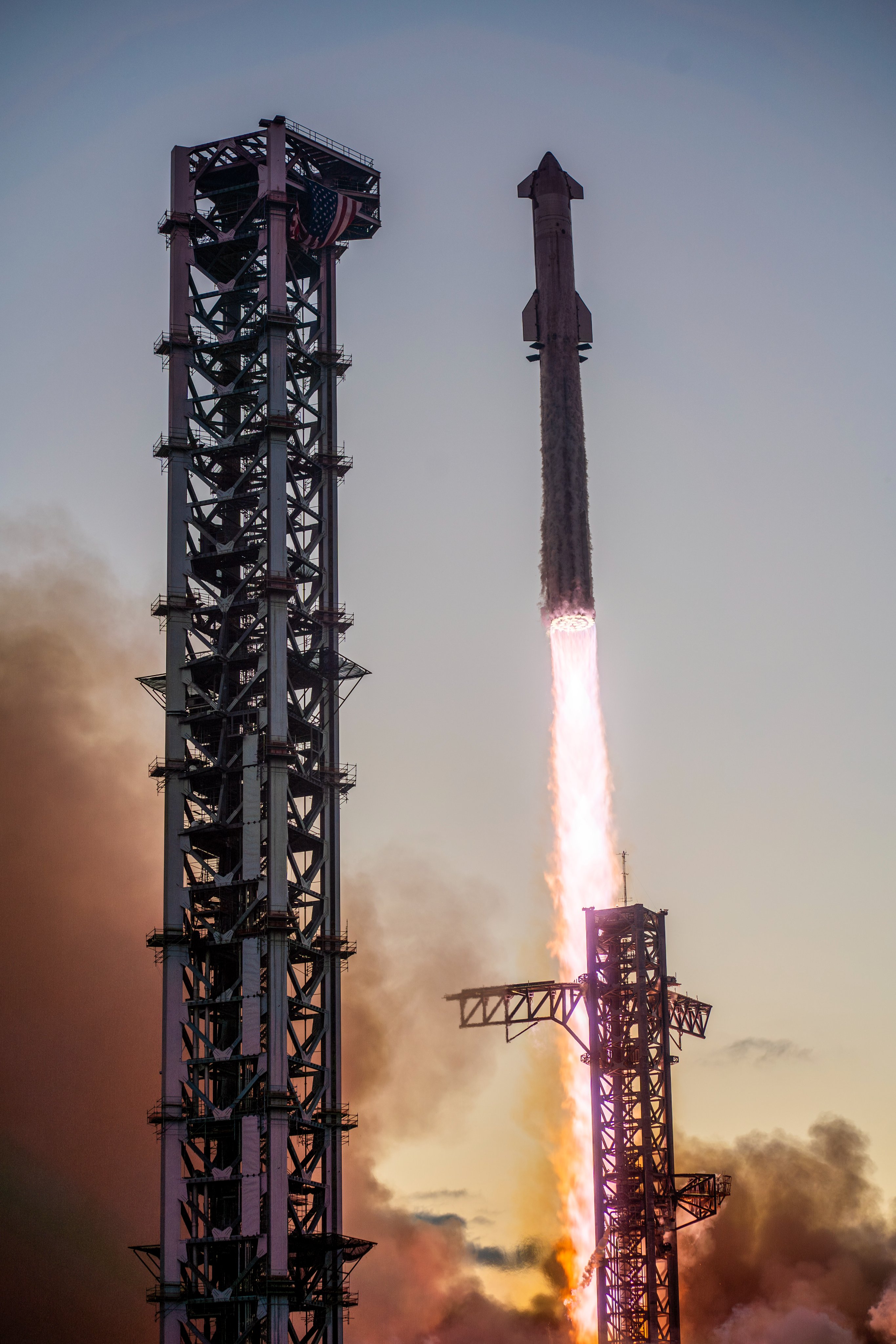
Hey there, space lovers! 🌌 Get ready to dive into the thrilling realm of spacecraft engineering, specifically focusing on SpaceX's Starship and the critical considerations for shockwave management as it reenters Earth's atmosphere at blistering speeds of up to Mach 25! That’s about 19,000 miles per hour (30,000 km/h)—fast enough to cover the distance from New York to San Francisco in under 15 minutes. Sounds wild, right? Let’s break it down! 🚀
When Starship reenters the atmosphere, it encounters intense conditions, including extreme heat and pressure. At Mach 25, the spacecraft produces a significant bow shockwave, which can lead to aerodynamic heating. To combat this, engineers focus on several crucial factors, starting with the spacecraft's thermal protection system (TPS). The TPS features heat-resistant tiles made from heat-resistant carbon-composite materials, designed to withstand temperatures exceeding 2,700 degrees Fahrenheit (1,482 degrees Celsius) during reentry. These tiles not only protect the craft but also help manage the shockwave effects by distributing heat and minimizing heat spikes. 🔥
In addition to the TPS, the shape and design of Starship itself play a pivotal role in shockwave management. Starship features a sleek, conical design that allows for smoother airflow around the vehicle, reducing the intensity of the shockwave and its effects on the structure. This design helps to mitigate the forces acting on the spacecraft during reentry, where the dynamic pressure can reach upward of 1800 Pascals (Pa)—about 25 times greater than the pressure at sea level! 🌪️
Another remarkable consideration is the use of active aerodynamic control surfaces. Starship is equipped with fins and canards that allow for fine-tuning of its trajectory during reentry. By adjusting the angle of these surfaces, engineers can manipulate the spacecraft’s orientation to optimize airflow and reduce shockwave intensity. This maneuverability is essential for maintaining stability during the high-speed descent, ensuring a controlled and safe reentry. 🎯
Moreover, SpaceX employs advanced simulation and modeling techniques to predict and analyze shockwave behavior during reentry. Using computational fluid dynamics (CFD), engineers can visualize how the shockwave forms and then interacts with the spacecraft. This data is invaluable for testing different design configurations and materials, ensuring that Starship can withstand the extreme conditions upon reentry. 📊
In summary, the considerations made for shockwave management during Starship's reentry at Mach 25 are complex yet fascinating. With advances in thermal protection, aerodynamic design, and real-time control systems, SpaceX is pushing the boundaries of what is possible in space travel. As we embark on this new era of exploration, every detail counts in ensuring the safety and success of missions beyond our planet. 🌍
Until next time, keep dreaming big and reaching for the stars! #SpaceX #Starship #ShockwaveManagement #AerospaceEngineering #NextGenSpaceTravel
Image credit: SpaceX