How does Thrust Vector Control (TVC) contribute to the Falcon 9's stability during launch?
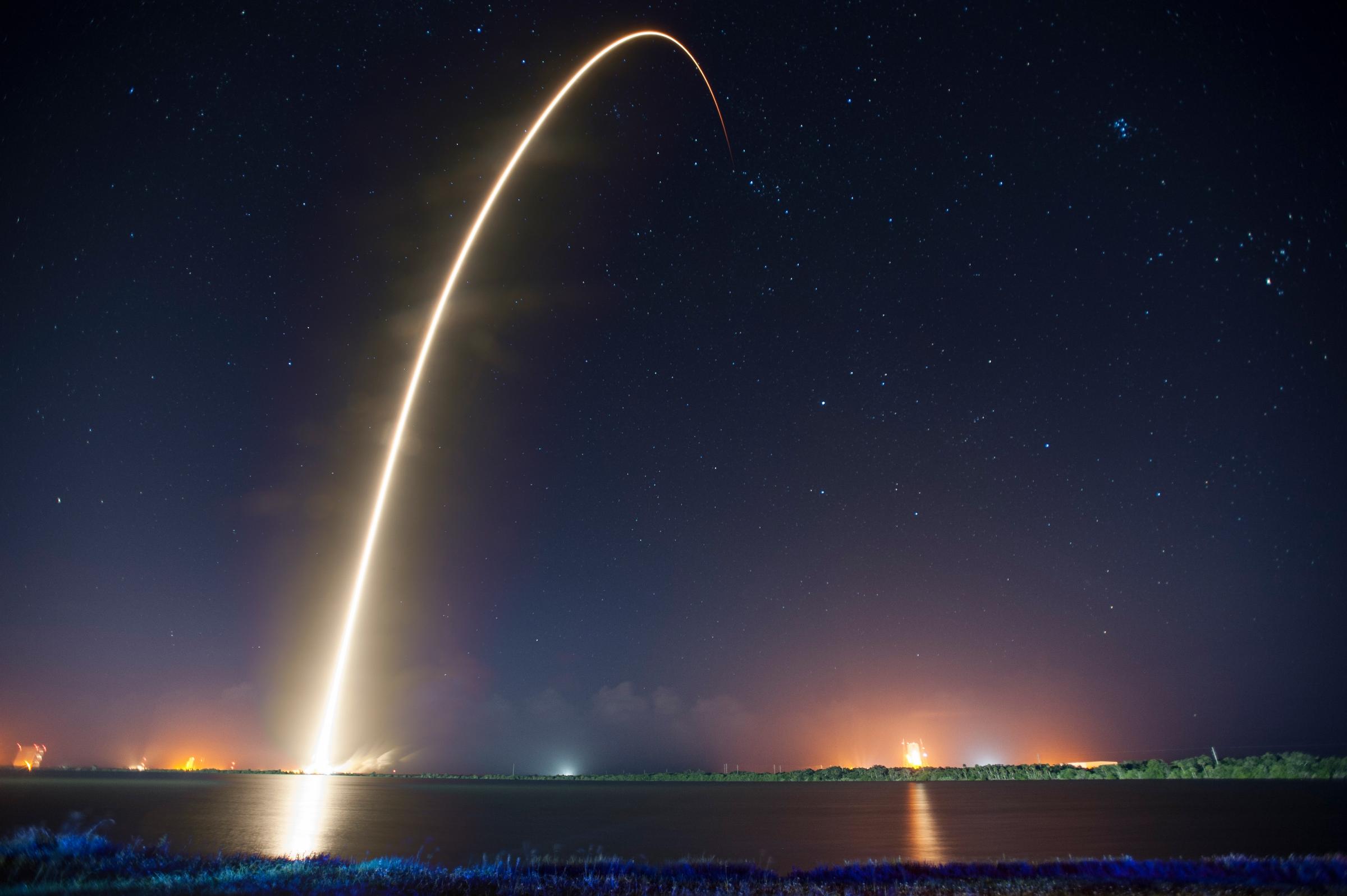
How Thrust Vector Control (TVC) Contributes to Falcon 9's Stability During Launch 🚀
Hey there, space aficionados! 🌌 Today we’re venturing into the fascinating world of rocket engineering, focusing on how Thrust Vector Control (TVC) systems enhance the stability of SpaceX’s Falcon 9 during its powerful ascent into the sky.
To set the stage, let’s think about what happens during a rocket launch. The Falcon 9, with its impressive two-stage design, generates over 1.7 million pounds of thrust from its nine Merlin engines during liftoff. That’s a staggering amount of force! But all that power requires precise control to ensure a stable flight path. This is where TVC comes into play. 🎯
TVC systems allow the rocket's engines to pivot (or vector) the direction in which the thrust is applied. Specifically, the Falcon 9 employs gimballed engines, where the nozzles can tilt to adjust the thrust direction. In fact, the Merlin engines can move approximately 5 degrees in any direction. This capability serves as an essential feedback mechanism to keep the rocket aligned with its intended trajectory, correcting any undesired spin or deviation caused by aerodynamic forces. 🌬️
Why is this crucial? As the Falcon 9 ascends, it encounters various forces, including atmospheric drag and thrust misalignments. Without the ability to control thrust direction, even a minor error could lead to catastrophic failures. The integrated TVC system allows the rocket to make real-time adjustments to maintain stability, which is particularly critical during the first few minutes of flight. During this phase, the Falcon 9 reaches speeds of nearly 2,600 mph while climbing through the atmosphere! 🚀💨
Moreover, TVC contributes to the rocket's ability to handle extreme conditions. Falcon 9 experiences rapid changes in aerodynamic stability as it ascends through different layers of the atmosphere. By adjusting the thrust vector, TVC helps mitigate the risk of structural failure due to these varying forces. It essentially acts as a balancing mechanism, guiding the rocket safely along its path while preventing any unwanted oscillations or rolling motions during flight.
After stage separation, TVC is not done. It continues to guide the second stage and ensures that payloads are delivered accurately into their orbits. The combination of TVC and the rocket’s onboard sensors provides a high level of accuracy. Did you know that Falcon 9 can achieve a targeted orbit with an accuracy of just a few hundred meters? Talk about precision engineering! 🎯🔧
In summary, Thrust Vector Control is an unsung hero in the engineering behind the Falcon 9. By allowing for real-time adjustments during launch, it ensures stability, safety, and accuracy as the rocket embarks on its journey to the stars. The synergy of technology and design is what makes space exploration possible! 🌟
Stay passionate about space, and always look up! #Falcon9 #RocketEngineering
image credit: SpaceX