How does the interplay between Falcon 9’s gimbal mechanism and inertial measurement units ensure accurate trajectory corrections?
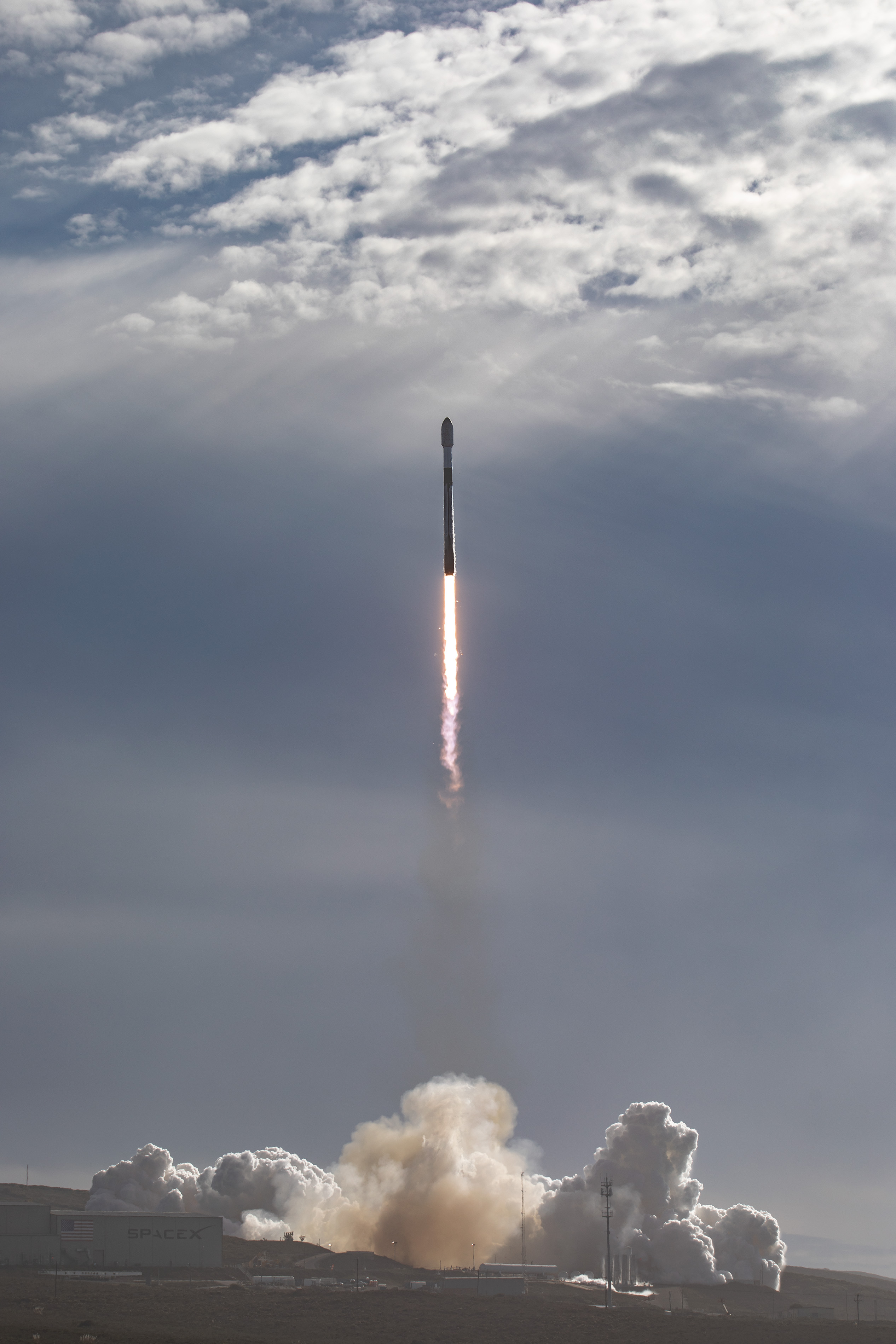
Hey there, space aficionados! 🌌 Today, let's explore the fascinating technology behind SpaceX's Falcon 9 rocket, particularly focusing on how its gimbal mechanism and inertial measurement units (IMUs) ensure accurate trajectory corrections. In the intricate dance of rocket science, precision is key! 🚀
Falcon 9’s flight relies on a series of highly sophisticated control systems to maintain its trajectory. At the heart of this system are its gimbal mechanisms, which allow the nine Merlin engines (each capable of producing around 190,000 pounds of thrust) to pivot and adjust their direction. When launch vehicle dynamics shift due to factors like wind or weight distribution changes, the gimbal system enables rapid real-time corrections, ensuring that the Falcon 9 remains on target. 🎯
Greetings, cosmic voyagers! 👩🚀 But that’s not all—this is where the inertial measurement units come into play. IMUs are an array of sensors that track the rocket’s orientation and movement. Typically consisting of accelerometers and gyroscopes, these units measure changes in speed and rotation. During Falcon 9’s ascent, the IMUs work tirelessly, continuously feeding real-time data about the vehicle’s state to the onboard computers. This data is then utilized to compute necessary adjustments and corrections to maintain the desired flight path. 📊
To put things into perspective, Falcon 9 operates at remarkably high speeds, reaching velocities over 28,000 kilometers per hour (approximately 17,500 miles per hour) when entering a low Earth orbit. With such rapid motion, even the slightest deviation can lead to significant inaccuracies, potentially jeopardizing the mission. That's why the interplay between the gimbal mechanism and IMUs is so critical—they must work in perfect harmony. ⚙️
Hello, space explorers! 🌠 When Falcon 9 experiences its flight phases, the coordination of these systems becomes even more vital. For instance, during stage separation, when the first stage detaches to return to Earth while the second stage continues its mission, the rocket's trajectory may shift dramatically. The gimbal mechanism reorients the engines to provide the necessary thrust vector control, while the IMUs continuously monitor the situation and relay data to adjust as needed—ensuring accurate trajectory corrections even during these dynamic moments.
Moreover, once Falcon 9 approaches its targeted orbit, it performs a series of burns to fine-tune its path. These adjustments rely heavily on the accuracy of both the gimbal mechanism and the IMUs. A slight angle adjustment can make a world of difference in achieving a successful deployment of payloads, whether it be satellites or crewed missions. In fact, Falcon 9 has historically demonstrated over a 97% success rate for its missions, a testament to the effectiveness of these systems! 🌍💫
In conclusion, the interplay between Falcon 9’s gimbal mechanism and inertial measurement units exemplifies the complex yet harmonious technology that propels our dreams of space exploration. With remarkable precision and real-time data processing, these systems work tirelessly to ensure that each launch is a success. As we continue to explore the final frontier, it’s clear that innovation remains at the core of every mission. ✨
Image credit: SpaceX