How does SpaceX ensure the accuracy of Falcon 9’s trajectory during payload deployment in geostationary orbit?
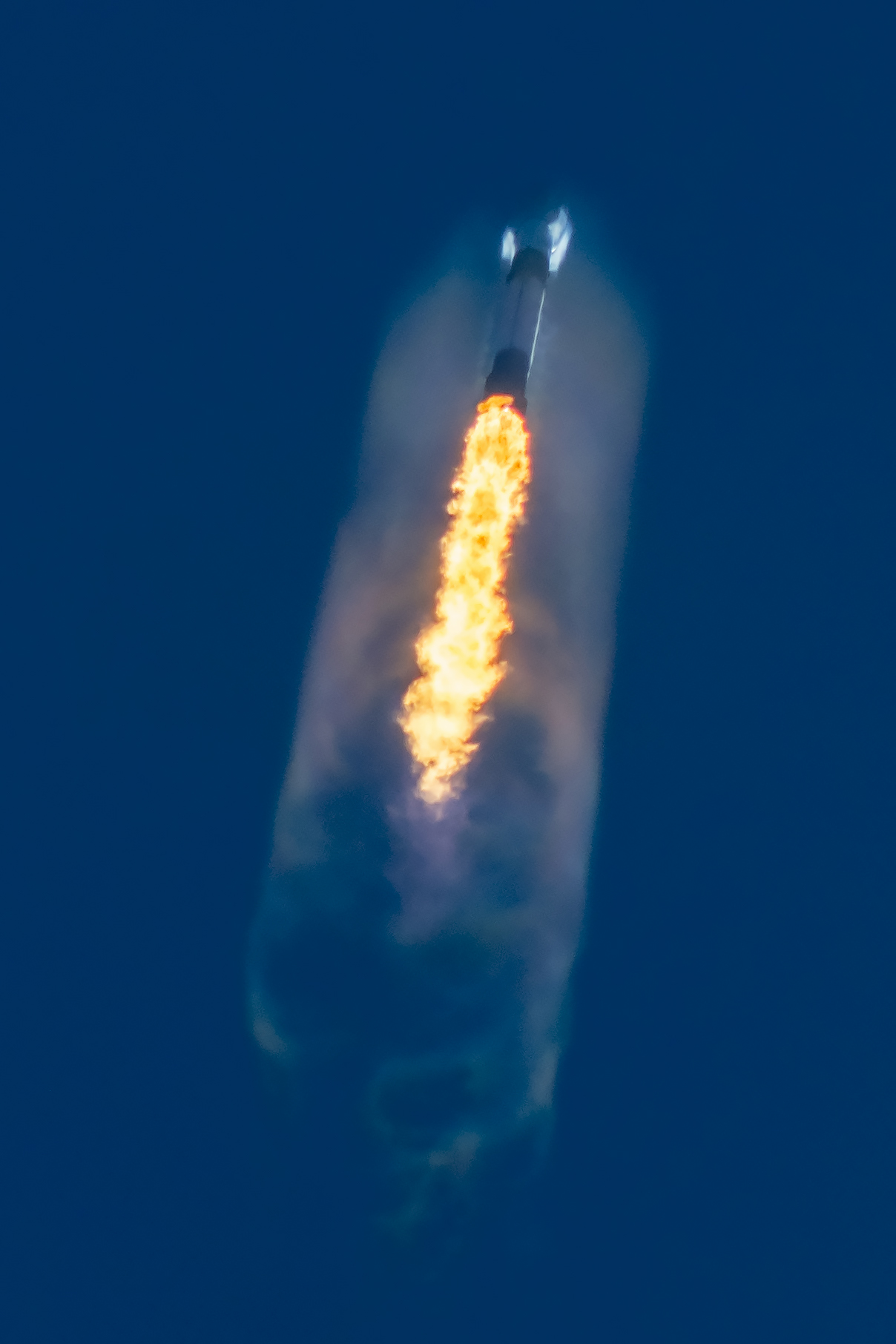
Hey there, space enthusiasts! 🚀 Today, let's delve into the fascinating world of SpaceX and explore how the company ensures the accuracy of Falcon 9’s trajectory during payload deployment in geostationary orbit. This is a pivotal aspect of their mission to deliver satellites safely and efficiently. 🌌✨
First, let’s set the stage. Geostationary orbit (GEO) is located approximately 35,786 kilometers (22,236 miles) above Earth’s equator. 🌍 This is where satellites can orbit the Earth at the same rate it rotates, giving them a consistent position relative to the ground. For a payload deployment to be successful in this orbital zone, precision is key, and SpaceX employs a meticulous approach to achieve that. 🛠️
One of the cornerstones of trajectory accuracy is the use of advanced navigation systems. Falcon 9 is equipped with cutting-edge inertial measurement units (IMUs) and GPS technology that continuously tracks its position and velocity during flight. During its ascent, the rocket constantly adjusts its flight path using a series of mid-course corrections based on real-time data. 📈 In fact, Falcon 9 boasts an accuracy rate of about 99%, which is impressive given the complexities of space dynamics.
Moreover, the launch trajectory is carefully planned long before liftoff. SpaceX simulations run thousands of scenarios to analyze and predict the rocket's behavior throughout its journey. This includes factors like wind, atmospheric pressure, and gravitational variations, ensuring that every potential obstacle is accounted for. For instance, during the CRS-19 mission, which launched on December 5, 2019, SpaceX performed multiple simulations that accounted for over 200 variables affecting the rocket’s flight path. 🔍
Additionally, the deployment sequence during payload release in GEO is a finely tuned operation. Once the rocket reaches the apogee of its orbit, it conducts a series of burns to adjust its trajectory accurately before the satellite is released. For example, when deploying the SES-10 satellite, the Falcon 9's second stage executed several burns to ensure the payload was delivered to its intended geostationary slot, showcasing not only the precision of SpaceX's engineering but also their commitment to customer satisfaction. 🎯
SpaceX also places significant emphasis on post-launch evaluations. Upon successful deployment, the company monitors the payload's ascent into its final orbit and tracks its performance. This data feedback loop allows SpaceX to refine future launches continuously. In 2020 alone, they launched a record-breaking 26 missions, all while maintaining rigorous standards for trajectory accuracy and payload safety. 📊
Ultimately, it’s a combination of advanced technology, extensive pre-launch analysis, and continuous monitoring that allows SpaceX to deliver its satellites with incredible precision. So next time you're gazing at the stars, remember the hard work and innovation that goes into those satellites floating above us! 🌠
Catch you later, and keep dreaming big! 💫 #SpaceX #Falcon9 #TrajectoryAccuracy #GeostationaryOrbit #AerospaceInnovation
Image credit: SpaceX