How does SpaceX design the guidance systems for Falcon 9 to ensure precise orbital insertion?
How Does SpaceX Design the Guidance Systems for Falcon 9 to Ensure Precise Orbital Insertion? 🚀
Greetings, fellow space enthusiasts! 🌌 Have you ever gazed up at the stars and wondered how rockets like SpaceX's Falcon 9 manage to achieve such precise orbital insertions? The magic lies in their meticulously designed guidance systems. Let's dive into the intricacies of just how SpaceX accomplishes such incredible feats of engineering!
First off, did you know that Falcon 9 is primarily powered by nine Merlin engines, which generate a whopping 1.7 million pounds of thrust? 💨 This power allows the rocket to accelerate at over 5 G’s, propelling it through the Earth’s atmosphere and into space. However, raw power is only part of the equation; the guidance system is what ensures that all that thrust is channeled correctly for precise orbital insertion.
At the heart of this system lies the inertial navigation system (INS). The Falcon 9 is equipped with multiple gyroscopes and accelerometers that provide real-time data on its position and velocity. 🛰️ This allows the spacecraft to calculate its trajectory and make necessary adjustments. Interestingly, SpaceX uses a high-performance computer known as the Falcon Flight Computer, capable of processing 100 control loops per second to maintain its path!
To further enhance accuracy, the Falcon 9 utilizes GPS data. Satellites orbiting the Earth provide crucial location information, ensuring that the rocket can maintain its course with pinpoint precision. 🔍 In fact, the accuracy of Falcon 9’s orbital insertions is often within a margin of only a few kilometers from the targeted orbit! This level of precision is vital for missions involving satellite deployments where even minor errors could lead to catastrophic failures.
One major innovation of the guidance system is the use of real-time updates. SpaceX's team continuously monitors flight data and can update software during the mission. In many cases, updates enhance reliability and efficiency, giving SpaceX a significant edge in the ever-changing conditions of space travel. 📈 They even perform simulations with debuggers like MATLAB before launch to predict how alterations may affect the rocket's trajectory, optimizing every aspect of the journey.
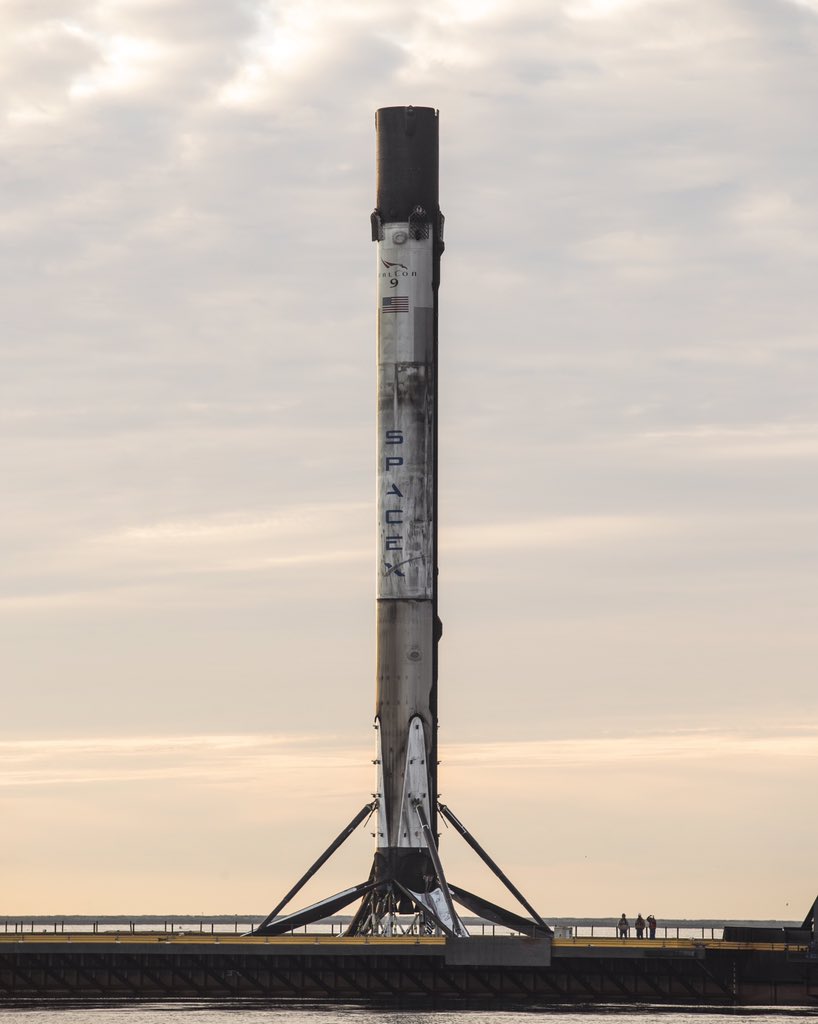
The autonomous landing capabilities of the Falcon 9’s first stage are another testament to its sophisticated guidance system. Through a combination of GPS data, onboard sensors, and advanced algorithms, the rocket can make a controlled descent back to Earth. This is a game changer, saving SpaceX millions of dollars in refurbishment costs for each launch.💰 They’ve achieved this successfully over 180 times as of October 2023!
There you have it! The combination of powerful engines, a high-tech inertial navigation system, real-time updates, and autonomous landing technology makes Falcon 9 a marvel of modern engineering. SpaceX has truly redefined what's possible in space travel, and we are merely on the brink of what’s to come. 🌠
Keep looking up, dreamers! Until next time!
#SpaceX #Falcon9 #RocketScience #Precision #GuidanceSystems
image credit: SpaceX