How does SpaceX design its launch pads to handle the heat and vibration from Falcon Heavy’s liftoff?
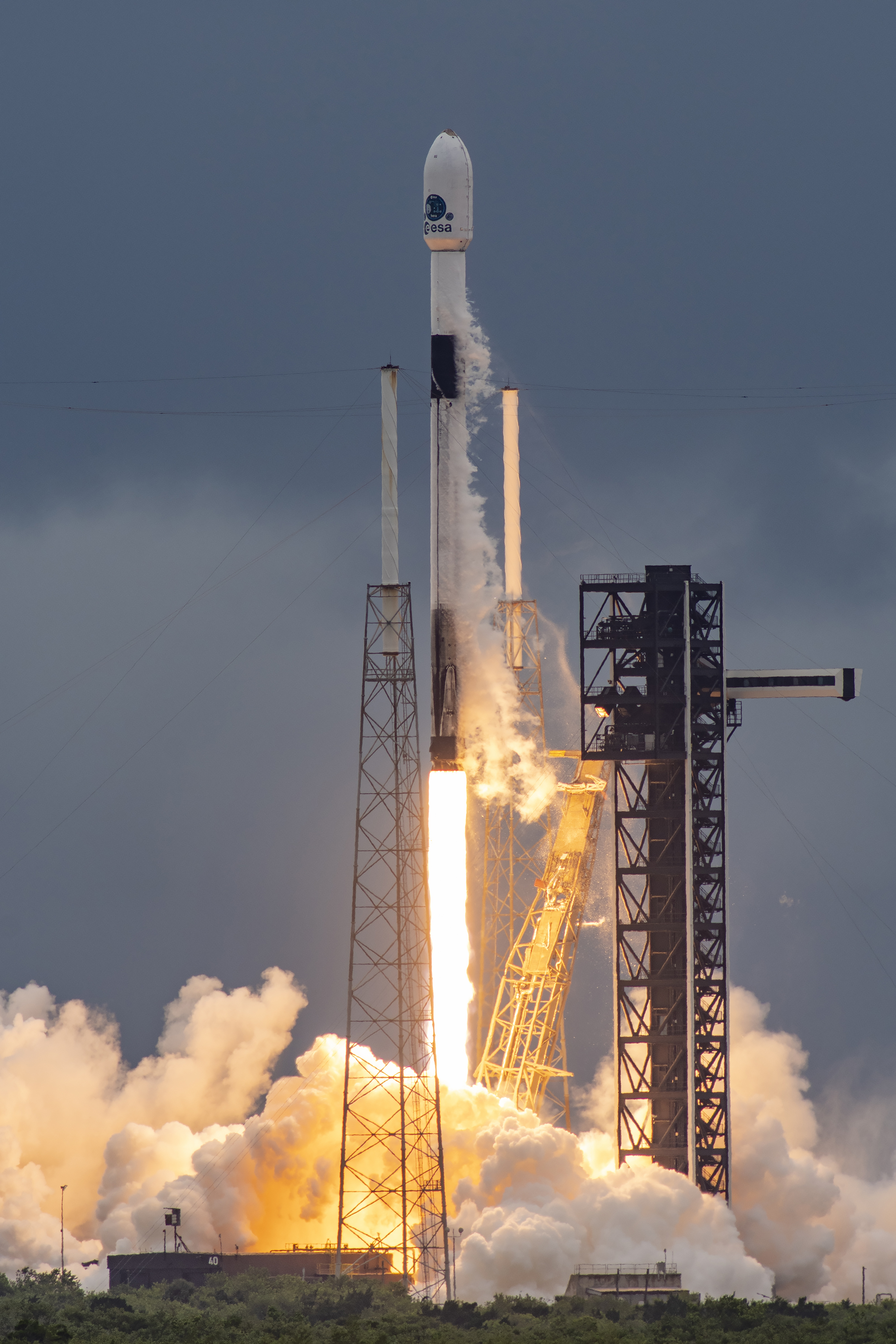
Withstanding the Fury: How SpaceX Designs Its Launch Pads for Falcon Heavy’s Liftoff ⚡️🚀
Greetings, space enthusiasts! Today, we're going to take a closer look at the incredible engineering feats involved in designing launch pads capable of handling the intense forces generated by Falcon Heavy's liftoff. This behemoth of a rocket, with 27 Merlin engines firing simultaneously, produces an awe-inspiring 5 million pounds of thrust. So, how do SpaceX's launch pads stand up to this monumental force? Let's dig in! 🚧
Hello, fellow rocket fans! When it comes to withstanding the heat, SpaceX's launch pads are designed with a combination of materials and technologies. At Cape Canaveral Space Force Station, the Falcon Heavy launch pad, LC-39A, features a reinforced concrete pad with a thickness of around 8 feet (2.4 meters). This robust foundation provides excellent thermal insulation and supports the massive weight of the rocket during liftoff. Additionally, a network of cooling systems keeps the pad surface at around 90°C (194°F) during launch, significantly reducing the risk of thermal shock. ❄️
Hi, curious minds! In terms of vibration management, SpaceX employs advanced seismic isolation systems. These sophisticated systems are designed to dampen the intense ground vibrations generated by the rocket's engines, preventing damage to both the pad and the rocket itself. The LC-39A launch pad features a state-of-the-art seismic isolation system, comprising a series of hydraulic bearings that effectively reduce vibrations by as much as 60 decibels! 🔄
Greetings, engineering enthusiasts! Another crucial aspect of launch pad design is the management of blast and acoustic loads. Falcon Heavy's liftoff produces sonic booms that can reach levels of up to 180 decibels, equivalent to the sound of a Saturn V rocket. To mitigate this, SpaceX incorporates blast deflection systems and acoustic shielding. These measures ensure that the pad, as well as nearby structures, are protected from the extreme forces generated during launch. 🌊
Hello again, space pioneers! As we mentioned earlier, the Falcon Heavy launch pad, LC-39A, at Cape Canaveral is designed to handle the immense forces generated by a single launch. With each rocket standing at 70 meters (230 feet) tall and weighing over 1.5 million kilograms (3.3 million pounds), the pad must support not only the rocket's weight but also the force of its engines firing simultaneously. This is a truly herculean task! 💪
Lastly, greetings, space enthusiasts! SpaceX has successfully demonstrated the reliability and performance of its launch pad design through numerous Falcon Heavy launches. With a 100% success rate for the Falcon Heavy program, as of October 2023, these launch pads have proven their worth in withstanding the fury of Falcon Heavy's liftoff. 🌟
In summary, greetings, fellow enthusiasts! The design of SpaceX's launch pads for Falcon Heavy is an impressive feat of engineering, requiring cutting-edge materials and advanced technologies to withstand the intense forces generated during liftoff. As we continue to push the boundaries of space exploration, it's crucial to appreciate the innovations that make these incredible achievements possible! 🚀
#SpaceX #FalconHeavy #LaunchPads #RocketEngineering
image credit: SpaceX