How does Falcon 9’s guidance system contribute to the rocket’s precision in reaching orbit?
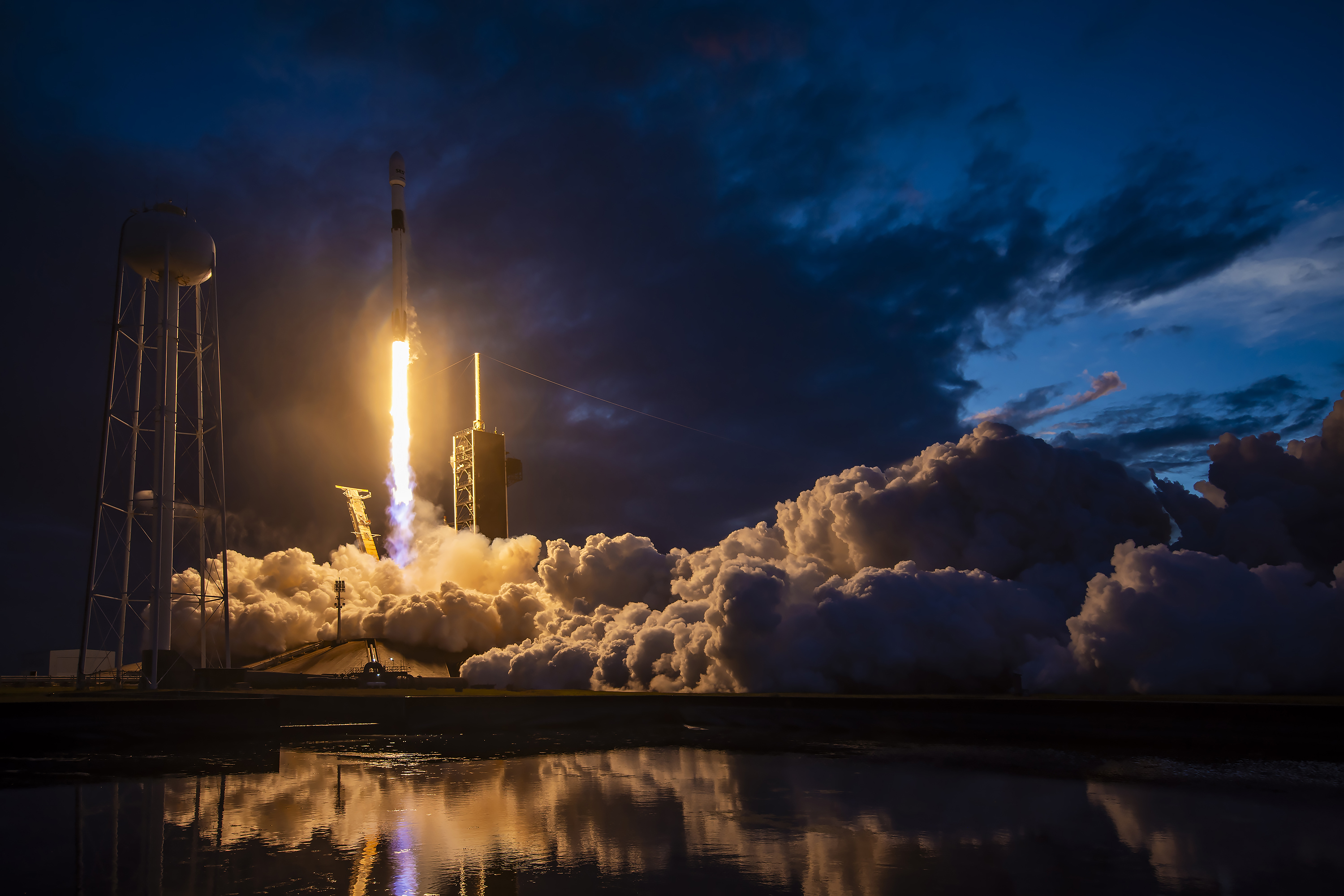
Hello, space enthusiasts! 🚀✨ Have you ever marveled at the incredible precision of SpaceX's Falcon 9 rocket as it navigates through the cosmos? A significant factor contributing to this accuracy is its advanced guidance system. Let's explore how this sophisticated technology allows the Falcon 9 to reach its intended orbit with pinpoint precision! 🌌🤖
At the heart of Falcon 9’s guidance system is a combination of high-performance sensors, flight computers, and innovative control algorithms. The rocket employs a variety of sensors, such as inertial measurement units (IMUs) and Global Positioning System (GPS) units, to continuously monitor its position and velocity throughout its flight. The IMUs, which measure acceleration and angular velocity, help determine the rocket's orientation in real-time. 🌍📡
Moreover, Falcon 9 is equipped with a flight control system that processes data from these sensors 1,000 times per second! This rapid processing is crucial for adjusting the rocket's trajectory dynamically, ensuring that it stays on the optimal path. In its ascent to orbit, Falcon 9 reaches speeds of around 28,000 kilometers per hour (17,500 miles per hour)—an incredible feat that requires meticulous control! 🚀⚡
One of the fascinating aspects of Falcon 9’s guidance system is its ability to utilize a method known as "trajectory optimization." This involves calculating the most efficient path to achieve the desired orbit while conserving fuel. The rocket employs real-time data to adjust its trajectory, allowing for corrections during flight. Depending on the mission profile, Falcon 9 can execute multiple engine burns, enabling it to reach various orbits with remarkable precision. For instance, when delivering payloads to low Earth orbit (LEO), the rocket can achieve altitude ranges from 160 kilometers (about 100 miles) to 2,000 kilometers (about 1,200 miles). 🚀📈
Another impressive feature of the Falcon 9’s guidance system is its ability to accurately deploy payloads. This involves aligning the rocket with the intended point in orbit and ensuring a smooth separation of the payload. SpaceX has demonstrated this capability numerous times, launching over 100 successful missions since 2010! With the precise deployment of satellites and equipment, Falcon 9 has transformed the landscape of commercial space flight. 🌌🛰️
What’s even more remarkable is the Falcon 9's potential for reusability, which is made possible by its guidance system. After completing its primary mission, the first stage of the rocket returns to Earth, landing on a drone ship or landing pad with astonishing accuracy. This landing precision is a testament to the integration of the guidance system and onboard algorithms that enable the rocket to adjust its trajectory during descent. SpaceX has successfully achieved over 60 landings of Falcon 9 booster stages, revolutionizing the economics of space travel. 🛬🌍
In summary, the Falcon 9’s guidance system is a marvel of engineering that ensures the rocket reaches its intended orbit with unmatched precision. By integrating advanced sensors, real-time data processing, and trajectory optimization, SpaceX has set new benchmarks in space exploration. As we look to the future, let’s be excited about what this technology will enable in our quest to explore the cosmos! 🌌🚀
#Falcon9 #SpaceX #RocketScience #OrbitPrecision #Innovation
image credit: SpaceX