Could the Starship's methane fuel be sourced entirely from ISRU systems on Mars, and how much production would be needed for a single return trip?
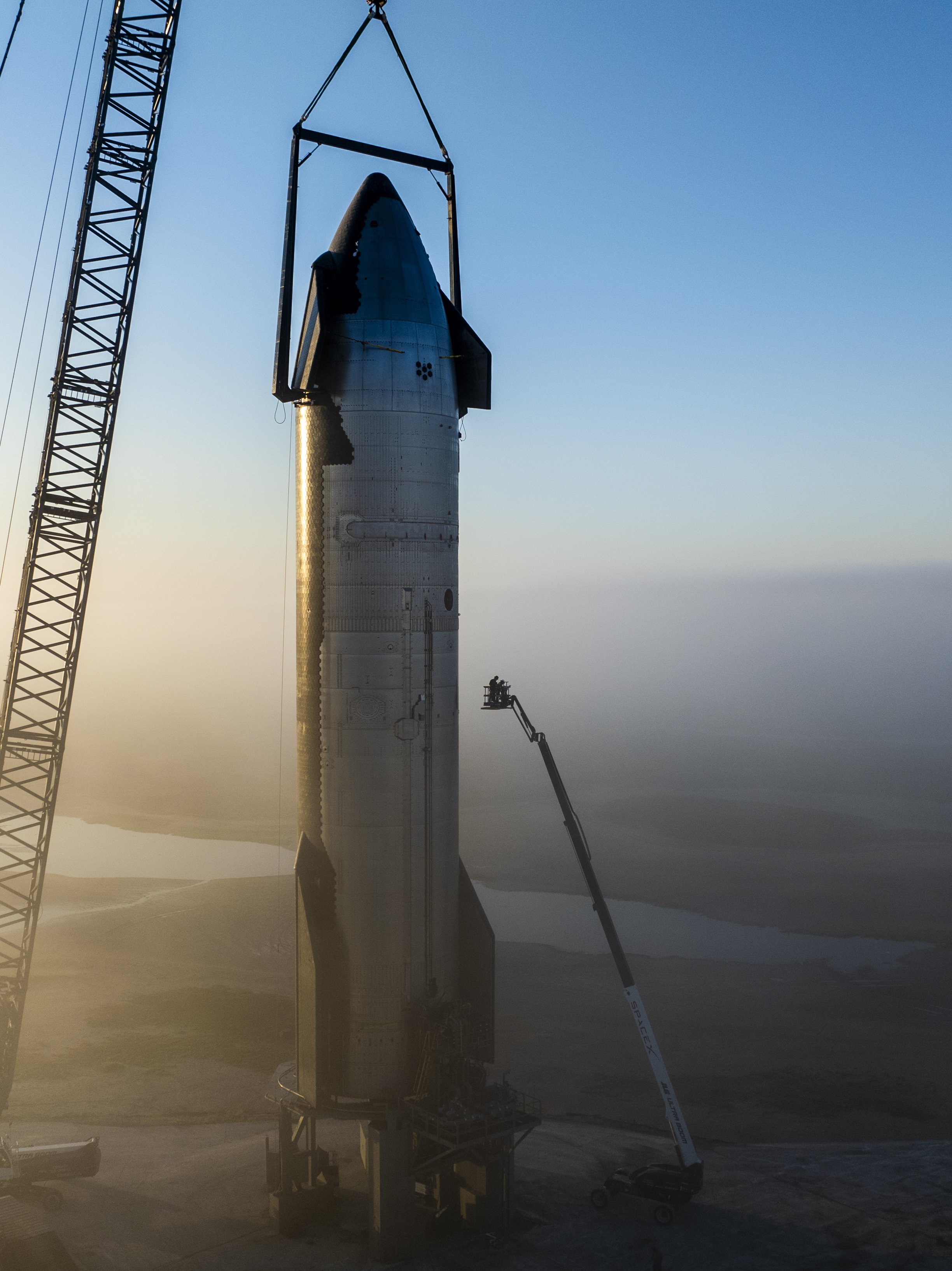
Greetings, space travelers! 🚀 Today, let’s dive into an intriguing aspect of SpaceX's ambitious plans for Mars: Can the methane fuel for the Starship be sourced entirely from In-Situ Resource Utilization (ISRU) systems on Mars? And just how much of this precious fuel would be needed for a round trip to our red neighbor? Buckle up as we explore the potential of Martian resources! 🌌
First things first! SpaceX aims to utilize a method known as the Sabatier process, an ingenious technique that combines carbon dioxide (found abundantly in the Martian atmosphere) with hydrogen to create methane (CH₄) and water (H₂O). Mars' atmosphere is roughly 95% carbon dioxide, making it fertile ground for extracting raw materials for fuel production. And the best part? The only hydrogen needed can be brought along from Earth or potentially extracted from Martian water ice. This could set the stage for sustainable fuel production on Mars itself. 🌡️
Now, let’s crunch some numbers regarding what a single return trip would require. According to estimates, a fully loaded Starship that transports around 100 passengers and cargo would need about 1,200 tons of propellant for its return launch to Earth's orbit. To break this down further, approximately 850 tons would be methane fuel, while the rest is comprised of liquid oxygen (LOX).
To produce that 850 tons of methane on Mars, we need to consider the efficiency of the Sabatier process, which typically runs at around 80% efficiency under optimal conditions. Thus, to generate 850 tons of methane, we would need to process roughly 1,062 tons of carbon dioxide. Given that the production rate could be about 4.5 metric tons of methane per day using a properly scaled Sabatier reactor, it would take about 189 days of continuous operation to produce enough methane for one return trip! 🔄
Additionally, during the Martian day, or sol, the average temperature hovers around -80 degrees Fahrenheit (-62 degrees Celsius), posing challenges for any equipment used in fuel production. Therefore, ensuring that these ISRU systems are robust enough to operate under Martian conditions would be vital. Furthermore, it’s essential to store the produced methane efficiently, as the conditions can significantly shift with the planet's seasonality.
But, the prospect of producing methane directly from Martian resources is game-changing! Not only does it reduce the need to launch heavy fuel loads from Earth, but it also paves the way for a sustainable presence on Mars—turning the Red Planet into a stepping stone for deeper space exploration. The ability to create fuel on-site fundamentally alters our approach to space travel and could enable colonization efforts much sooner than we imagined! 🌍✨
In conclusion, while producing methane fuel on Mars for a return trip is feasible, it requires substantial time, technology, and effort. Nevertheless, the dream of interplanetary travel is edging closer to reality!
Until next time, keep dreaming of the stars! 🌠
#SpaceX #Mars #ISRU #MethaneFuel #SabatierProcess
image credit: SpaceX