The Invisible Pilot: How Falcon 9's GNC System Guides a Flawless Journey
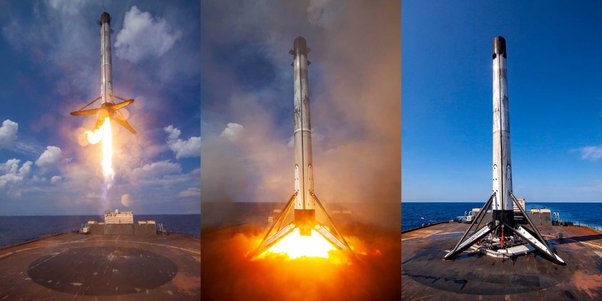
How does Falcon 9's Guidance, Navigation, and Control (GNC) System contribute to the overall precision of the rocket during launch and reentry?
Imagine a colossal metal beast hurtling towards the cosmos, defying gravity's pull with a fiery roar. Or picture its fiery reentry, hurtling back to Earth with pinpoint accuracy, aiming for a tiny platform amidst the vast ocean. Both these awe-inspiring feats are orchestrated by an unseen hand, a silent conductor in the grand symphony of spaceflight: the Falcon 9's Guidance, Navigation, and Control (GNC) system.
The Mastermind Behind the Machine
The GNC system acts as the brain and nervous system of the Falcon 9, constantly monitoring its position, velocity, and orientation. It's the invisible pilot, making split-second decisions and issuing precise commands to keep the rocket on its intended course throughout its treacherous journey. Its responsibilities are vast and crucial:
- Launch Ascent: During liftoff, the GNC system steers the rocket through the dense atmosphere, ensuring it maintains the optimal trajectory for maximum thrust and fuel efficiency. It meticulously controls the gimbaling of the nine Merlin engines, directing their fiery exhaust to achieve the perfect climb angle.
- Space Maneuvers: Once in space, the GNC system guides the rocket through its designated orbital path, performing precise maneuvers to deploy satellites or rendezvous with the International Space Station. It utilizes star trackers and gyroscopes for celestial navigation, ensuring pinpoint accuracy in the vast emptiness of space.
- Reentry and Landing: The fiery descent back to Earth is perhaps the GNC system's greatest test. It navigates the scorching plasma sheath, utilizing the grid fins as celestial rudders to steer the rocket through the turbulent atmosphere. By precisely controlling the center engine re-ignition, it slows the descent to a delicate touchdown, whether on the designated landing zone or the Autonomous Spaceport Drone Ship (ASDS).
A Symphony of Sensors and Software
To achieve this remarkable precision, the GNC system relies on a sophisticated orchestra of sensors and software:
- Inertial Measurement Units (IMUs): These gyroscopes and accelerometers constantly measure the rocket's orientation and acceleration, providing real-time data on its position and movement.
- Star Trackers: These sensors lock onto celestial bodies, providing absolute reference points for navigation in the vast emptiness of space.
- GPS (Global Positioning System): In the lower atmosphere, GPS provides additional positioning data, ensuring a smooth transition to the final landing phase.
- Flight Computers: These powerful brains process the sensor data in real-time, employing complex algorithms to calculate the optimal trajectory and issue commands to the rocket's engines and control surfaces.
Beyond the Hardware: The Power of Software
Advertisement
The true magic of the GNC system lies in its software, a marvel of engineering that anticipates and reacts to changing conditions. This software:
- Models the environment: It factors in air density, wind speeds, and gravitational variations to predict the rocket's behavior with remarkable accuracy.
- Makes real-time adjustments: The software constantly monitors the incoming sensor data and adapts the flight path in real-time, compensating for any unforeseen disturbances.
- Learns and improves: Every flight generates valuable data, which is used to continuously refine the GNC software, enhancing its performance and paving the way for even more ambitious missions.
The Fruits of Precision: A New Era of Spaceflight
The remarkable precision of the Falcon 9's GNC system has revolutionized spaceflight. By enabling the reusability of rockets, it has dramatically reduced launch costs, opening doors for more frequent and affordable space missions. From launching satellites to sending humans to Mars, the future of space exploration looks brighter thanks to this invisible conductor, silently guiding the way towards the stars.