Starship: A Master of Adaptation - How its Design Takes on Diverse Missions
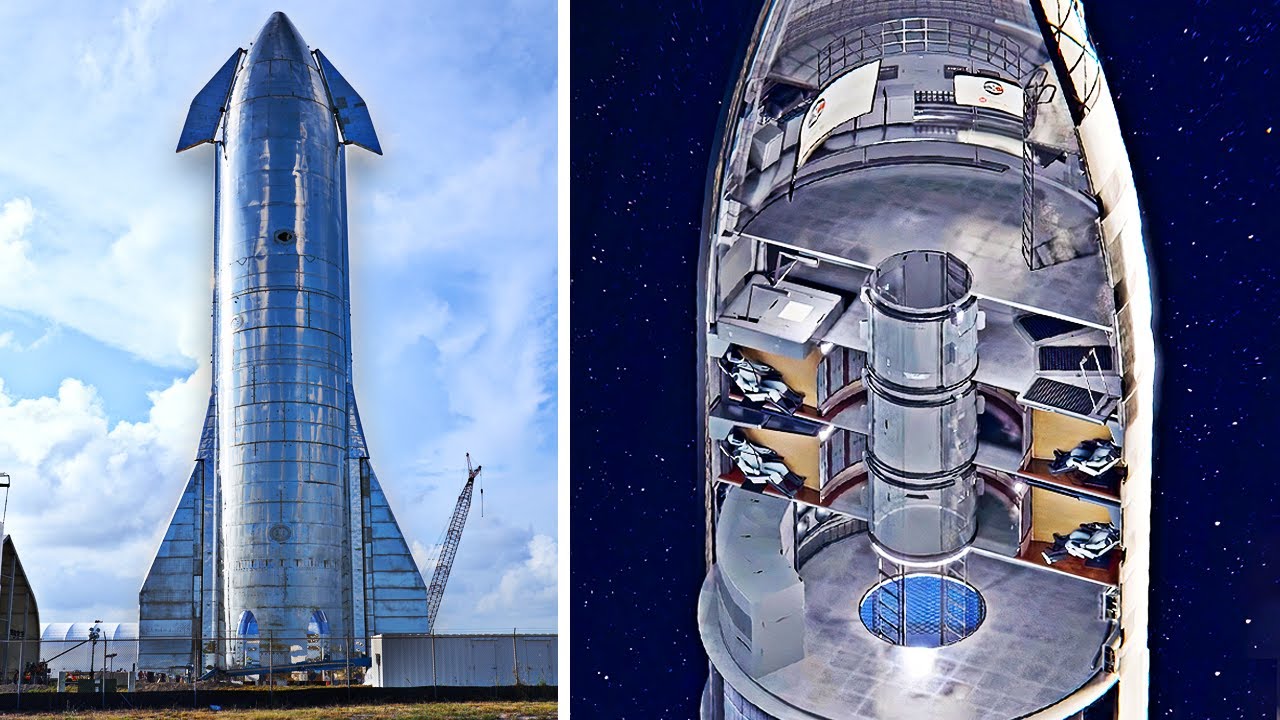
How does the structural design of the Starship spacecraft support its role in various mission profiles, such as satellite deployment or crewed missions?
SpaceX's Starship, a behemoth of stainless steel and ambition, isn't just a pretty face. Its sleek, seemingly simple design hides a remarkable level of versatility, allowing it to tackle a vast array of missions, from satellite deployment to crewed voyages to Mars and beyond. But how exactly does its structure support these diverse roles? Let's dive in!
Advertisement
Strength in Simplicity:
Starship's cylindrical body and pointed nose minimize drag during atmospheric entry, while its large fuel capacity fuels its ambitious journeys. The robust stainless steel construction can withstand the punishing heat of re-entry and the harshness of space, making it a reliable workhorse.

A Modular Approach:
The key to Starship's adaptability lies in its modular design. The payload bay, a spacious cavern at its core, can be customized to accommodate a variety of cargo and crew configurations. Imagine it as a giant Lego set for space missions!
Advertisement
Satellite Deployment:
For satellite deployments, the payload bay can be outfitted with special dispensers. These gently release satellites into space, ensuring they reach their desired orbits without a hitch. With its reusable nature, Starship can become a cost-effective and efficient satellite delivery service.
Crewed Missions:
For crewed missions, the payload bay transforms into a comfortable living space. It can house cabins, laboratories, and even greenhouses, providing astronauts with everything they need for extended stays in space. Starship's maneuverability allows for precise docking with space stations and other spacecraft, making it a versatile transport for future space exploration.
Advertisement
Beyond Earth:
But Starship's ambitions stretch far beyond Earth's orbit. Its powerful engines and spacious interior make it a prime candidate for Mars colonization. Imagine a fleet of Starships carrying settlers, supplies, and even robots to establish a new home on the Red Planet.
The Future is Adaptable:
The true beauty of Starship's design lies in its ability to evolve. As new technologies emerge and mission requirements change, its modularity allows for adaptation and upgrades. This adaptability ensures that Starship remains at the forefront of space exploration for years to come.
Advertisement
Conclusion:
Starship's structural design is a testament to human ingenuity. It's a master of adaptation, capable of tackling a wide range of missions with efficiency and style. From deploying satellites to ferrying astronauts to Mars, Starship is poised to rewrite the future of space travel. So, the next time you see this gleaming behemoth, remember, it's not just a spaceship, it's a versatile platform for humanity's next giant leap into the cosmos.