SpaceX Barge Turnaround Time: The Key to Reusability
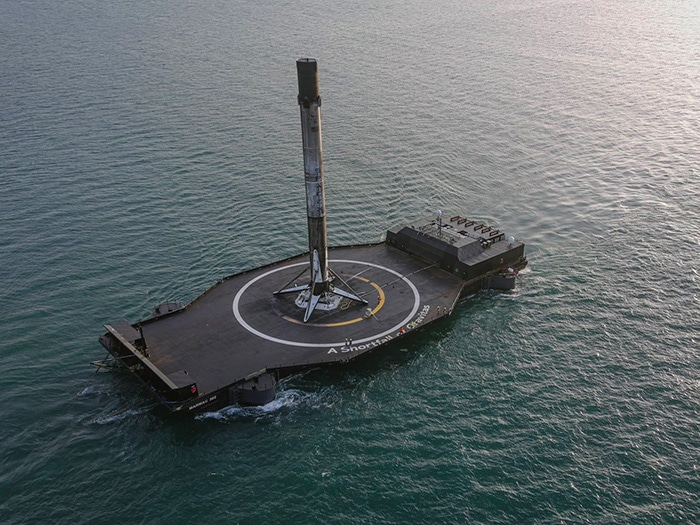
SpaceX, the aerospace manufacturer and space transportation company founded by Elon Musk, has been making headlines for its ambitious goals in reducing the cost of space travel and making it more sustainable. One of the key strategies in achieving this goal is reusability, and at the heart of this reusability is the turnaround time of SpaceX's autonomous spaceport drone ships, often referred to simply as "barges." These barges play a critical role in the company's mission to revolutionize space travel and open up new frontiers for humanity.
Advertisement
The Importance of Reusability
Before delving into the specifics of SpaceX's barge turnaround time, it's essential to understand why reusability is such a crucial aspect of space exploration. Historically, space missions have been prohibitively expensive, primarily due to the one-time use of expensive rocket components. A single-use rocket would be discarded into the ocean after a mission, resulting in billions of dollars of wasted resources with each launch.
SpaceX recognized this problem early on and set out to change the paradigm. The company's vision is to build rockets and spacecraft that can be used multiple times, dramatically reducing the cost of space travel. By reusing rocket components, SpaceX aims to make space accessible not only for governments and large corporations but also for commercial ventures, scientific research, and even space tourism.
The Role of Autonomous Spaceport Drone Ships
To achieve reusability, SpaceX has developed a fleet of autonomous spaceport drone ships equipped with the necessary technology and infrastructure to recover and refurbish rocket boosters. These drone ships are stationed in various locations, primarily in the Atlantic and Pacific Oceans, to support a wide range of missions, including cargo resupply missions to the International Space Station (ISS) and satellite launches.
Advertisement
The core function of these drone ships is to catch the rocket's first stage after it has completed its primary task of propelling the payload into space. Instead of allowing the first stage to fall into the ocean and become non-recoverable, SpaceX has designed its rockets to perform a series of controlled burns and maneuvers that guide them back to Earth, where they can land on these drone ships.
The Key Metrics: Turnaround Time
The speed at which SpaceX can recover, refurbish, and relaunch rocket components is crucial to the company's success in achieving reusability. This metric, known as "turnaround time," represents the time it takes to prepare a rocket for its next mission after it has completed its previous one.
Reducing turnaround time is challenging and requires significant advancements in technology and engineering. SpaceX has made remarkable progress in this regard. As of my last knowledge update in September 2021, the company had achieved turnaround times of just a few weeks for some of its Falcon 9 rockets.
A shorter turnaround time offers several key advantages:
Cost Reduction:
The faster a rocket can be prepared for its next mission, the lower the overall cost of the launch. This cost reduction is critical for both SpaceX and its customers, as it makes space access more affordable and competitive.
Increased Frequency:
Shorter turnaround times enable SpaceX to conduct more launches in a given timeframe. This increased launch frequency is essential for deploying satellite constellations, servicing the ISS, and meeting contractual obligations with various clients.
Rapid Response:
In situations where rapid access to space is required, such as deploying emergency satellites or responding to unforeseen events, a short turnaround time allows SpaceX to provide swift and flexible solutions.
Sustainability:
Reusing rocket components instead of discarding them reduces space debris and environmental impact. It aligns with SpaceX's long-term goal of making space travel more sustainable.
Ongoing Improvements
SpaceX continues to invest in research and development to further reduce turnaround times and improve the reliability of its reusable rockets. Innovations in materials, manufacturing processes, and automation are at the forefront of these efforts. Additionally, the experience gained from numerous successful rocket recoveries and relaunches has provided valuable insights into optimizing the refurbishment process.
As of my last knowledge update, SpaceX had successfully reused Falcon 9 rockets multiple times, demonstrating the feasibility of reusability. The company's ambitious Starship program, designed for missions to Mars and beyond, also incorporates reusability as a core principle.
Advertisement
Conclusion
SpaceX's focus on reducing the turnaround time of its autonomous spaceport drone ships is a testament to its commitment to reusability in space exploration. This commitment has the potential to revolutionize the space industry by making access to space more affordable, frequent, and sustainable. As SpaceX continues to push the boundaries of technology and innovation, the future of space travel looks brighter than ever, thanks to shorter turnaround times and the promise of reusability.