How SpaceX's Starship Will Take Us to Mars
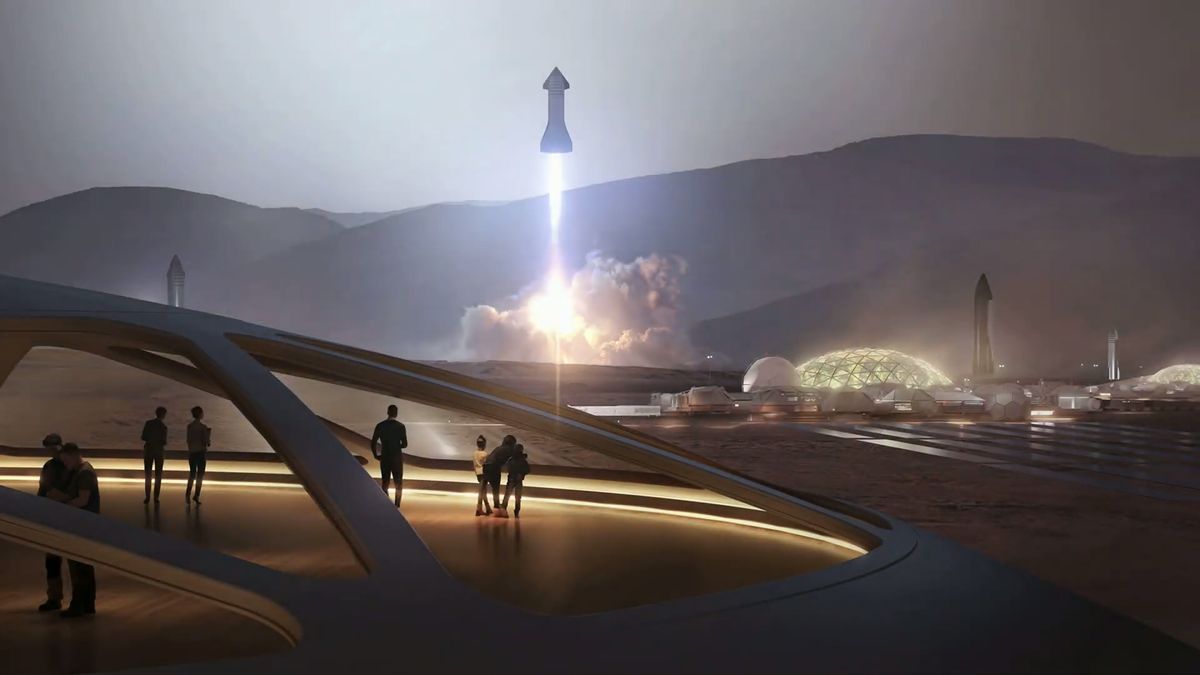
SpaceX is developing Starship, a fully reusable two-stage-to-orbit rocket system that is designed to transport humans and cargo to Mars. Starship is still under development, but SpaceX has already made significant progress. The company has successfully test-flown prototypes of both the Super Heavy booster and the Starship spacecraft.
Advertisement
How Starship Works
Starship consists of two stages:
- The first stage, called Super Heavy, is a massive rocket booster that will be powered by 33 Raptor engines. It will be responsible for lifting Starship into orbit.
- The second stage, called Starship, is a reusable spacecraft that will be powered by 6 Raptor engines. It will be capable of carrying both crew and cargo to Mars.
To reach Mars, Starship will first be launched into orbit around Earth. Then, it will be refueled by a fleet of tanker Starships. Once it is fully refueled, it will travel to Mars. The journey to Mars will take about 6 months. Once Starship arrives at Mars, it will land on the surface and deploy its payload.
Advertisement
The Benefits of Starship
Starship has several advantages over other rockets that have been used to send missions to Mars. First, it is fully reusable, which means that it can be launched multiple times without having to be rebuilt. This will significantly reduce the cost of sending missions to Mars.
Second, Starship is much larger than other rockets, which means that it can carry more cargo to Mars. This is important because it will allow SpaceX to send the resources that are needed to build a permanent human presence on Mars.
Third, Starship is designed to be able to land on both Earth and Mars. This means that it can be used to transport people and cargo between the two planets.
The Challenges of Starship
There are still some challenges that need to be addressed before Starship can be used to send missions to Mars. One challenge is that the rocket has not yet been fully tested. SpaceX has only conducted a few test flights of Starship prototypes, and it is not yet clear if the rocket is capable of surviving the journey to Mars.
Advertisement
Another challenge is that Starship needs to be refueled in orbit before it can travel to Mars. This is a complex operation that has never been done before. SpaceX will need to develop a reliable way to refuel Starship in orbit before it can be used for missions to Mars.
The Future of Starship
Despite the challenges, SpaceX is confident that Starship will be ready to send missions to Mars in the 2030s. The company has already received funding from NASA to develop Starship, and it is working closely with the agency to ensure that the rocket is capable of meeting the needs of future Mars missions.
If Starship is successful, it could revolutionize the way we explore space. It could make it possible to send humans and cargo to Mars on a regular basis, and it could help us to build a permanent human presence on the Red Planet.
Conclusion
SpaceX's Starship is a promising new rocket system that has the potential to revolutionize the way we explore space. The rocket is still under development, but it has already made significant progress. If Starship is successful, it could make it possible to send humans and cargo to Mars on a regular basis, and it could help us to build a permanent human presence on the Red Planet.
Q: How does Starship work?
A: Starship consists of two stages:
- The first stage, called Super Heavy, is a massive rocket booster that will be powered by 33 Raptor engines. It will be responsible for lifting Starship into orbit.
- The second stage, called Starship, is a reusable spacecraft that will be powered by 6 Raptor engines. It will be capable of carrying both crew and cargo to Mars.
To reach Mars, Starship will first be launched into orbit around Earth. Then, it will be refueled by a fleet of tanker Starships. Once it is fully refueled, it will travel to Mars. The journey to Mars will take about 6 months. Once Starship arrives at Mars, it will land on the surface and deploy its payload.
Q: What are the benefits of Starship?
A: Starship has several advantages over other rockets that have been used to send missions to Mars. First, it is fully reusable, which means that it can be launched multiple times without having to be rebuilt. This will significantly reduce the cost of sending missions to Mars.
Second, Starship is much larger than other rockets, which means that it can carry more cargo to Mars. This is important because it will allow SpaceX to send the resources that are needed to build a permanent human presence on Mars.
Third, Starship is designed to be able to land on both Earth and Mars. This means that it can be used to transport people and cargo between the two planets.
Q: What are the challenges of Starship?
A: There are still some challenges that need to be addressed before Starship can be used to send missions to Mars. One challenge is that the rocket has not yet been fully tested. SpaceX has only conducted a few test flights of Starship prototypes, and it is not yet clear if the rocket is capable of surviving the journey to Mars.
Another challenge is that Starship needs to be refueled in orbit before it can travel to Mars. This is a complex operation that has never been done before. SpaceX will need to develop a reliable way to refuel Starship in orbit before it can be used for missions to Mars.
Q: When will Starship be ready to send missions to Mars?
A: SpaceX is confident that Starship will be ready to send missions to Mars in the 2030s. The company has already received funding from NASA to develop Starship, and it is working closely with the agency to ensure that the rocket is capable of meeting the needs of future Mars missions.
Q: What are the chances of Starship being successful?
A: The chances of Starship being successful are good. SpaceX has a proven track record of success in developing and launching rockets. The company has also received significant funding from NASA, which will help to ensure that Starship is developed and tested properly.
However, there are still some risks associated with Starship. The rocket has not yet been fully tested, and there is no guarantee that it will be able to survive the journey to Mars. Additionally, the refueling operation in orbit is a complex challenge that has never been done before.
Overall, the chances of Starship being successful are good. However, there are still some risks that need to be addressed before the rocket can be used to send missions to Mars.