Driving a rover through a lunar-like landscape made me feel like an astronaut from Apollo (video)
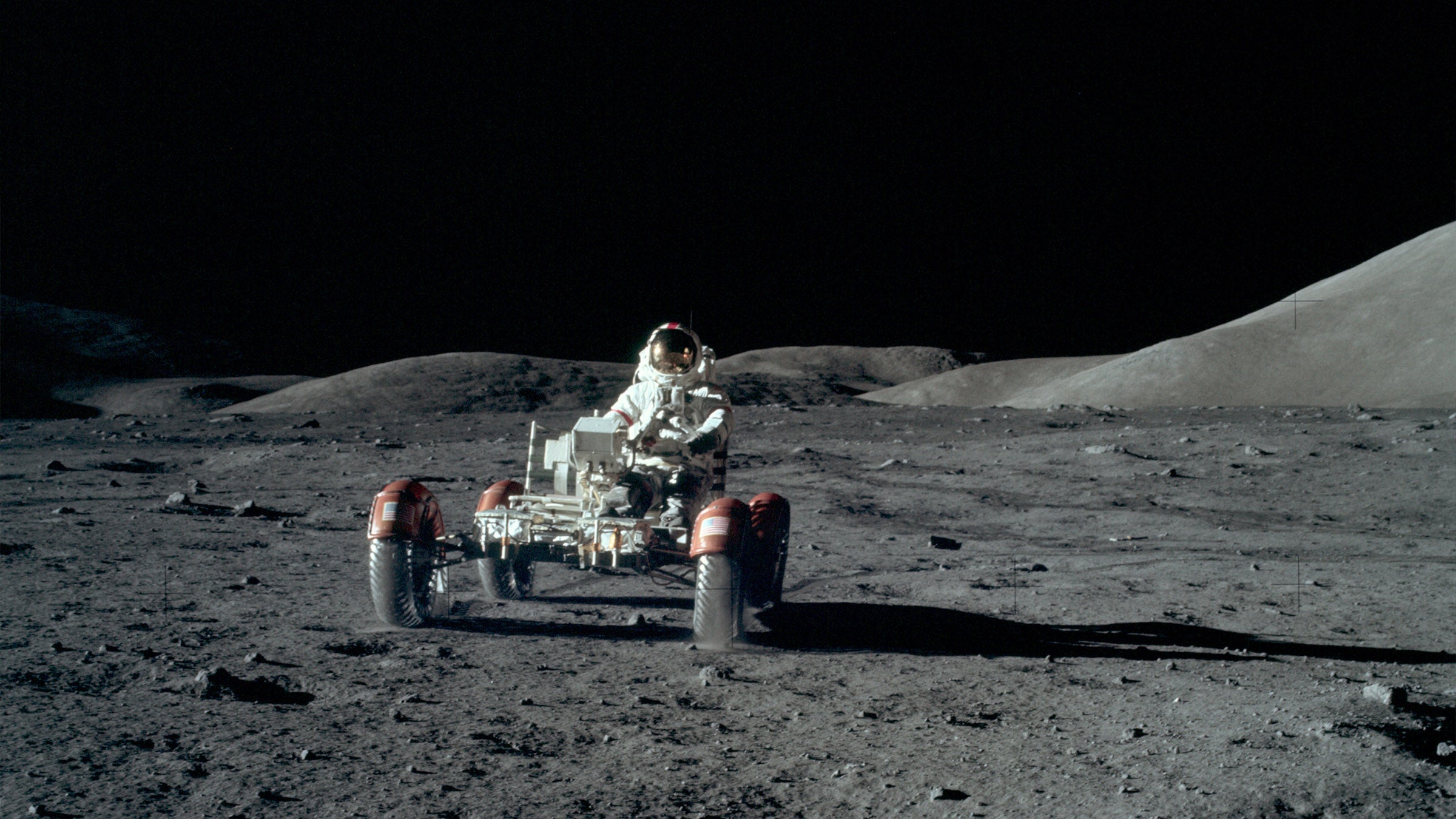
I found a portal to the moon behind an office door and was ready to explore a simulation of a moon landscape. There is 4,000 square feet of sand surrounding the prototype and a single lamp high on the wall. When I turn away from the light and see my figure projected far into the distance, I am transported to the images and video of the 1960s and 1970s taken by the Apollo astronauts.
Advertisement
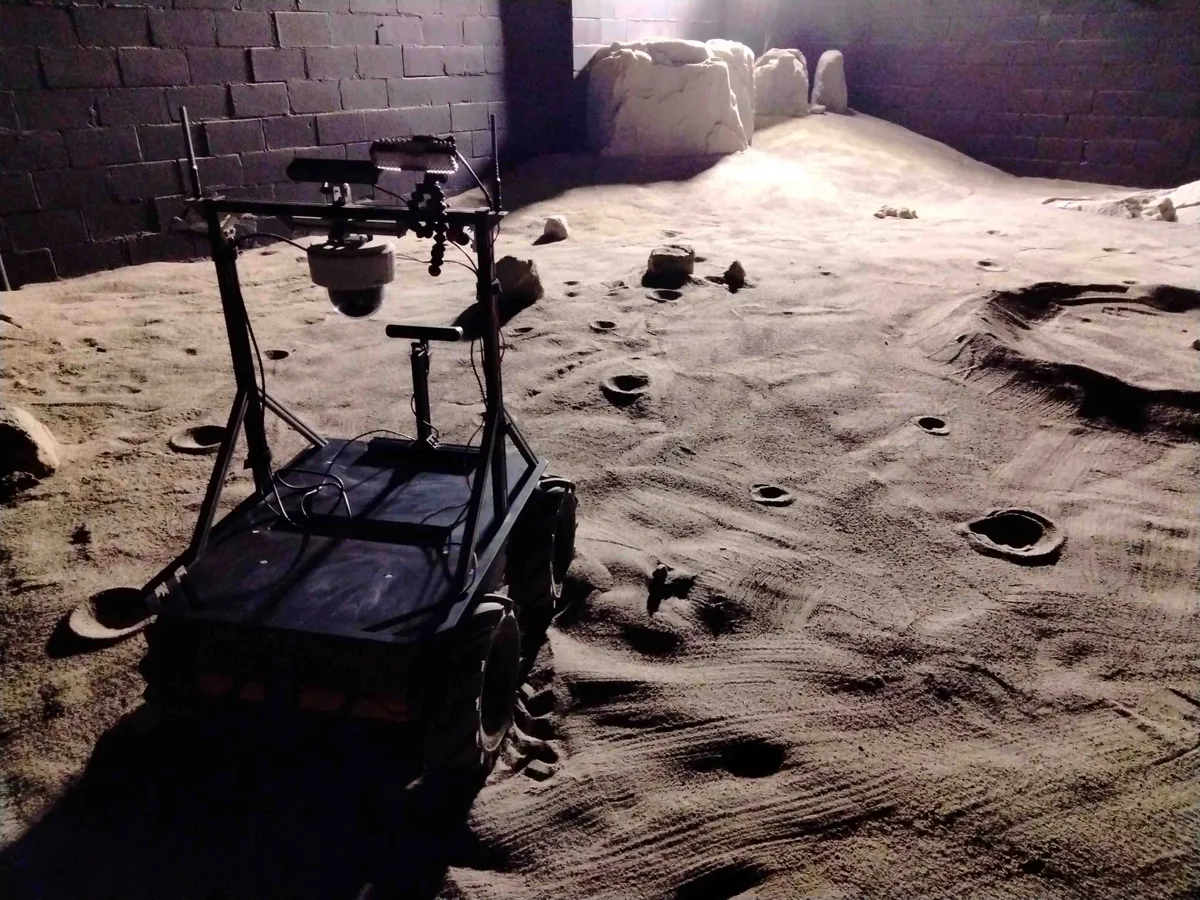
The design of the facility included having a single and bright light source to provide one shadow, just like moon explorers see. Deslauriers said that cameras aboard Max were tested for the Rashid mission and that Mission Control trained the models for machine learning. Clearpath Robotics' chair-sized "Husky" rovers fit the bill, Deslauriers said; the rover nicknames "Max" and "Ruby" came from a popular Canadian animated children's show. As part of Mission Control's mandate to do outreach, novices like me have been allowed to drive these rovers.
Advertisement
Advertisement
"When we did this lab, it was a conscious effort to get bulletproof, reliable rovers, and Clearpath has been awesome," Deslauriers said. Mission Control is a small company that prepares software systems for lunar exploration. The pockmarked "craters" and "simulation moon regolith" are formed with sand raked into place between lunar rover excursions. The shadows were similar to what the Apollo astronauts saw in the 1960s and 1970s, thanks to a single lamp high on the wall.
Advertisement
The lighting needs to be adjusted for the software systems. To make it look like the moon, the walls and ceilings are painted black, and two truckloads of sand are brought in. Landscape rocks, garden boulders and lunar rover "Max" complete the look. Testing rovers, software and other bits of moon technology in such facilities prepares everything for lunar exploration.
Small missions to the moon are taking off and are expected to increase as NASA ferries Artemis program astronauts to the surface. Mission Control's lunar focus isn't accidental. NASA has contracts with companies to send small rovers, landers and other things to the moon. That's because the agency wants to bring private infrastructure to support the multinational NASA-led Artemis missions, which could land astronauts near the lunar south pole as soon as 2025.
Advertisement
The country is betting big on lunar exploration, working with the company MDA to develop a new robotic Canadarm3 to maintain NASA's Gateway lunar space station. The Canadian Space Agency's Canadarm3 is the country's major contribution to the space program. A Canadian will fly on the Artemis 2 mission. In a conference room, I eagerly take the wheel of Max.
The "hazard" feature of the software brings a yellow and red sheen to obstacles that are difficult to see in the gray landscape. I moved the mouse forward to get Max moving. A shift to the left or right allows me to explore the landscape quickly. With black-painted walls and sand under the wheels, the drive feels like the real thing.
Advertisement
There is no two-second time delay for my movements, as there would be during the remote driving of an actual moon rover. Rocks are easy to avoid. I quickly fall into zen, experiencing my own form of "slow TV" as Max drives in circles on my behalf (creating tracks that will need to be raked away later; I tell the rep assisting me to thank those employees after I leave.) I remember the moment when I stepped into Mission Control's lunar portal for the first time. I haven't experienced a lot of quiet in my life, but the scene filled me with a sense of peace I haven't experienced in a long time.
People's imaginations are captured. It's easier for visitors to remember us when we have visitors. I will remember my lunar experience, not just the guys with the computers and the desks. I felt connections with the Apollo astronauts of the past, as well as those who will touch the moon in the future.
Advertisement