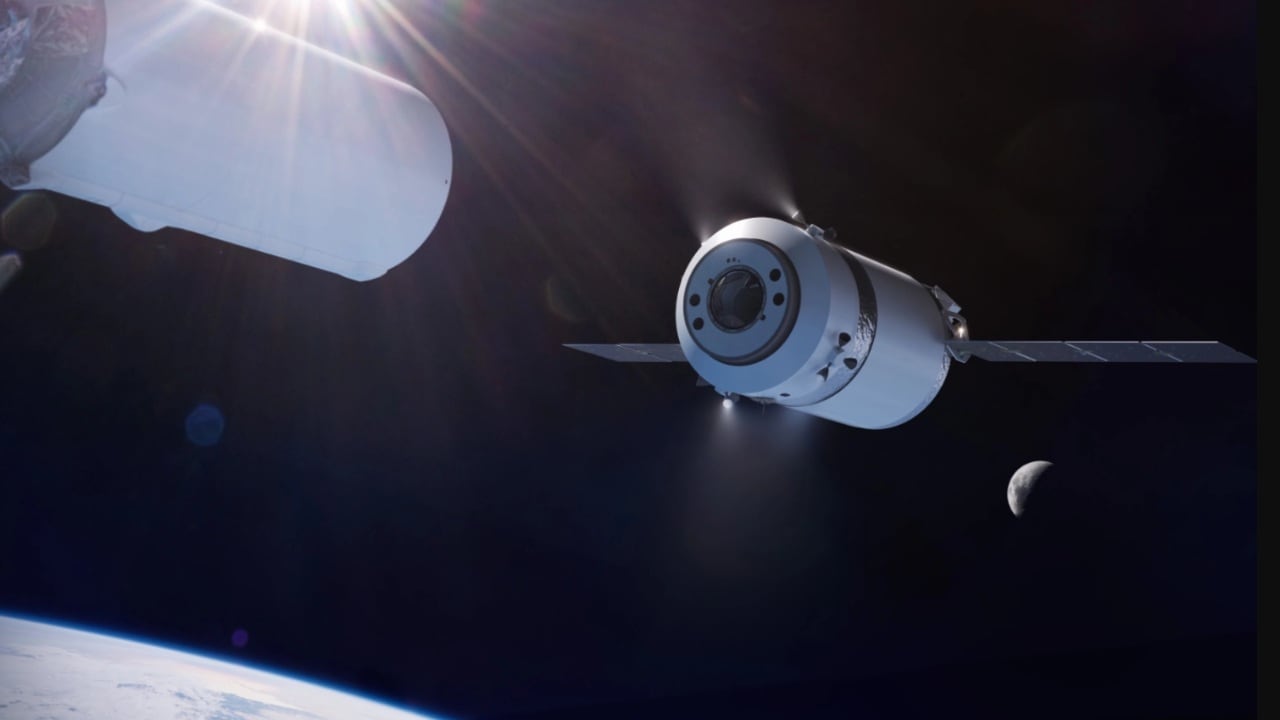
NASA has asked SpaceX to make a decision on the future of the Dragon XL lunar freight mission.
Key Highlights
- NASA appears to have implicitly asked SpaceX to assess the fate of its "Dragon XL" lunar cargo spaceship in a new Request for Information (RFI) that was quietly released on April Fools' Day.
- NASA appears to be particularly interested in the possible benefits of cheaper and more capable deep space cargo transport services than Dragon XL.
- Dragon XL would be propelled by non-cryogenic propellant and is expected to stay at the Gateway for at least six to twelve months at a time.
- The RFI might potentially end in a whimper if SpaceX simply informs NASA that it is willing to proceed with Dragon XL in its current configuration.
- NASA plans to host an industry day on April 20th to further explain the RFI's objectives.
Advertisement

NASA appears to have implicitly asked SpaceX to assess the fate of its "Dragon XL" lunar cargo spaceship in a new Request for Information (RFI) that was quietly released on April Fools' Day.
NASA stated in March 2020 that it had chosen SpaceX to carry the majority of the pressurised and unpressurized cargo required to man and operate the proposed "Gateway" lunar space station for the first several years of its operation. SpaceX would accomplish this by developing a highly modified single-use version of its Dragon 2 spacecraft with increased propellant storage, increased cargo capacity, and a variety of other design improvements.
The spacecraft, dubbed Dragon XL, would weigh approximately 15 to 16 tonnes (33,000–35,000 kg) at launch and would almost certainly require a fully or partially expendable Falcon Heavy launch for each lunar mission. NASA made a reasonable and prudent decision at the time, relying on existing investments and knowledge with SpaceX and Dragon while imposing no significant technical obstacles.However, NASA has yet to begin work on the contract more than two years later.
That is why the new RFI issued on April 1st is so exciting. NASA begins by referring to fine text in the original 2018 Gateway Logistics Services (GLS) Request for Bids (RFP) that authorises the agency to continue receiving and considering new proposals from new and existing suppliers for the program's anticipated 17-year duration.
According to the government, its key goals are to gather "knowledge and plan ahead," to solicit comments, to stimulate competition, and to "[consider] whether to perform an on-ramp in 2022." NASA does not define what that phrase implies, but in light of the remainder of the text, it appears that the agency intends to utilise this RFI to assist in determining whether or not to eventually "on-ramp" its existing Dragon XL contract with SpaceX.
However, the document becomes significantly more intriguing and revealing as it progresses. Later in the survey, NASA clarifies exactly what it wants respondents to discuss. The agency consistently implies a willingness to significantly expand the scope of GLS in a series of eight major questions.
In question #8, NASA inquires whether the answers would be able to deliver additional cargo to "cislunar orbits [and] the lunar surface" or provide a "dedicated delivery tug capability" or "quick response delivery service" in order to assist in "creating a robust supply chain in deep space."
Additionally, NASA requests information on how prospective GLS providers can "[minimise] the financial impact of... requirement changes," "decrease operating costs," and "downfront expenditures." NASA asks for information on "new and/or inventive capabilities" that might "substantially increase... freight delivery capacity" during the "next five years" and indicates that "offers exceeding the minimal [cargo] capabilities may be considered more favourably."
Advertisement
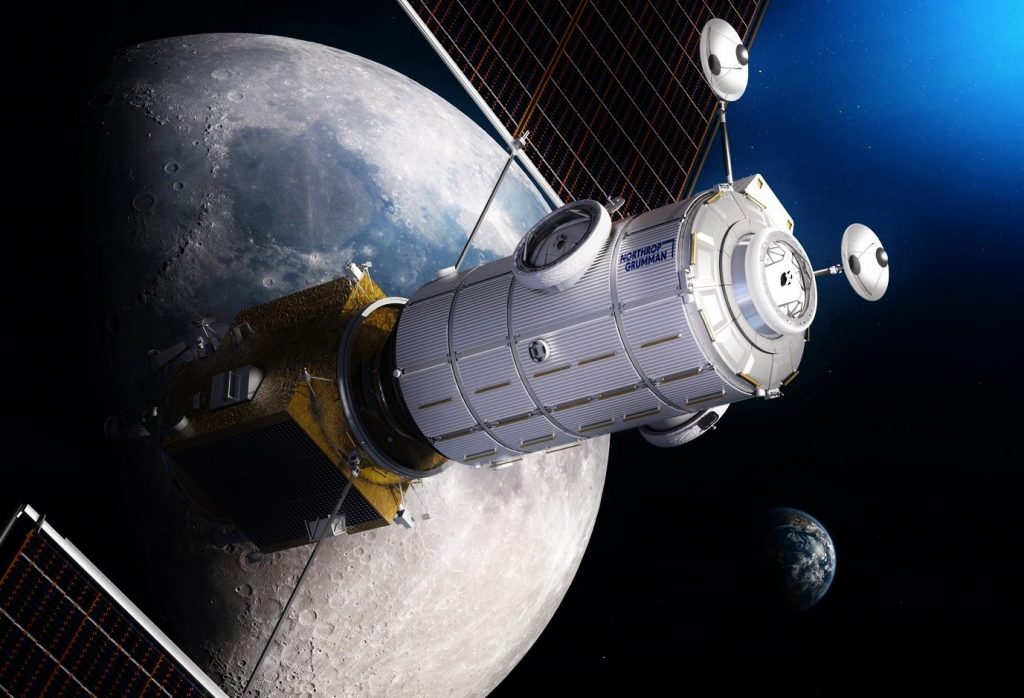
The Gateway's first two modules are scheduled to launch no earlier than late 2024 on a SpaceX Falcon Heavy rocket. (NASA)
NASA appears to be particularly interested in the possible benefits of cheaper and more capable deep space cargo transport services than Dragon XL. However, between the lines, the RFI reads as though it were sent straight to SpaceX. Perhaps the most telling question is this one: "Is your organisation interested in transitioning to the GLS contract to supply logistics services as outlined in the original solicitation?"
SpaceX is the only business having an existing GLS contract on which it could "on-ramp"—a euphemistic term for "begin work on." NASA then regularly displays interest in cargo transport capabilities that exceed the constraints of the original contract and inquires about innovative new capabilities that could permit such enhancements. NASA also "recognises" and hints at a willingness to investigate unconventional solutions, such as requiring "more than one launch" for each cargo delivery or assisting in "reducing upfront costs to the government." Simply said, while it allows virtually any US company to inform NASA on new GLS choices, it's difficult not to assume that this new RFI is partially intended to allow SpaceX to provide Dragon XL alternatives or upgrades.
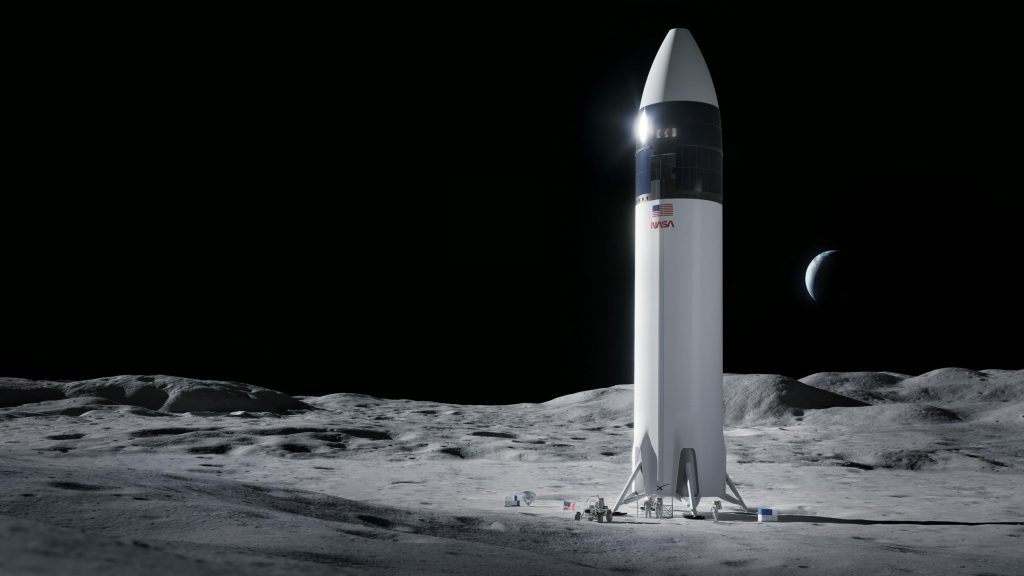
As of 2021, SpaceX's Starship Moon lander design.
Obviously, the most obvious solution is a starship. NASA has already committed to investing at least $3 billion in the Human Landing System (HLS) programme to develop a crewed Starship Moon lander, as well as the fully-reusable launch vehicle and refuelling infrastructure required to launch and operate it.
The starship design that SpaceX and NASA are currently constructing may be used to transfer dozens of tonnes of pressurised cargo to cislunar space, lunar orbit, the Gateway, the lunar surface, or virtually anywhere else NASA desires. Leveraging that significant investment would also satisfy nearly every requirement in NASA's new RFI, significantly lowering upfront and total development costs, stimulating a "vibrant" deep space supply chain, and outperforming Dragon XL's cargo capabilities by a factor of 5, 10, or even 20 or more.
Naturally, there are technical obstacles and grounds for anticipating that Starship will be unable to simply replace Dragon XL. Even Dragon XL faced the possibility of exceeding Gateway's visiting vehicle mass restriction of 14 tonnes. A starship would very certainly weigh between 100 and 200 tonnes — more than the Gateway in its entirety. Dragon XL would be propelled by non-cryogenic propellant and is expected to stay at the Gateway for at least six to twelve months at a time.
NASA has also investigated the concept of temporarily utilising Dragon XL as a crew cabin or bathroom to alleviate the severely cramped livable volume of Gateway. The main engines of the starship use cryogenic propellant that yearns to warm up and boil into gas, making it far more difficult to stay at the station for months at a time. While those issues are likely to be resolved, it's worth noting that Starship is not a perfect fit out of the box.
The RFI might potentially end in a whimper if SpaceX simply informs NASA that it is willing to proceed with Dragon XL in its current configuration. Ultimately, only time will tell. NASA plans to host an industry day on April 20th to further explain the RFI's objectives. The agency is seeking replies by May 31st, 2022, at which point it will determine whether or not to proceed with an RFP or on-ramp Dragon XL.
Advertisement