Elon Musk Revealed The Starship Separation System Mechanism
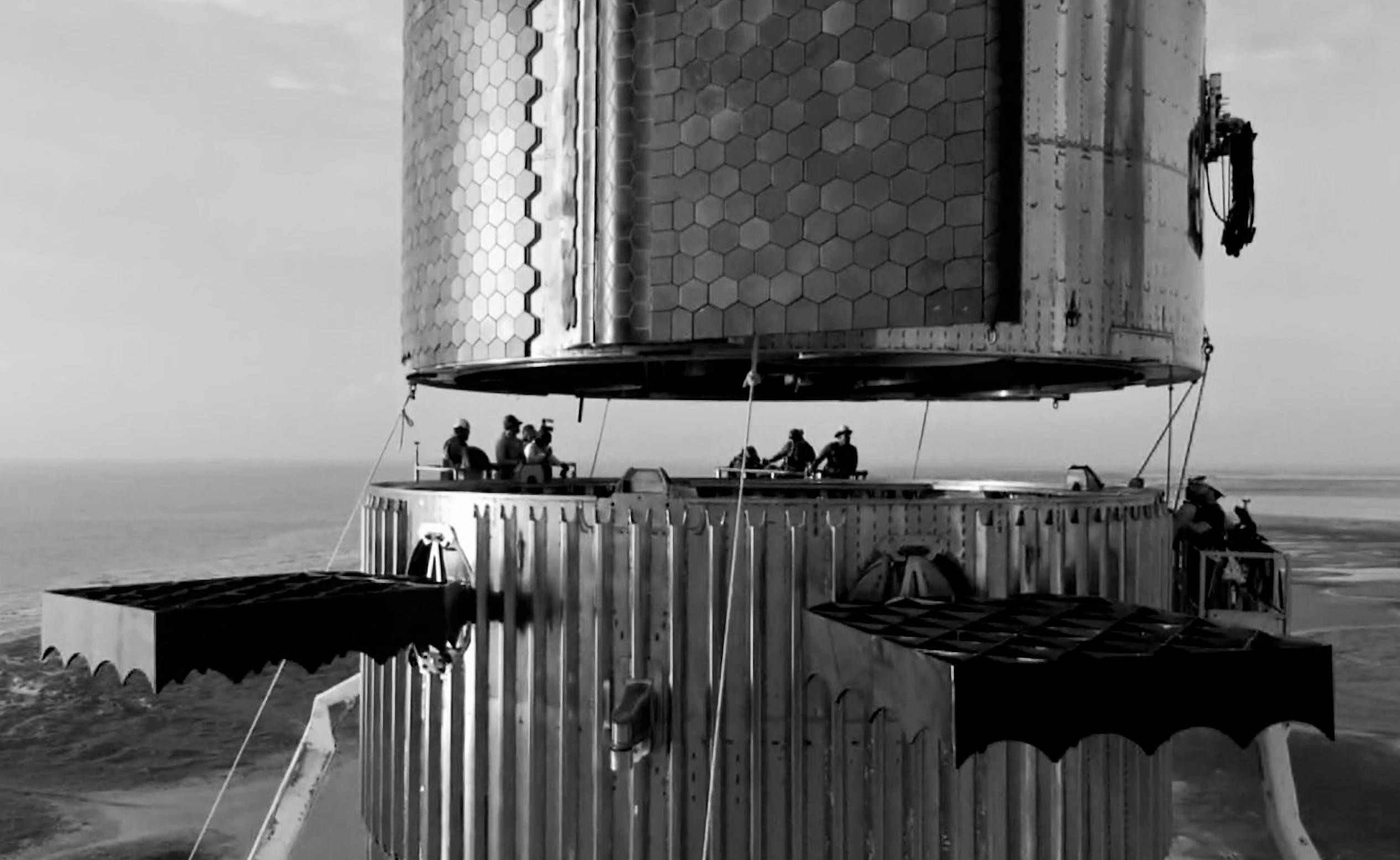
Starship Separation System Mechanism
The Starship is promoted as a totally reusable transport vehicle that can be used to fly to the Moon, Mars, and Earth orbit. It is also recognised for being the largest rocket in the world, with a very heavy booster in two stages and a starship just demonstrated by SpaceX.
The complete height of the Starship is achieved by stacking the two stages on top of each other. Although the full stage of the prototype has never been flown, many people are still uncertain about how the rocket's 2-stage separation mechanism will function.
Therefore, we'll provide the most detailed overview and explanation of how the Starship system works yet. Elon Musk, the CEO of SpaceX, and Tim Dodd, one of our favourite producers, appeared in an interview on Dodd's YouTube channel, The Daily Three With Astronauts.
In the same interview, he also discussed the two-stage separation system mechanism and how the starship separation system operates. According to Elon Musk, starships will be separated in the future anyway, as he considers the entire procedure redundant and the existing method obsolete. Booster, for instance, can be achieved by gimbling Raptor engines.
Advertisement
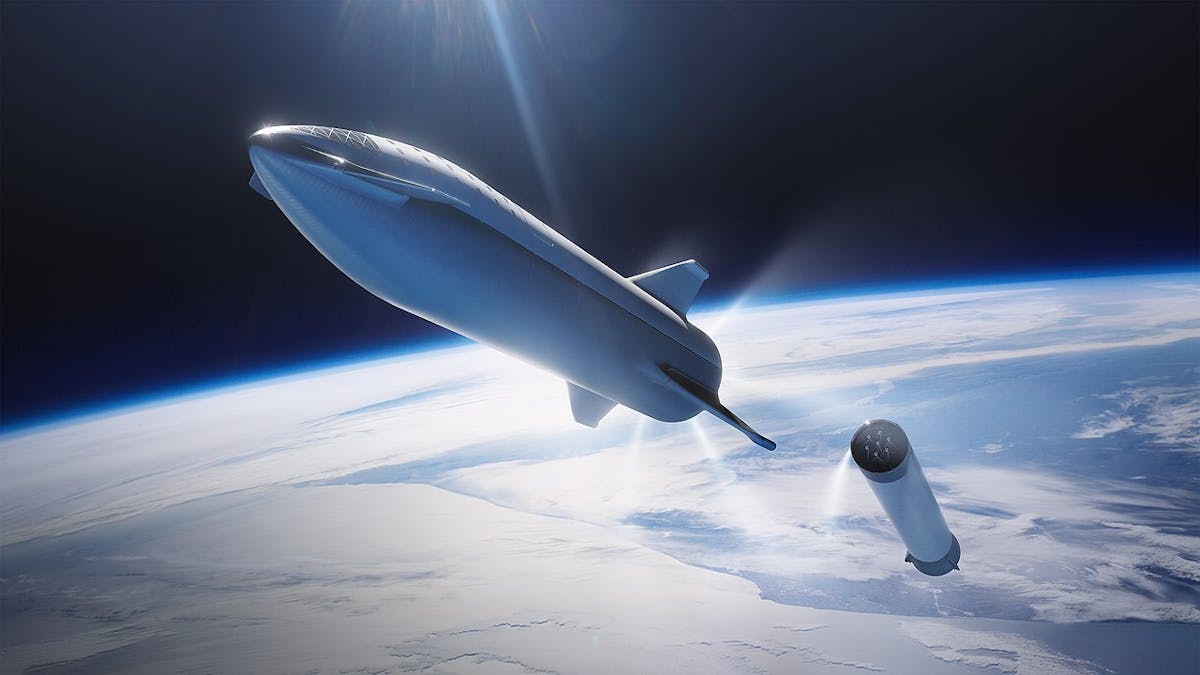
The super heavy main engines will gimbal their engines right before cutoff or mecho, forcing the vehicle to begin spinning. will depart.
When the latch between the Starship and the Super Heavy is removed, the vehicles will split, achieving two goals while commencing the booster flip, which requires them to separate phases.
The booster return burn is quite similar to how SpaceX currently deploys Starling satellites from the Falcon using centrifugal forces.
At the conclusion of the upper stage, when the spacecraft is free to float, it rotates. The Starship is five times heavier than the Super Heavy. After the stallion effectively separates from the booster, Blei linear path cold gas thrusters are used to guide its propellant, and its six Raptor engines are fired in orbit in exchange for a rather unorthodox deployment profile.
If this new strategy is successful, SpaceX could abandon the development of all pusher spring systems. In large part due to the fact that the ship's six Raptor engines are concealed totally under a skirt, the 1300-ton Starship is not as hefty as is conceivable for a starship.
In other rockets, there are often two types of launch vehicle separation procedures.
To connect and separate the stages, all rockets require some type of actuation latch or frangible bolt. Nevertheless, during stage separation, some rockets, particularly Russian vehicles, rely on hot staging.
When a separate stage ignites its engines slightly sooner or simultaneously with its release to destroy the lower stage, often the upper stages of the rocket are equipped with small solid rocket motors or small vernier thrusters toward orbit. A substantial gap is cleared from the lower stages before leaving and igniting.
Separation of each component of a multistage rocket presents extra risks to the success of the launch mission, lowering the number of repercussions of separation events.
Advertisement
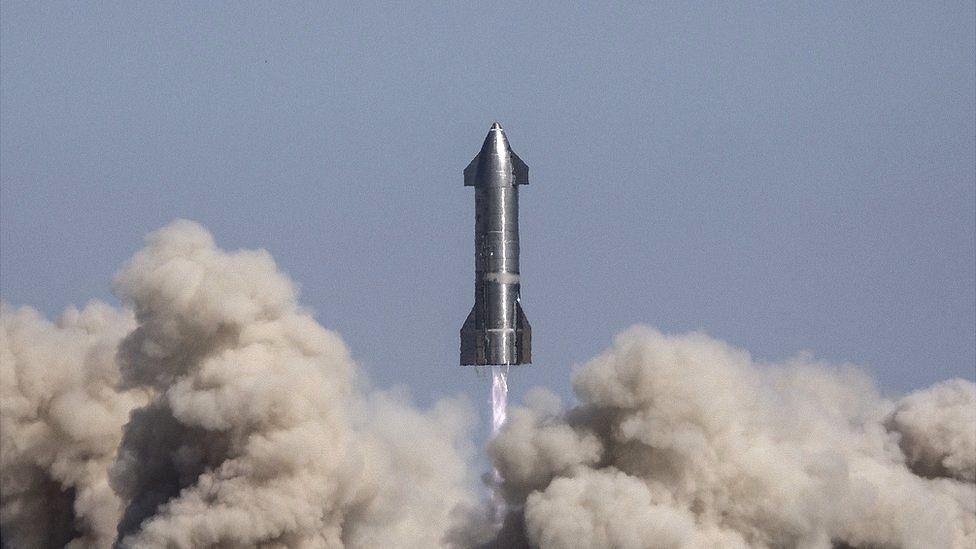
Space travel needs a rocket with multiple stages and a separation system to reduce danger and complexity.
The laws of physics limit the greatest velocity a rocket with a certain fuel-to-dry mass ratio can attain.
The traditional rocket equation describes this relationship; let's now dissect it.
The delta V loss due to vehicle velocity change, gravity, and atmospheric drag is the next one m sub o, which is the final dry mass plus the initial total wet mass equal to the propellant, and the following one m sub f is the final dry mass, after which the propellant is consumed. Is.
We have v sub e, which is the effective exhaust velocity determined by the propellant engine design and throttle position, and ln, which is the natural logarithmic function, the delta v required to reach low earth orbit or sufficiently heavy wet to d is required for the required velocity of the suborbital payload.
This constraint is circumvented by dividing the multi-stage rocket's delta-v into fractions as each lower stage is shut down and the successful stage ignites.
Maximum speed The dry mass of each lower stage contains propellant in the upper stages, and each succeeding upper stage reduces its dry mass by eliminating the wasted dry mass of the lower stages, with the added benefit that each stage may use a different type of rocket.
Thus, the lower stage engines are designed for usage at atmospheric pressure, whilst the upper stage engines may be converted to near-vacuum conditions. They require additional construction because they must support their own weight.
Optimizing the structure of each preceding stage decreases the overall vehicle weight and delivers further advantages. In addition to making the entire rocket more complicated and difficult to produce than a single stage.
Advertisement
In addition, each launch of a staging event is a possible failure point. failure to distinguish between ignition system failure and stage collisionYet, the savings are so substantial that every rocket used to send payloads to space has a purpose other than the first two segments of a three-part conversation with YouTube creator Tim Dodd Allon.
Musk also explored other new starship and super-heavy mechanisms that pursued simplicity at the beginning of the month. known as a multi-ton automobile.
Since the starship's initial appearance was first shown in 2016, curved wings have been anticipated. What was unanticipated, however, was that the grid fin of Booster 4 reportedly lacked a deployment or retraction mechanism and was instead stuck in a deployed position after installation.
SpaceX does not need to create a sophisticated retraction mechanism that maintains a mechanical connection and provides sufficient power because the wings are always deployed. The purpose of the grip fin on a starship grid fin is to push and pull rockets weighing several hundred tonnes around at hypersonic speeds.
used for precision and accuracy in landing location control for reusable launch vehicles on the Falcon 9 rocket, so it helps the rocket land on a landing pad or autonomous spaceport drone ship.
Unlike the famed cast titanium grid fins on the Falcon Booster, the Super Heavy's fins are significantly heavier than welded steel.
However, it will make it significantly simpler to catch.
Advertisement
FAQS
What is the Starship separation system mechanism?
The Starship separation system mechanism is a new way of separating the Starship upper stage from the Super Heavy booster stage. It is different from traditional stage separation systems in that it does not use explosive bolts or pyrotechnic devices. Instead, it uses a combination of mechanical and pneumatic systems.
How does the Starship separation system mechanism work?
The Starship separation system mechanism works by first unlocking the clamps that connect the Starship to the Super Heavy booster. Once the clamps are unlocked, a series of pneumatic pistons push the Starship away from the booster. The Starship then uses its own engines to fly to orbit.
Why is the Starship separation system mechanism different from traditional stage separation systems?
There are a few reasons why the Starship separation system mechanism is different from traditional stage separation systems. First, it is simpler and more reliable. Second, it is lighter and more efficient. Third, it is safer.
What are the benefits of the Starship separation system mechanism?
The Starship separation system mechanism has a number of benefits, including:
- It is simpler and more reliable than traditional stage separation systems.
- It is lighter and more efficient than traditional stage separation systems.
- It is safer than traditional stage separation systems.
- It is reusable, which can reduce the cost of spaceflight.
When will the Starship separation system mechanism be used?
The Starship separation system mechanism is expected to be used on SpaceX's first orbital launch of Starship and Super Heavy. This launch is currently scheduled for no earlier than late 2023 or early 2024.
What are the risks of the Starship separation system mechanism?
One of the main risks of the Starship separation system mechanism is that it is a new technology that has not yet been tested in space. Another risk is that the mechanism could fail, which could result in the Starship and Super Heavy booster colliding. However, SpaceX engineers have taken steps to mitigate these risks.
Is the Starship separation system mechanism a good idea?
Whether or not the Starship separation system mechanism is a good idea is a matter of opinion. Some people believe that it is a risky new technology that is not yet ready to be used in space. Others believe that it is a promising new technology that could revolutionize spaceflight. Ultimately, the success or failure of the Starship separation system mechanism will be determined by its performance on SpaceX's first orbital launch of Starship and Super Heavy.