Radio Telescope to Launch to Moon's Far Side in 2025 to Hunt for Cosmic Dark Ages
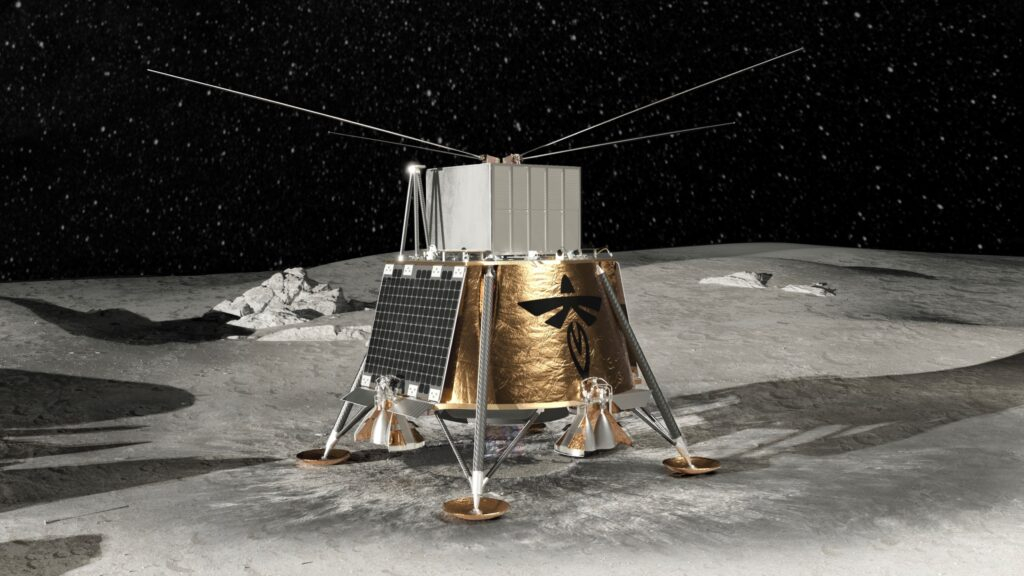
A small radio telescope is scheduled to launch to the far side of the moon in 2025 to hunt for radio waves from the cosmic Dark Ages, a period of time shortly after the Big Bang. The telescope, called the Lunar Surface Electromagnetics Experiment-Night (LuSEE-Night), is being developed by a team of scientists and engineers from the United States and Europe.
Advertisement
The LuSEE-Night telescope will be deployed on the far side of the moon because it is shielded from radio interference from Earth. This will allow the telescope to detect the faint radio waves from the Dark Ages, which have been traveling through space for billions of years.
The Dark Ages was a time when the universe was filled with a thick fog of neutral hydrogen gas. This gas absorbed all of the visible light, making the universe dark and opaque. However, the gas was transparent to radio waves.
By detecting radio waves from the Dark Ages, scientists can learn more about how the universe evolved during this time. For example, they can learn more about the formation of the first stars and galaxies.
The LuSEE-Night telescope is a pathfinder mission for future radio telescopes on the moon. If the mission is successful, it will pave the way for larger and more powerful telescopes that could revolutionize our understanding of the early universe.
Advertisement
The LuSEE-Night telescope is expected to launch in 2025 on a private robotic lunar lander. Once it arrives on the moon, the telescope will be deployed on the surface and will begin its search for radio waves from the Dark Ages.
The mission is expected to last for two years. If it is successful, the LuSEE-Night telescope could make a major breakthrough in our understanding of the early universe.
FAQ
What is the cosmic Dark Ages?
The cosmic Dark Ages is a period of time shortly after the Big Bang when the universe was filled with a thick fog of neutral hydrogen gas. This gas absorbed all of the visible light, making the universe dark and opaque. However, the gas was transparent to radio waves.
Why is the moon's far side a good location for a radio telescope?
The moon's far side is shielded from radio interference from Earth. This is important because the radio waves from the Dark Ages are very faint and could be easily drowned out by radio noise from Earth.
What will the radio telescope do?
The radio telescope will search for radio waves from the Dark Ages. By detecting these radio waves, scientists can learn more about how the universe evolved during this time, such as the formation of the first stars and galaxies.
When will the radio telescope launch?
The radio telescope is scheduled to launch in 2025 on a private robotic lunar lander.
How long will the mission last?
The mission is expected to last for two years.
What are the potential benefits of this mission?
If the mission is successful, the radio telescope could make a major breakthrough in our understanding of the early universe. For example, it could help us to learn more about the formation of the first stars and galaxies, and the evolution of dark matter.
What are the challenges of this mission?
One of the biggest challenges of this mission is the distance between Earth and the moon. It will be difficult to communicate with the telescope and send it instructions. Additionally, the moon's far side is very cold and dark, which could create challenges for the telescope's electronics.
Overall, the launch of a radio telescope to the moon's far side is a bold and ambitious mission. If it is successful, it could revolutionize our understanding of the early universe.