First Falcon Heavy launch by SpaceX in three years is scheduled for late October.
SpaceX sent out an email to members of the media informing them that the rocket will launch in October. As a result of a seemingly relentless flood of delays impacting almost every one of the rocket's payloads, Falcon Heavy made it within three or four months of ending its launch drought. Two of the four main stages that make up Falcon Heavy are already inside the hangar. One of the new side boosters has a grey band around the bottom of it to increase the amount of heating absorbed from the sun. The rocket will use a new booster that will boost back to Florida and land side by side at LZ-1/LZ-2 after a single flight. The T/E will roll inside the hangar to confirm that Falcon Heavy has been assembled and is about to be installed on the structure.

Tuesday, October 11, 2022 | Chimniii Desk
It will be the first time in more than three years that the Falcon Heavy rocket will have a firm launch date. As a result of a seemingly relentless flood of delays impacting almost every one of the rocket's payloads, Falcon Heavy made it within three or four months of ending its launch drought. At the time, the rocket was more or less ready to begin assembly, but NASA announced late that month that the Jet Propulsion Laboratory and supplier Maxar had failed to finish qualifying software needed to power its Psyche spacecraft.
Advertisement
Advertisement
The complex trajectory required to reach Psyche constrained the mission to a launch window between August and October. JPL and Maxar were forced to stand down and wait until the next earliest window, which begins in July 2023, because they couldn't test the software in time. There was no reason to believe that any of the three possible payloads would be ready to launch before the year 2023. The most powerful rocket currently in operation is at least one more shot at a launch in 2022. Spaceflight Now broke the news with an official statement from the US Space Force, which confirmed that an industry partner had finally solved the problems that had delayed the military's USSF-44 mission. The target of October 28th was revealed by the USSF spokesman.
Advertisement
Advertisement
The US military has repeatedly offered implausible launch targets for USSF-44 with little to no official explanation for the mission's delays, making it reasonable to appraise any specific launch date much like a boy crying wolf. The target was announced within the same month as it was, so it's a bit more believable. It is not on its own. On October 7th, SpaceX sent out an email to members of the media stating that Falcon Heavy is scheduled to launch in October and asking them to register for press site access and remote camera setup opportunities.
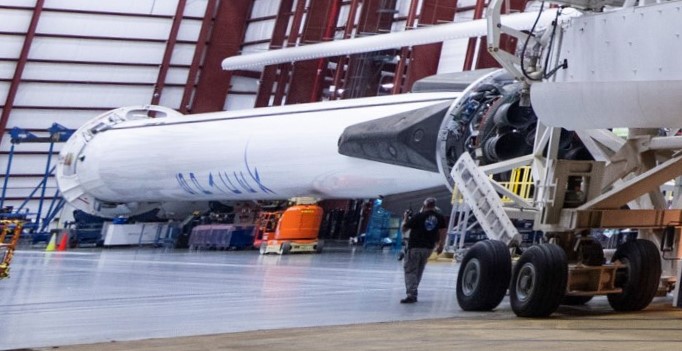
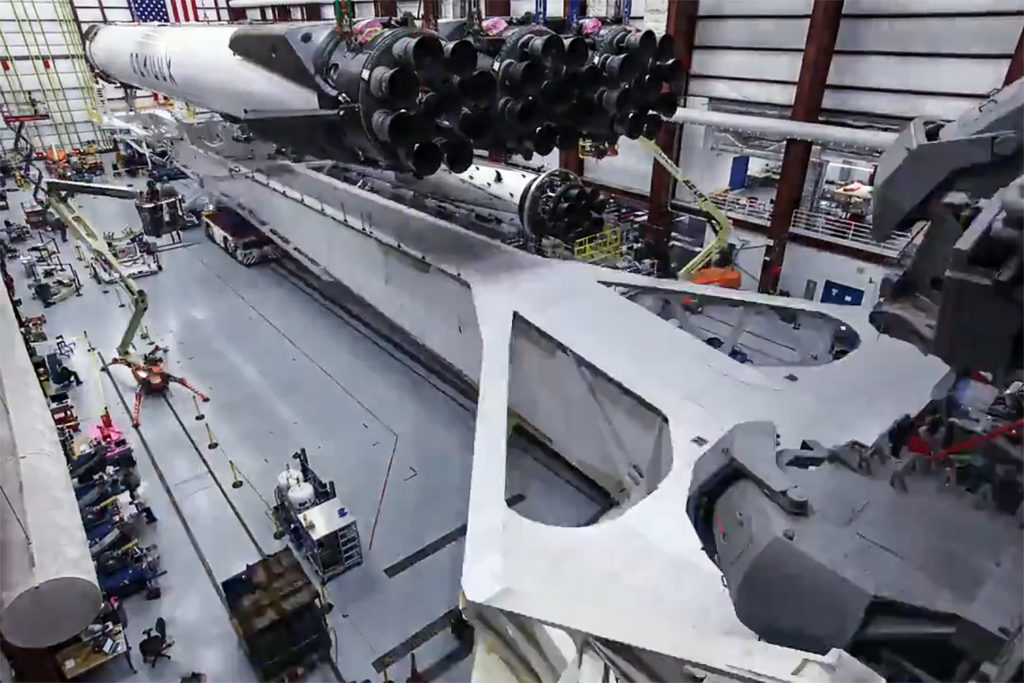
It's possible that the rocket or USSF-44 satellites will run into issues and cause additional delays, but a press accreditation email is about as close as one can get to a believable guarantee that a secretive US military payload is on track for a SpaceX launch scheduled more than a week or so The assembly of Falcon Heavy inside the main hangar at the NASA Kennedy Space Center LC-39A pad will be the next major step in the mission. At least two of the four main stages that make up Falcon Heavy are already inside that hangar, according to photos that were shared last month and earlier this month. One of the new side boosters was spotted on September 30th. A new booster. The USSF-44 upper stage, which was captured a week prior, is visible to the right of it.
Advertisement
Advertisement
There is a greyed out upper stage on the Falcon 9. The expendable upper stage of the rocket was clearly visible in a September 23rd photo. The upper stage stored behind the Crew-5 upper stage in the foreground has a unique grey band around the bottom of it. The grey band on the upper stage of the Falcon 9 was tested in July to improve the rocket's longevity. For some of the most challenging launches, six or more hours is needed. Direct-to-geostationary launches are the most common type of mission to require long coast capabilities and are often demanded by the US military. The purpose of the grey band is to increase the amount of heating absorbed from the sun to warm the fuel inside the rocket. kerosene becomes slush-like before it freezes solid when it gets too cold. slushy fuel would likely ruin the upper stage's engine.
Advertisement
Advertisement
The grey band reappeared more than three years after its first test, and will be explained by the USSF-44. Just one month before the upper stage test, the third and latest launch of Falcon Heavy occurred. 40 months later, the rocket might finally launch again, and it will do so by attempting the most difficult customer mission to date. The high performance required for the mission will be enabled by the use of a Falcon Heavy booster for the first time. The new side boosters will boost back to Florida and land side by side at LZ-1 and LZ-2 but the new center core will be used after a single flight. After the rocket is assembled and suspended by cranes, the T/E can only fit inside the Pad 39A hangar.
Advertisement
Pad 39A's mobile transporter/erector was previously set up for single-core Falcon 9 rockets. The T/E will roll inside the hangar to confirm that Falcon Heavy has been assembled and is about to be installed on the structure. The rocket will be rolled out to the pad and brought vertical for static fire testing, a process that will likely begin at least a week before the current October 28th launch target. If the testing goes well, Falcon Heavy will return to the hangar, have the USSF-44 payload installed, and roll out to the pad one last time. Stay updated on that process.
Advertisement