SpaceX Starship Flight 7 to Deploy Simulated Starlink Satellites
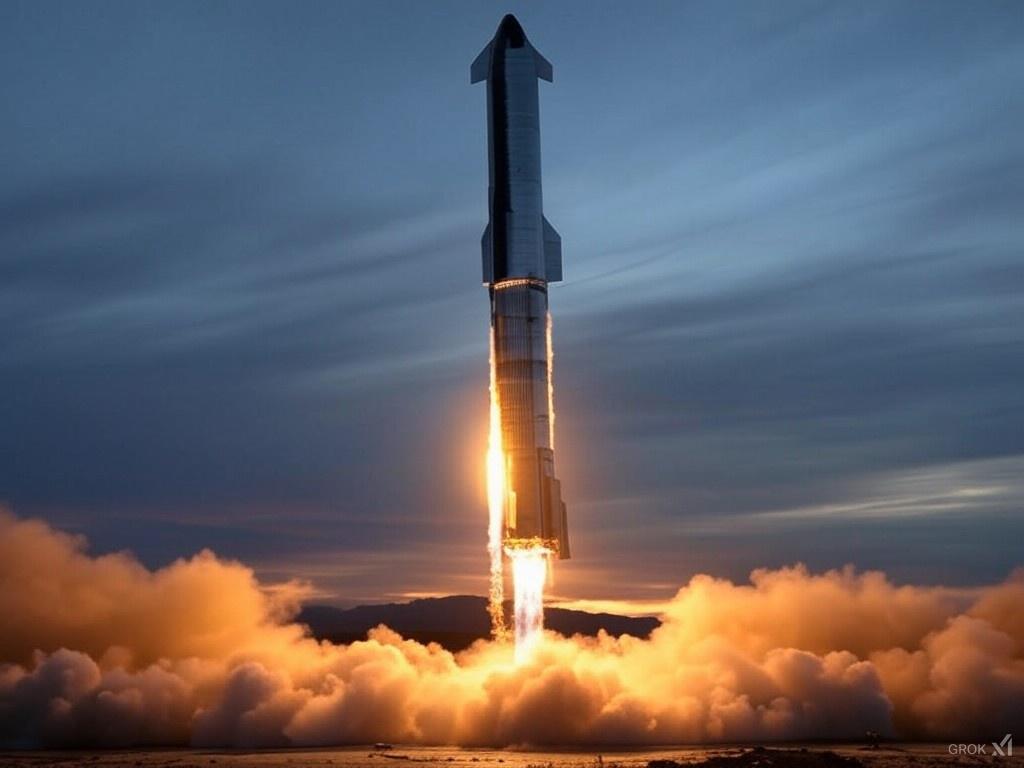
SpaceX's Starship Flight 7 to Deploy Simulated Starlink Satellites
Boca Chica, Texas - SpaceX is gearing up for a historic milestone with its Starship Flight 7 test, scheduled for the near future from its Starbase in Boca Chica, Texas. This test flight will be the first to attempt the deployment of simulated Starlink satellites into space, marking a significant advancement in the company's satellite deployment capabilities.
Elon Musk's SpaceX has announced that during this test, Starship will deploy 10 Starlink simulators, which will mimic the size and weight of the next-generation Starlink satellites. These simulators will follow the same suborbital trajectory as Starship, with the spacecraft targeting a splashdown in the Indian Ocean. The deployment is a critical demonstration for Starship's role in the burgeoning satellite launch market, showcasing its potential to handle payloads effectively.
Starship, designed for full reusability and impressive payload capacity, is pivotal for SpaceX's ambitions not only in satellite internet but also in its broader mission to enable human space travel to Mars. The vehicle's upgrades for this flight include enhancements to the propulsion system, avionics, and heat shield, aiming to increase both reliability and performance.
The transition to using Starship for Starlink deployments is seen as a strategic move by SpaceX to scale up its satellite constellation rapidly, thereby adding significant capacity to the Starlink network. This test flight is part of SpaceX's broader plan to launch up to 25 Starship missions in 2025, each potentially deploying 60 V3 satellites, which would add 60 terabits per second of capacity to the network.
The anticipation among space enthusiasts and industry professionals is palpable, with many expressing excitement over the potential implications for global broadband internet coverage. However, the deployment of these satellites, even if simulated, is under scrutiny by astronomers and environmentalists due to potential impacts on night sky visibility and space debris concerns.
This test flight also comes on the heels of SpaceX's recent Starlink launch just days ago from Florida, which added another 24 satellites to the constellation, further expanding SpaceX's footprint in space.
SpaceX has also announced other significant developments recently, including United Airlines' plan to integrate SpaceX's Starlink WiFi service into its flights, indicating the growing influence of Starlink technology beyond space.
With this test flight, SpaceX is not just pushing the boundaries of rocket technology but also setting the stage for a new era in satellite deployment and space travel. As the launch window approaches, all eyes will be on SpaceX to see if Starship can successfully deploy these dummy satellites, paving the way for future operational missions.
The exact date for Starship Flight 7 is tentatively planned, but recent updates suggest a possible delay, shifting the launch to approximately January 13th or 14th, 2025, due to various factors including weather and FAA advisories.
Stay tuned for further updates as SpaceX continues to innovate and expand its capabilities in space exploration and satellite technology.