Elon Musk Declares Starship Flight 7 "Not a Failure" Despite Explosion
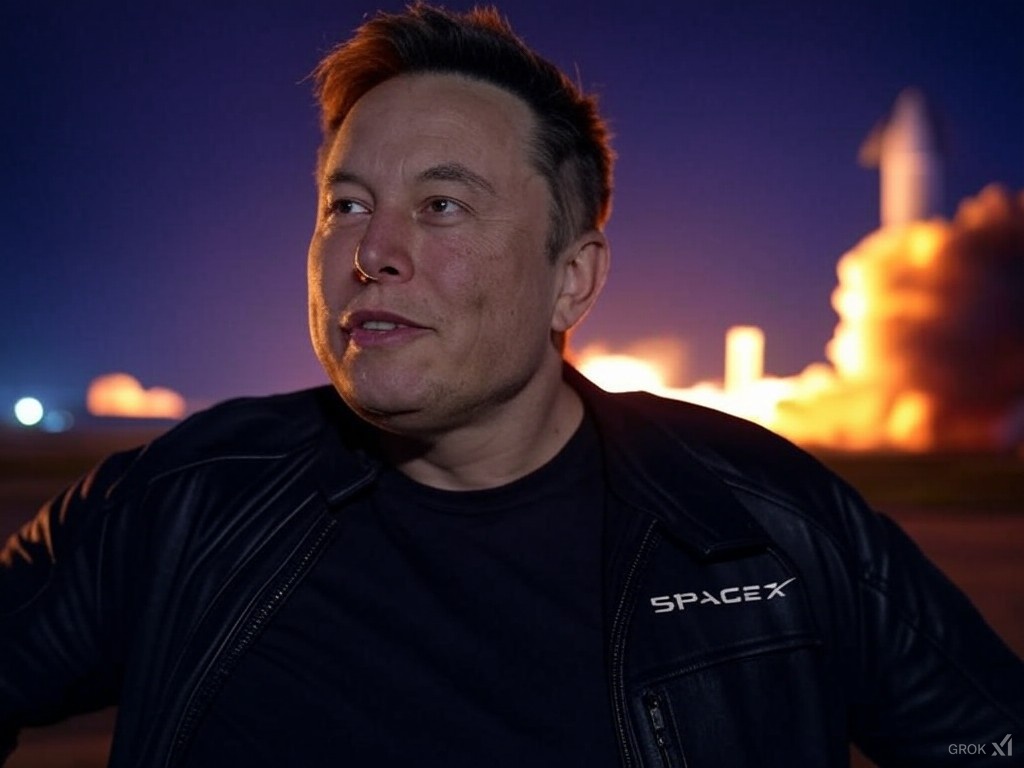
Boca Chica, Texas - In a bold statement that defies conventional interpretation, Elon Musk has described the recent Starship Flight 7 as "not a failure," even after the spacecraft exploded in mid-air over the Caribbean. The event, which took place on January 16, 2025, was SpaceX's seventh attempt to push the boundaries of rocket technology with the Starship system.
A Test of Innovation
The test flight commenced with a successful launch from Starbase in Texas, with the Super Heavy booster executing a flawless return and catch by the Mechazilla tower's mechanical arms, a feat Musk likened to catching a "33-story building coming from space at supersonic speeds." However, the upper stage of the Starship, after initial success, met a catastrophic end when it disintegrated due to what preliminary reports suggest was an oxygen leak, leading to an explosion.
Despite this, Musk took to social media platform X to share his perspective, stating, "The booster flight was a success, the ship flight was 1/4 successful, hence cup being ~5/8 full." He highlighted that new components like the forward flaps, higher thrust engines, and tile adherence on ascent were tested, providing valuable data for future launches. Musk's focus was on the learning curve rather than the setback, emphasizing the advancements made in the rocket's design and operation.
Community and Industry Reaction
The online community, particularly on X, responded with a mix of humor and support. Memes and altered images circulated, showcasing the lighter side of the incident while acknowledging the significant progress in reusable rocket technology. Some users humorously proposed that the explosion was part of Musk's grand plan for an "epic light show," further fueling the conversation around the event.
Industry experts, however, took a more nuanced view. While acknowledging the explosion as a significant issue, they concurred with Musk's optimism, pointing out that each test flight, even those ending in failure, propels the industry forward by providing critical data for safety and performance enhancements. The focus is shifting towards not just reaching space but doing so in a manner that is sustainable and cost-effective through reusability.
Looking Forward
SpaceX has already outlined plans to address the issues encountered during Flight 7. Musk mentioned steps like double-checking for leaks, adding fire suppression systems, and potentially increasing vent areas to prevent similar incidents in future launches. The company aims to have another launch potentially as soon as next month, showcasing its commitment to rapid iteration and improvement.
The Federal Aviation Administration (FAA) will conduct a mishap investigation to ensure public safety for future flights, a process that is standard but could influence the timeline for the next Starship test.
Conclusion
While the Starship's upper stage did not complete its mission, Musk's perspective reframes the event not as a failure but as a step closer to achieving reliable space travel. This approach underscores SpaceX's philosophy of rapid experimentation and learning from each test, no matter the outcome. As SpaceX moves towards making life multiplanetary, each flight, successful or not, is seen as a piece of the larger puzzle in human space exploration.
This event, while dramatic, is likely to be remembered not for the explosion but for the strides made in the technology that could one day take humans to Mars.
For more information on SpaceX's Starship program and Elon Musk's vision for space travel, refer to the latest updates from SpaceX official channels and related discussions on X.