SpaceX’s Crew Dragon Endurance: Upgrades for Crew-10’s Six-Month ISS Marathon
What upgrades to Endurance’s heat shield or life support were made for Crew-10’s six-month ISS stay?
Hawthorne, California – March 11, 2025
As SpaceX prepares to launch its Crew-10 mission to the International Space Station (ISS) on March 12, the spotlight falls on Endurance, the Crew Dragon spacecraft tasked with ferrying astronauts Anne McClain, Nichole Ayers, Takuya Onishi, and Kirill Peskov for a grueling six-month stay in orbit. This mission, set to conclude with a splashdown in September 2025, marks Endurance’s fourth crewed flight since its debut in November 2021. To ensure the spacecraft can withstand the rigors of a half-year in space—and safely return its crew—SpaceX has rolled out critical upgrades to its heat shield and life support systems, reflecting lessons learned from prior missions and evolving demands of long-duration spaceflight.
A Heat Shield Hardened for the Long Haul
The Crew Dragon’s heat shield, a 13-foot-wide ablative barrier made of SpaceX’s proprietary Phenolic Impregnated Carbon Ablator (PICA-X), is the spacecraft’s first line of defense against the fiery plunge through Earth’s atmosphere. For Endurance’s previous outings—Crew-3, Crew-5, and Crew-7—the heat shield performed admirably, enduring reentry temperatures exceeding 3,500°F (1,900°C). Yet, post-flight inspections revealed areas for improvement, particularly after the Demo-2 mission in 2020 exposed deeper-than-expected erosion near the tension ties connecting the capsule to its trunk.
For Crew-10, SpaceX has fortified Endurance’s heat shield with a more erosion-resistant PICA-X formulation, first tested in 2020 and refined over subsequent flights. “We’ve dialed in the material composition to reduce ablation rates without adding significant weight,” said Hans Koenigsmann, SpaceX’s Vice President of Build and Flight Reliability, during a recent briefing. This upgrade addresses the wear seen in earlier missions, where small patches of the shield eroded faster due to aerodynamic stresses at the capsule-trunk interface. The new shield underwent rigorous testing in late 2024, including simulated reentries at NASA’s Ames Research Center, ensuring it can handle the six-month exposure to solar radiation and micrometeoroid impacts before facing reentry.
Moreover, SpaceX has tweaked the heat shield’s attachment process. After a manufacturing defect sidelined a heat shield for Crew-5 in 2022, the company implemented stricter X-ray and load-testing protocols. For Endurance, this means a detachable composite structure with enhanced bonding integrity, reducing the risk of delamination under the extreme forces of splashdown. “It’s not just about surviving reentry—it’s about doing it flawlessly after six months in space,” Koenigsmann added.
Life Support: Breathing Easy for 180 Days
Crew Dragon’s Environmental Control and Life Support System (ECLSS) is the unsung hero keeping astronauts alive, balancing oxygen levels, scrubbing carbon dioxide, and managing humidity in the capsule’s cramped confines. For short missions like Demo-2 or Crew-1, the system’s capacity—rated for 20 person-days with four lithium hydroxide (LiOH) cartridges—was more than sufficient. But a six-month ISS stay demands more, especially during the critical undocking and reentry phases when Endurance operates independently.
For Crew-10, SpaceX has upgraded Endurance’s ECLSS with an eye toward redundancy and longevity. Each of the four LiOH cartridges, which absorb CO2, is now spec’d for 2.5 days for four people, with two used nominally and two held as spares. However, for this mission, SpaceX has packed additional cartridges—rumored to be six in total—stowed in the capsule’s limited cargo space. “We’re not relying on the ISS to do all the heavy lifting,” said Sarah Walker, Director of Dragon Mission Management. “If we need to extend our free-flight time or handle an emergency, we’ve got the margin.”
The life support system also boasts an improved dehumidifier membrane, addressing ammonia contamination issues flagged in earlier flights. This tweak, first introduced after Crew-2 in 2021, ensures the system can run multiple missions without degradation—a necessity for Endurance’s fourth trip. Oxygen and nitrogen supplies have been bolstered too, with precise quantities undisclosed but likely exceeding the 20 person-day baseline, giving the crew a buffer during the 19-hour return journey.
Why It Matters: A Testbed for Deep Space
These upgrades aren’t just about Crew-10—they’re a proving ground for SpaceX’s broader ambitions. With Endurance now a veteran of long-duration missions, each tweak to its heat shield and ECLSS informs the Starship program, which aims to carry humans to the moon and Mars. The enhanced PICA-X could scale up for Starship’s massive heat shield, while the life support improvements hint at closed-loop systems needed for deep-space voyages.
For NASA, the stakes are equally high. Crew-10’s success will cement SpaceX’s role as a reliable ISS partner while Boeing’s Starliner plays catch-up. The mission also carries symbolic weight, rescuing stranded astronauts Butch Wilmore and Suni Williams, whose 10-day Starliner test ballooned into nine months due to thruster failures. Endurance’s upgrades ensure it can handle the extra passengers—five instead of the usual four—using cargo straps and seat liners for a snug, if unconventional, ride home.
Looking Ahead
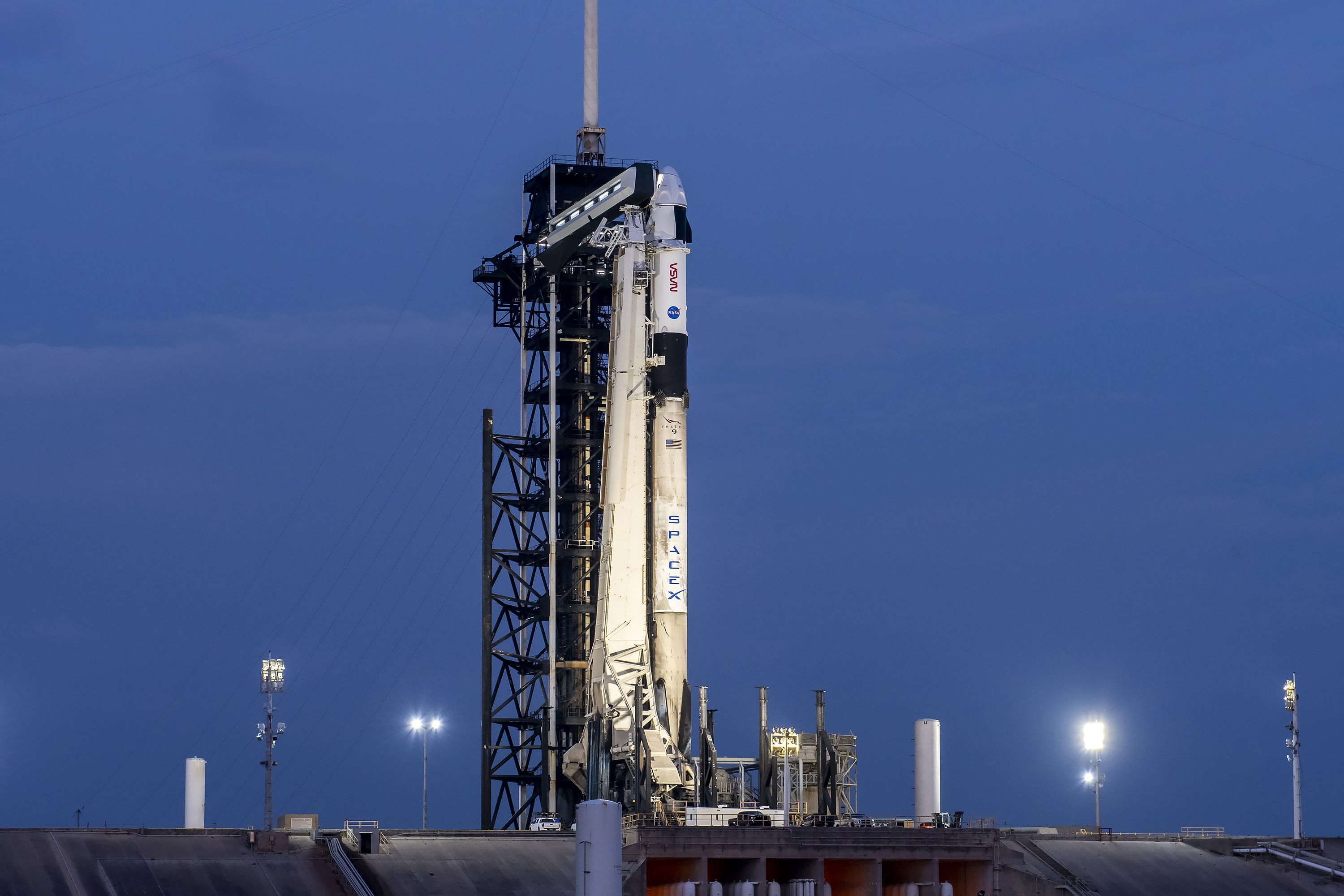
As Endurance stands poised on Launch Complex-39A, its heat shield gleaming and life support primed, the countdown to March 12 ticks on. The upgrades reflect SpaceX’s iterative ethos: test, learn, improve. Whether it’s shrugging off reentry heat or keeping the air breathable for half a year, Endurance is ready to live up to its name. For McClain, Ayers, Onishi, Peskov—and their unexpected passengers—the journey ahead promises six months of science, survival, and a splashdown that will test these enhancements to the limit.