Soviet-Era Venus Lander Kosmos 482 Crashes into Indian Ocean After 53 Years in Orbit
May 10, 2025 – 10:31 PM IST
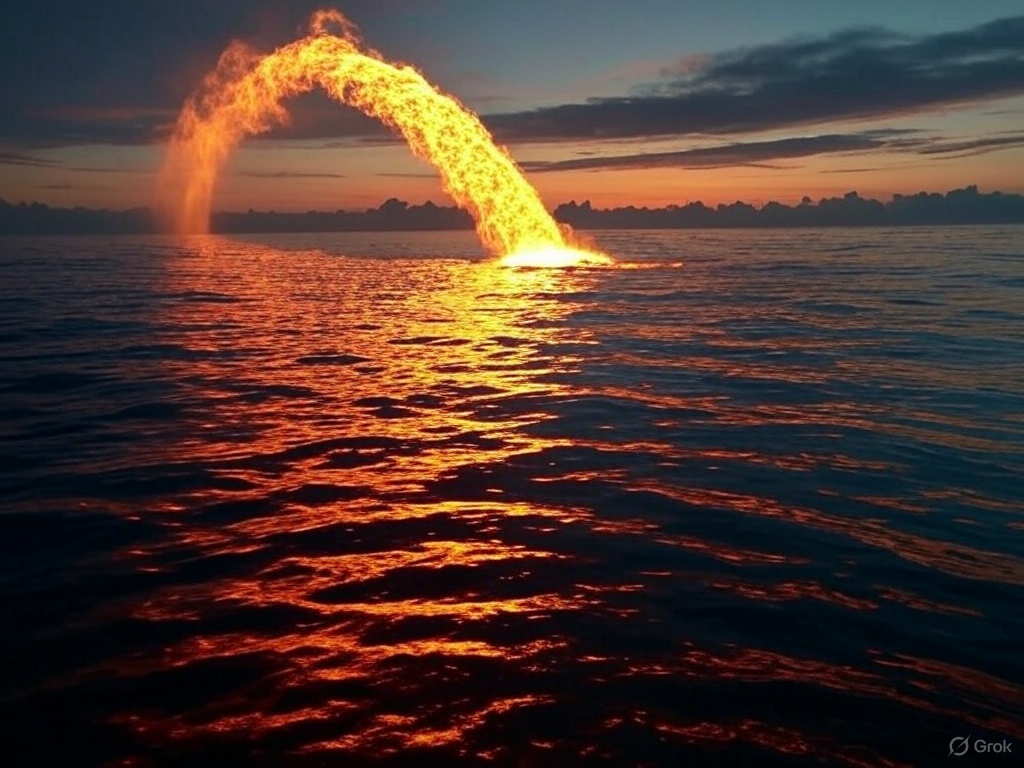
A piece of space history met its fiery end early this morning as the Soviet-era spacecraft Kosmos 482, originally destined for Venus, crashed into the Indian Ocean after spending 53 years stranded in Earth’s orbit. The half-ton lander, part of the Soviet Union’s ambitious Venera program, concluded its unintended journey at 2:24 a.m. EDT (6:24 a.m. GMT), west of Jakarta, Indonesia, according to the Russian space agency Roscosmos.
Launched on March 31, 1972, Kosmos 482 was designed to study Venus’s harsh surface and atmosphere, equipped with scientific instruments like a gamma-ray spectrometer and atmospheric sensors. However, a malfunction in the upper stage of its Soyuz rocket prevented it from achieving the velocity needed to reach Venus, leaving it trapped in an elliptical orbit around Earth. Over the decades, atmospheric drag slowly pulled the spacecraft closer to Earth, culminating in its dramatic reentry today.
The 3-foot-wide (1-meter) spherical descent craft, built to withstand Venus’s extreme conditions—temperatures averaging 867°F (464°C) and a crushing atmosphere—was likely to survive reentry intact, experts predicted. Marco Langbroek, a lecturer in space situational awareness at Delft Technical University in the Netherlands, had been tracking the spacecraft’s descent for years. “It’s possible it reached the ocean in one piece, though its parachute system, after 53 years in space, almost certainly failed to deploy,” Langbroek noted.
Astronomer Gianluca Masi of the Virtual Telescope Project captured an image of Kosmos 482 during one of its final orbits as it passed over Rome, Italy, just before sunrise on May 10. The probe appeared as a dashed trail in the sky, a poignant reminder of its long, unintended journey.
The spacecraft’s reentry was closely monitored by global space agencies, including the European Space Agency and U.S. Space Command. Initial predictions suggested it could land anywhere between 52 degrees north and south latitude, a vast area covering most of Earth’s surface. While there were concerns about the lander’s potential to survive reentry and pose a risk, its small size—about 1,091 pounds (495 kilograms)—and the vastness of the ocean minimized the danger. No damage or injuries have been reported, and Roscosmos confirmed the spacecraft “ceased to exist” upon impact.
Kosmos 482’s journey began during the height of the Cold War space race, a time when the Soviet Union was aggressively exploring Venus through its Venera program. While the program achieved successes—such as Venera 8, which landed on Venus just four days after Kosmos 482’s launch—the stranded probe became a relic of the era’s ambitious yet risky space endeavors. Space historian Asif Siddiqi of Fordham University called its return “a literal object lesson” about the artifacts of the space race preserved in orbit. “Low-Earth orbit is an archive of that era’s dreams and failures,” he said.
The crash also highlights the growing issue of space debris. According to the European Space Agency, over 1.2 million pieces of space junk larger than 0.4 inches (1 centimeter) currently orbit Earth. While most burn up upon reentry, objects like Kosmos 482, designed for extreme conditions, underscore the challenges of managing orbital decay and the potential hazards of uncontrolled reentries.
For now, the Indian Ocean holds the remains of Kosmos 482, a spacecraft that never fulfilled its mission to Venus but instead became a testament to humanity’s early steps into the cosmos—and the unpredictable nature of space exploration. As space agencies continue to monitor the skies, the story of Kosmos 482 serves as both a historical footnote and a cautionary tale for the future of spaceflight.