Revolution in Physics: Scientists Unveil Third Form of Magnetism Dubbed the 'Missing Link' to Superconductivity
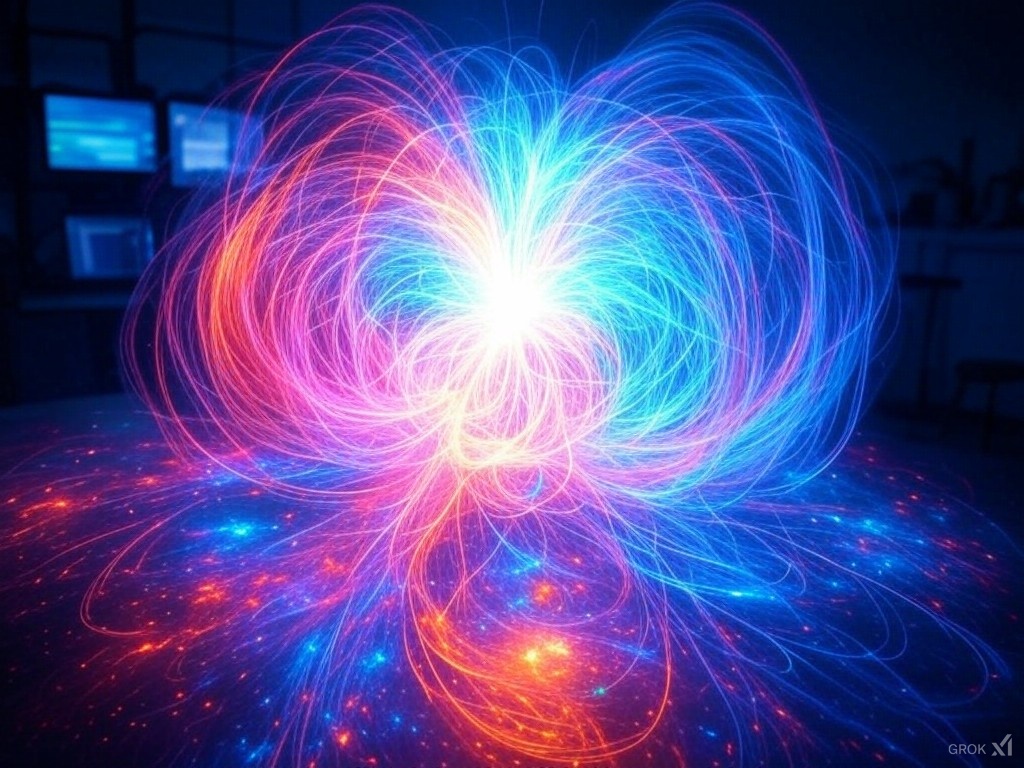
In a groundbreaking revelation that could reshape the landscape of physics and technology, scientists have discovered a third form of magnetism, which they believe might be the elusive key to unlocking the full potential of superconductivity. This newly identified magnetism, termed "altermagnetism," bridges the gap between the well-known types of ferromagnetism and antiferromagnetism, potentially revolutionizing how we approach energy efficiency and data storage.
A New Magnetic Paradigm
Until now, magnetism was understood through the lens of two primary forms: ferromagnetism, where magnetic moments align in the same direction, and antiferromagnetism, where they align in opposite directions, canceling out external magnetic fields. However, this new form, altermagnetism, presents a unique structure where magnetic moments alternate but are slightly twisted, breaking time-reversal symmetry. This twist introduces properties that are neither purely ferromagnetic nor antiferromagnetic, offering a blend of stability and manipulability previously unseen.
Implications for Superconductivity
Superconductivity, the phenomenon where materials can conduct electricity with zero resistance, has long been one of the Holy Grails in physics due to its potential to drastically reduce energy losses in electrical systems. However, integrating magnetic materials with superconductors has always posed a challenge due to the interference between magnetic fields and the superconducting state. Altermagnetism, with its unique properties, might just be the "missing link" needed to harmonize these two fields. Experts suggest that this new class of magnetic material could provide the symmetry necessary for superconductors to operate at higher temperatures or integrate better with magnetic components, thus broadening the application scope of superconducting technologies.
Potential Technological Leap
The discovery isn't just academic; it holds substantial promise for technological advancements. Altermagnets could lead to the development of ultra-efficient energy systems, quantum computing technologies, and next-generation magnetic memory devices that are faster, more resilient, and less susceptible to external magnetic interference. The ability to manipulate these materials to create exotic vortex textures could also pave the way for new forms of data storage and processing, where information is carried not by electrical charge but by the spin of electrons, known as spintronics.
Global Scientific Buzz
The scientific community has been abuzz since the discovery was published in the prestigious journal 'Nature'. Posts on X have been flooded with discussions and analyses from both experts and enthusiasts, reflecting a global interest in how this discovery might translate into practical applications. There's a sense of excitement about what this could mean for the future of technology, especially in areas like sustainable energy and high-speed computing.
The Road Ahead
Researchers are now racing to explore the full capabilities of altermagnetism. The next steps involve not only deepening the understanding of this new magnetic form but also applying this knowledge to create materials that can be used in real-world applications. The scientific consensus is that this could be the dawn of a new era in materials science, where the boundaries of physics are pushed to new limits.
As we stand on the brink of this potential revolution, one thing is clear: the discovery of altermagnetism is not just a scientific milestone but a beacon of what's possible when we dare to look beyond the established paradigms. The quest for superconductivity might have just found its missing link, promising a future where energy efficiency and digital speed are no longer limited by the materials we know today.