NASA Pushes Forward with Roman Space Telescope Amid Budget Uncertainty
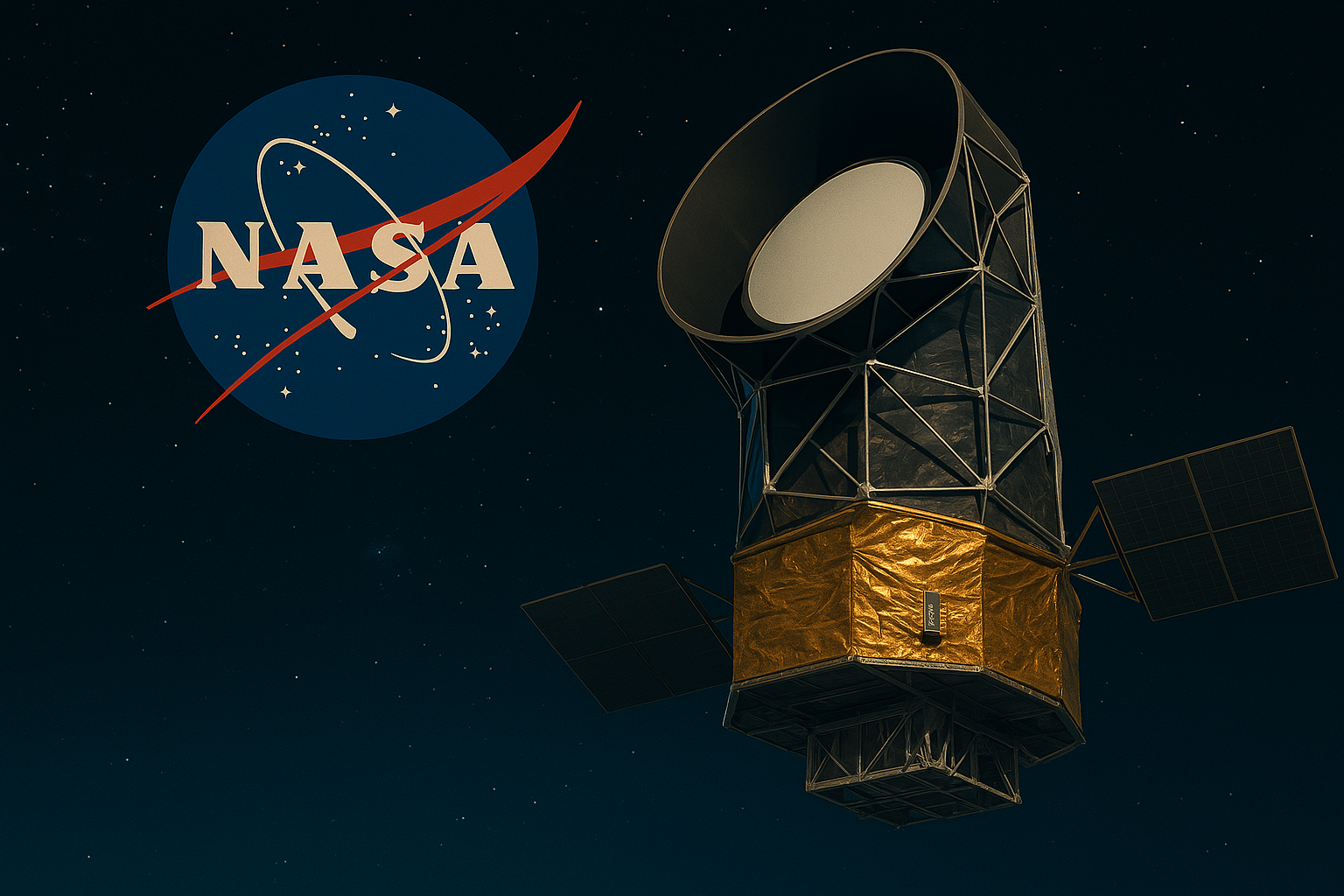
May 17, 2025 – Despite looming budget concerns, NASA is forging ahead with the development of its next-generation Nancy Grace Roman Space Telescope, a flagship mission designed to unravel the mysteries of dark energy, exoplanets, and the cosmic landscape. At a press briefing held at NASA’s Goddard Space Flight Center in Greenbelt, Maryland, on Friday, May 16, 2025, project leaders reaffirmed their commitment to the $4.2 billion observatory, even as fiscal constraints cast a shadow over the agency’s broader ambitions.
A Telescope to Probe the Universe
Named after Nancy Grace Roman, NASA’s first chief astronomer and a pioneer in advocating for space telescopes, the Roman Space Telescope is set to launch in late 2026. The observatory will feature a 2.4-meter primary mirror—identical in size to the Hubble Space Telescope’s but with a field of view 100 times larger—enabling it to survey vast swaths of the sky with unprecedented efficiency. Equipped with two primary instruments, the Wide Field Instrument (WFI) and the Coronagraph Instrument, the telescope will tackle some of astronomy’s biggest questions.
The WFI will map the distribution of galaxies to study dark energy, the mysterious force driving the universe’s accelerated expansion, while also searching for distant supernovae. The Coronagraph, a technology demonstrator, will block starlight to directly image exoplanets, paving the way for future missions that might detect signs of life on other worlds. “Roman will be a game-changer,” said Julie McEnery, the project scientist for the mission, during the briefing. “It’s going to give us a panoramic view of the universe and help us answer fundamental questions about our place in it.”
Budget Woes Threaten Progress
NASA’s determination to continue building the Roman Space Telescope comes amid growing financial uncertainty. The Trump administration’s proposed 2026 budget, released earlier this month, includes significant cuts to NASA’s science directorate, raising concerns among lawmakers and scientists alike. U.S. Representatives recently expressed worry that these reductions could impact other critical programs, such as asteroid tracking, but the Roman project is also feeling the squeeze.
The telescope’s cost has already ballooned from an initial estimate of $3.2 billion to $4.2 billion due to pandemic-related delays, supply chain issues, and technical challenges. A 2024 independent review warned that further budget constraints could delay the launch or force NASA to scale back the mission’s scope. Despite these challenges, NASA has opted to press forward, with officials confirming that the telescope’s primary mirror and WFI are now fully integrated, and the Coronagraph is undergoing final testing.
“We’re committed to making Roman a reality,” said David Spergel, chair of the Roman Space Telescope’s science advisory committee. “But we need sustained funding to ensure we can meet our timeline and deliver on the mission’s promise.”
A Balancing Act for NASA
The Roman Space Telescope is one of several high-profile projects NASA is juggling, alongside lunar missions under the Artemis program and collaborations with private companies like Rocket Lab, which successfully launched a Japanese Earth-observing satellite earlier today, May 17, 2025, at 6:33 AM IST. However, the agency’s budget constraints have forced tough choices. Some programs, like the NEO Surveillance Mission for asteroid tracking, are facing potential delays, as reported earlier this week.
Public sentiment on platforms like X reflects a mix of excitement and concern. Users have praised the Roman Space Telescope’s potential, with one noting, “This could redefine how we see the universe—can’t wait for those first images!” Others, however, worry about the broader impact of budget cuts, with posts questioning whether NASA can sustain its ambitious slate of missions.
Despite the fiscal hurdles, NASA remains optimistic about the Roman Space Telescope’s future. The agency plans to conduct a critical design review later this year, with integration and testing scheduled to ramp up in 2026 ahead of the anticipated launch. Once in orbit, the telescope will operate from the Sun-Earth L2 Lagrange point, a stable position 1.5 million kilometers from Earth, where it will spend at least five years collecting data.
As NASA continues to build this cutting-edge observatory, the stakes are high—not just for the agency, but for humanity’s understanding of the cosmos. The Roman Space Telescope promises to shed light on some of the universe’s greatest mysteries, but its success will depend on navigating the turbulent waters of budget politics here on Earth. For now, the team at Goddard is keeping its eyes on the stars, determined to make Roman a beacon of discovery in an uncertain fiscal climate.