It's Extremely Worrisome': NASA's James Webb Space Telescope Faces Potential 20% Budget Cut Just Four Years After Launch
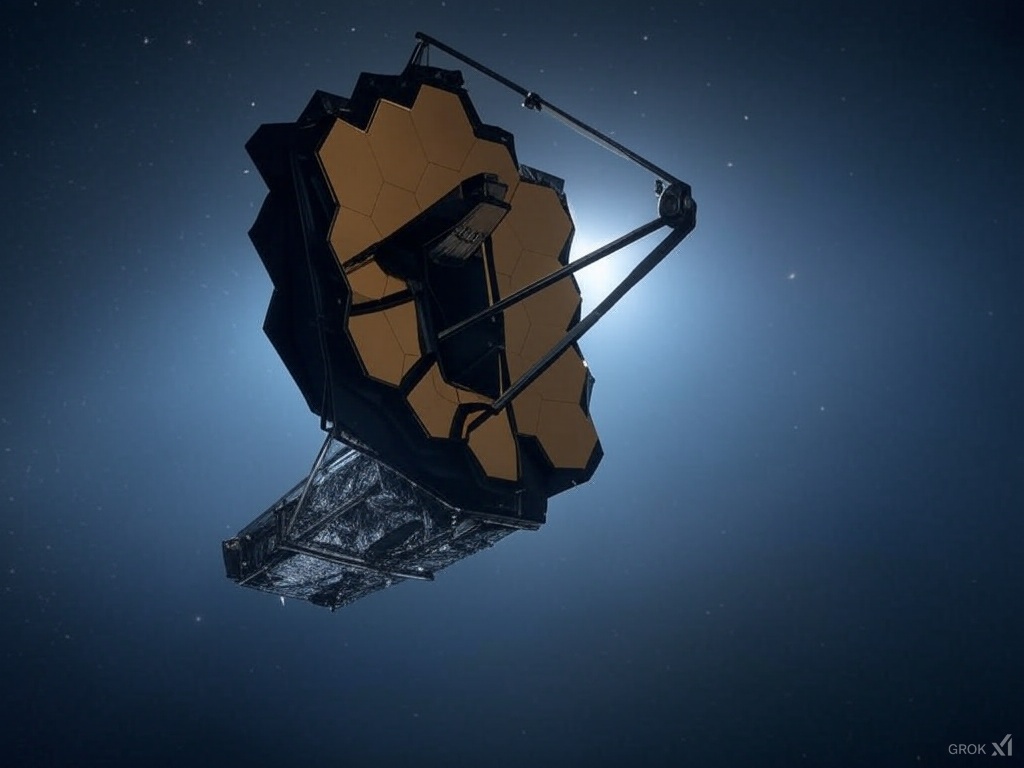
February 22, 2025 – NASA’s James Webb Space Telescope (JWST), heralded as one of the most revolutionary scientific instruments in history, is facing a potential 20% budget cut that could jeopardize its operations just four years after its triumphant launch on December 25, 2021. The news, revealed during a town hall at the 245th American Astronomical Society meeting last month, has sent shockwaves through the scientific community, with experts warning that such a drastic reduction could severely limit the telescope’s ability to deliver groundbreaking discoveries.
Tom Brown, head of the JWST Mission Office at the Space Telescope Science Institute (STScI) in Maryland, which manages the telescope’s science operations, sounded the alarm in January. “It’s extremely worrisome that, while we’re in the middle of the prime mission, we’re also maybe looking at significant budget cuts,” Brown told attendees. “The impacts are quite significant when you’re talking about a 20% cut to operations.” The proposed reduction, slated to take effect in October 2025 at the start of the federal fiscal year, comes as NASA grapples with constrained budgets across its astrophysics and science programs.
Launched with a price tag of $10 billion after decades of development, the JWST has exceeded expectations since it began operations in July 2022. Orbiting a million miles from Earth at the Earth-Sun Lagrange Point 2 (L2), the telescope’s infrared capabilities have unveiled unprecedented views of the cosmos—from the oldest galaxies formed after the Big Bang to intricate details of exoplanets and our own solar system. Its performance has been so exceptional that NASA estimates it could remain operational for over 20 years, far beyond its initial five-year prime mission. Yet, this potential longevity now hangs in the balance.
The proposed cuts would affect every facet of JWST’s operations, including the teams that select observation targets, analyze data, maintain observatory efficiency, and troubleshoot anomalies. Science grants, which fund astronomers worldwide to utilize the telescope’s data, could also face reductions. In NASA’s fiscal year 2025 budget request, the agency allocated $187 million for JWST—$127 million for operations and $60 million for science grants. However, Brown noted that operational costs were underestimated back in 2011, and rising inflation combined with a tightening NASA budget have exacerbated the shortfall.
Demand for JWST’s observation time is at an all-time high. In the latest Cycle 4 proposal round, astronomers submitted 2,377 requests totaling 78,000 hours—nine times the available allocation. “JWST is not even close to hitting its peak science or demand,” said Jennifer Lotz, STScI’s director. “It’s performing better than expected.” Highlights include the discovery of the farthest black hole ever observed in galaxy GN-z11 and detailed images of star-forming regions, cementing JWST’s status as a game-changer in astrophysics.
The timing of the cuts has sparked outrage among scientists and space enthusiasts alike. “We’re talking about slashing funding for a telescope that’s rewriting our understanding of the universe, right when it’s hitting its stride,” said Dr. Jane Rigby, NASA’s senior project scientist for JWST. “NASA’s astrophysics and science budgets are quite constrained, and Webb is not immune to that.” The agency’s broader priorities, such as the $7.6 billion Artemis program for lunar and Mars exploration, have put additional pressure on funding for pure science missions.
Reactions on social media platforms like X reflect a mix of frustration and disbelief. Posts have criticized the prioritization of other expenditures—like fossil fuel exploration—over fundamental research, with one user lamenting, “Apparently, digging for more oil is more important than doing pure science.” Others have called the JWST a “relative bargain” compared to projects like the $24 billion Space Launch System, which has faced its own challenges.
The potential budget cut echoes past struggles for JWST, which narrowly escaped cancellation in 2011 amid cost overruns and delays. Scientists rallied then to save it, and they may need to do so again. “This isn’t just about pretty pictures—it’s about humanity’s quest to understand our place in the cosmos,” said Dr. Macarena Garcia Marin, STScI’s JWST project scientist. “A 20% cut isn’t nibbling at the edges; it’s a blow to everything we’re achieving.”
As the October deadline looms, NASA and its partners—the European Space Agency and Canadian Space Agency—face a critical juncture. Without intervention, the JWST’s ability to peer into the universe’s past and unlock its mysteries could be dimmed, leaving scientists and the public alike to wonder what discoveries might be lost to the budget axe.