ISRO’s PSLV-C61 Mission Fails to Deploy EOS-09 Satellite Due to Third-Stage Anomaly
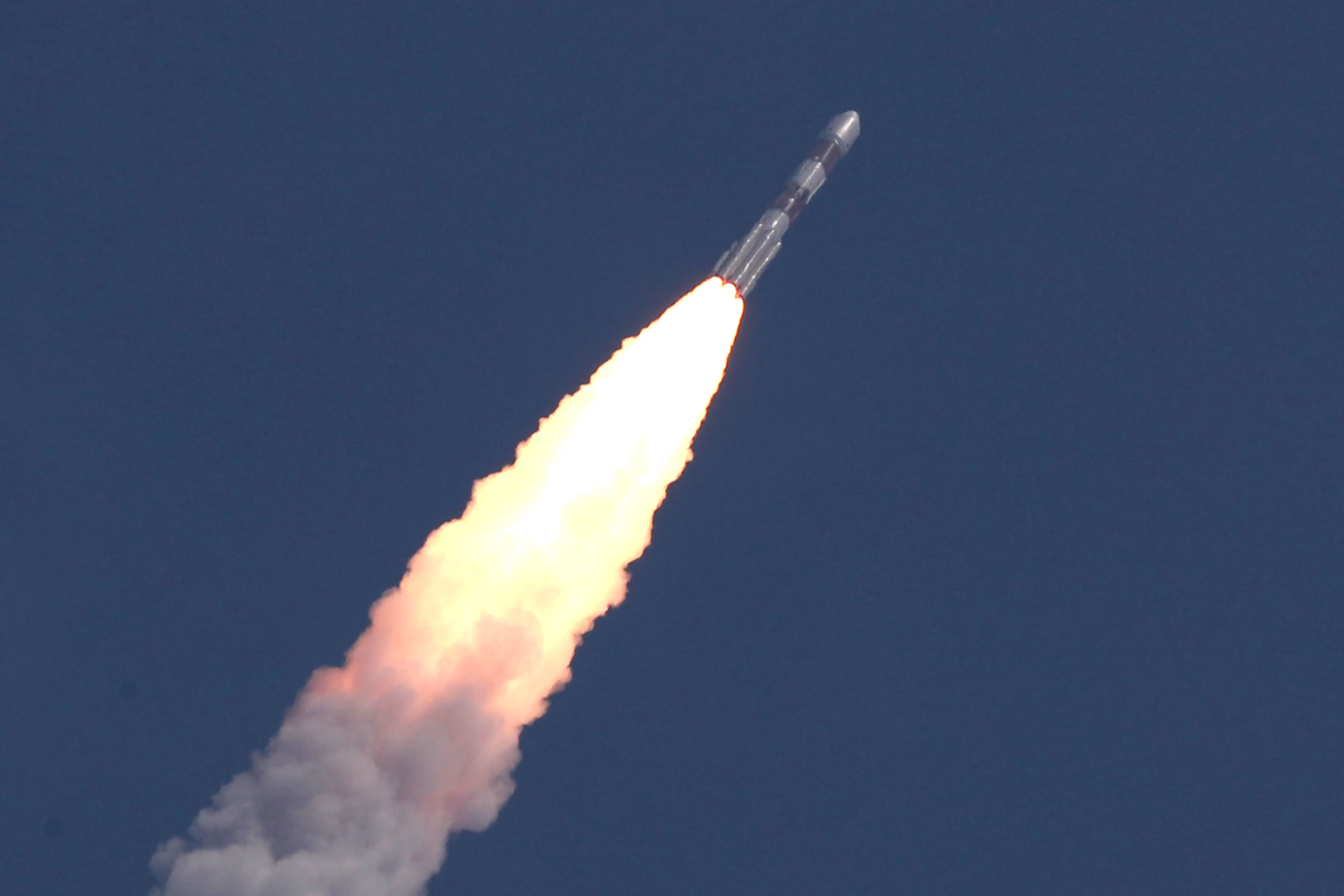
Sriharikota, May 18, 2025 – The Indian Space Research Organisation (ISRO) faced a significant setback today as its PSLV-C61 mission, intended to deploy the advanced Earth observation satellite EOS-09, failed mid-flight. The launch, which marked ISRO’s 101st mission and the 63rd flight of the Polar Satellite Launch Vehicle (PSLV), lifted off at 5:59 AM IST from the Satish Dhawan Space Centre in Sriharikota but encountered a critical issue during the third stage, preventing the satellite from reaching its intended orbit.
A Promising Start, a Sudden Failure
The 44.5-meter-tall PSLV-C61, weighing 321 tonnes at liftoff, performed flawlessly through its first two stages, raising hopes for a successful deployment of the 1,696 kg EOS-09 satellite into a 525 km Sun-Synchronous Polar Orbit (SSPO). However, ISRO Chairman V. Narayanan confirmed that an anomaly occurred in the third stage, roughly 12 minutes into the flight. “The first two stages performed as expected, but we observed a drop in chamber pressure in the third stage, and the mission could not be accomplished,” Narayanan stated during a post-launch briefing.
Initial analysis points to a suspected flex nozzle malfunction in the third-stage propulsion system, which uses a solid rocket motor designed to produce 240 kN of thrust. This failure marks the PSLV’s third mishap in its 63-launch history, following setbacks in 1993 and 2017, and its first since the latter.
The Significance of EOS-09
EOS-09, also known as RISAT-1B, was a radar imaging satellite equipped with C-band Synthetic Aperture Radar (SAR), capable of delivering high-resolution, all-weather, day-and-night imagery. A follow-up to the EOS-04 satellite launched in 2022, it was designed to enhance India’s Earth observation capabilities, supporting applications in agriculture, forestry, soil moisture estimation, disaster management, and national security through improved border surveillance. With a mission life of five years, EOS-09 was also equipped with deorbiting fuel to ensure sustainable disposal at the end of its service, aligning with global space debris mitigation practices.
The failure delays India’s plans to augment its 52-satellite surveillance constellation, a critical asset for both civilian and defense purposes, at a time when space-based monitoring is increasingly vital.
What Went Wrong?
The PSLV is a four-stage rocket, and its third stage relies on a solid motor system to provide thrust after exiting Earth’s atmosphere. Telemetry data showed a sharp decline in velocity—from an expected 6 km/s to 2.45 km/s—indicating a propulsion issue. While ISRO has not yet released a detailed technical report, the drop in chamber pressure suggests potential problems like a propulsion defect, stage separation glitch, or control system failure. A Failure Analysis Committee (FAC) has been formed to investigate the telemetry and flight data, with a focus on identifying the root cause and implementing corrective measures.
Space scientist PK Ghosh commented on the incident, noting that while the failure is unfortunate, it should not overshadow ISRO’s overall track record. “ISRO has had minimal setbacks compared to other space agencies. This is a learning opportunity,” Ghosh said, emphasizing the PSLV’s reputation as one of the world’s most reliable launch vehicles.
A Broader Context of Space Challenges
The PSLV-C61 failure comes amid a busy period for global space activities. Earlier today, Rocket Lab successfully launched a Japanese Earth-observing satellite, while NASA continues to build its Roman Space Telescope despite budget concerns. However, ISRO’s setback underscores the inherent risks of spaceflight, even for a program as dependable as the PSLV, which has previously launched missions like Chandrayaan-1 and the Mars Orbiter.
Posts on X reflect a mix of disappointment and resilience among space enthusiasts, with some expressing confidence that ISRO will rebound quickly. “Heartbreaking to see PSLV fail, but ISRO will come back stronger,” one user wrote, echoing sentiments from the 2017 PSLV-C39 failure.
What’s Next for ISRO?
ISRO has promised a thorough investigation, with Chairman Narayanan assuring that the agency will “come back after analysis.” The loss of EOS-09 is a blow, but ISRO’s track record suggests it will use this failure as a stepping stone. The agency has already scheduled future missions, including the upcoming PSLV-C60 SpaDeX launch, and remains committed to its goal of enhancing India’s space capabilities.
For now, the focus is on understanding what went wrong with PSLV-C61 and ensuring that future missions avoid similar pitfalls. As the global space race intensifies, ISRO’s ability to learn and adapt will be crucial in maintaining its position as a leader in space exploration and Earth observation.