Firefly Aerospace Alpha Rocket Suffers Mishap During Lockheed Martin Satellite Launch
Vandenberg Space Force Base, CA – April 29, 2025
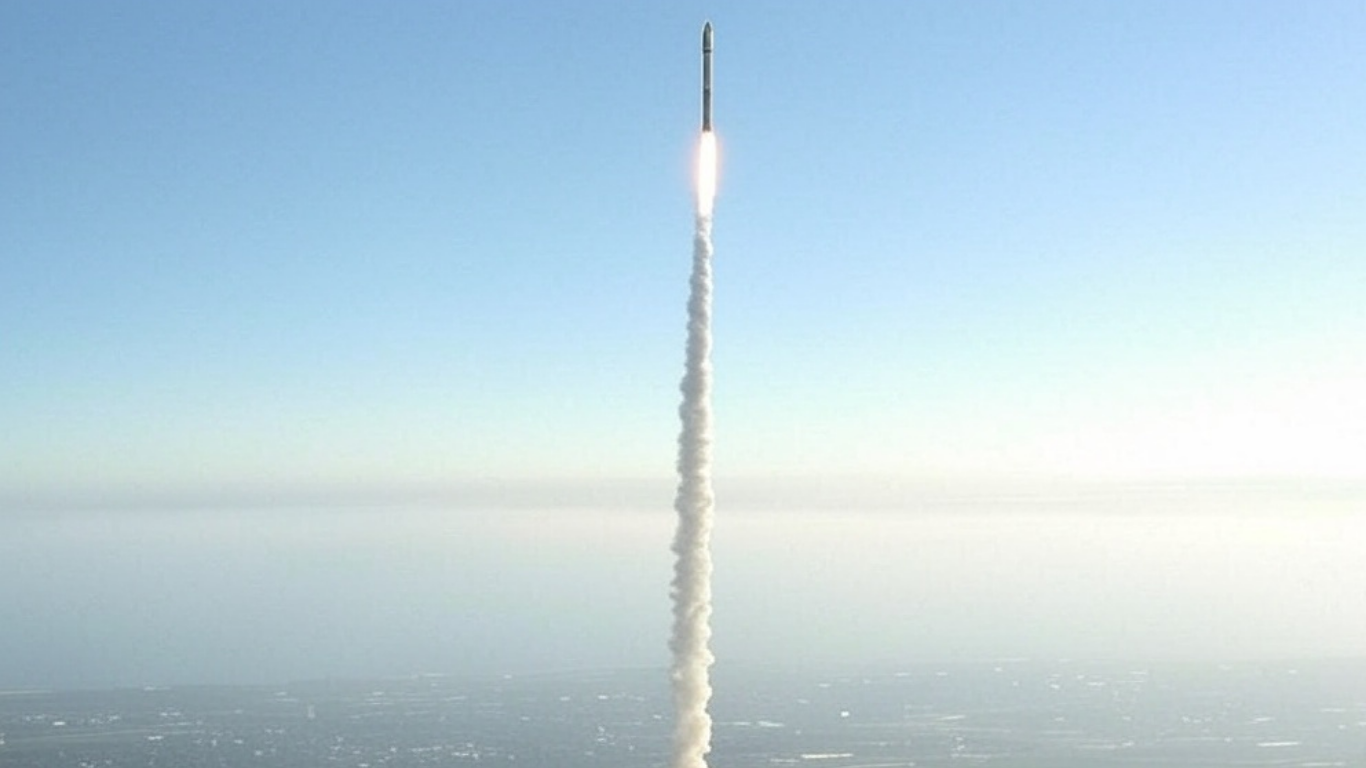
Firefly Aerospace’s Alpha rocket encountered a significant setback during its sixth mission, dubbed “Message in a Booster,” when a mishap during stage separation resulted in the deployment of a Lockheed Martin LM400 satellite prototype into a lower-than-planned orbit. The launch, which took place on April 27, 2025, from Vandenberg Space Force Base in California, was intended to demonstrate the capabilities of Lockheed Martin’s new mid-sized, multi-mission satellite bus.
According to Firefly Aerospace, the Alpha rocket experienced a nominal liftoff, but a problem occurred during the separation of the first and second stages. The first stage impacted the second stage’s Lightning engine nozzle, causing damage that affected the rocket’s ability to reach the intended polar orbit. As a result, the LM400 satellite, designed to showcase advanced communications and operational flexibility for military, commercial, and civil applications, was placed in a suboptimal orbit.
“We are working closely with our Lockheed Martin customer, the U.S. Space Force, and the Federal Aviation Administration to conduct a thorough investigation into the anomaly,” Firefly Aerospace stated in a post on X. The company emphasized its commitment to identifying the root cause and ensuring the reliability of future missions.
The FLTA006 mission marked the second collaboration between Firefly and Lockheed Martin under a multi-launch agreement signed in 2024, which could include up to 25 launches through 2029. The LM400 satellite bus, a modular platform capable of supporting multiple payloads and orbits, was a key component of this demonstration flight. Lockheed Martin designed the LM400 to serve as a “Goldilocks” solution—offering more power and payload capacity than small satellites but being more agile and cost-effective than larger, traditional satellites.
Despite the mishap, the LM400 was deployed, though its operational capabilities in the lower orbit remain uncertain. Posts on X reflected a mix of disappointment and speculation, with some users suggesting the first stage may have exploded or caused significant damage during separation. Firefly has not confirmed these claims, and the investigation is ongoing.
This incident is not the first challenge for Firefly’s Alpha rocket. In December 2023, the rocket suffered a partial failure during its fourth flight, deploying another Lockheed Martin payload into the wrong orbit. However, the Alpha rebounded successfully in its fifth mission in June 2024, delivering eight cubesats to low Earth orbit as planned.
The mishap comes at a critical time for Firefly Aerospace, which has been gaining traction in the competitive small-satellite launch market. The company recently raised $175 million in a Series D funding round and secured contracts with NASA, the National Reconnaissance Office, and the U.S. Department of Defense. Firefly’s Alpha rocket, capable of carrying up to 1,000 kilograms to low Earth orbit, is positioned as a responsive and affordable option for commercial and government clients.
Lockheed Martin, a major player in aerospace and defense, remains optimistic about the LM400 platform despite the launch anomaly. The company is already preparing for its next mission with Firefly, the FLTA007, which will launch a Tactical Satellite (TacSat) in 2025 to demonstrate advanced sensing and 5G communications capabilities.
The space industry is no stranger to setbacks, and both Firefly and Lockheed Martin are expected to leverage lessons from this mishap to strengthen future missions. As the investigation unfolds, the focus will be on ensuring the Alpha rocket’s reliability and maintaining confidence in Firefly’s ambitious launch schedule.
“We remain committed to providing responsive access to space,” said Jason Kim, CEO of Firefly Aerospace. “This mission, while not achieving all objectives, provides valuable data to improve our systems and support our customers’ needs.”
The incident underscores the challenges of space exploration, where precision and reliability are paramount. As Firefly and Lockheed Martin work to address this setback, the industry will be watching closely to see how they adapt and move forward in their quest to redefine satellite deployment and space access.
For updates on the investigation and future launches, follow Firefly Aerospace and Lockheed Martin on X or visit their official websites.