Crew-9 Astronauts Return to Earth After Historic Nine-Month Mission
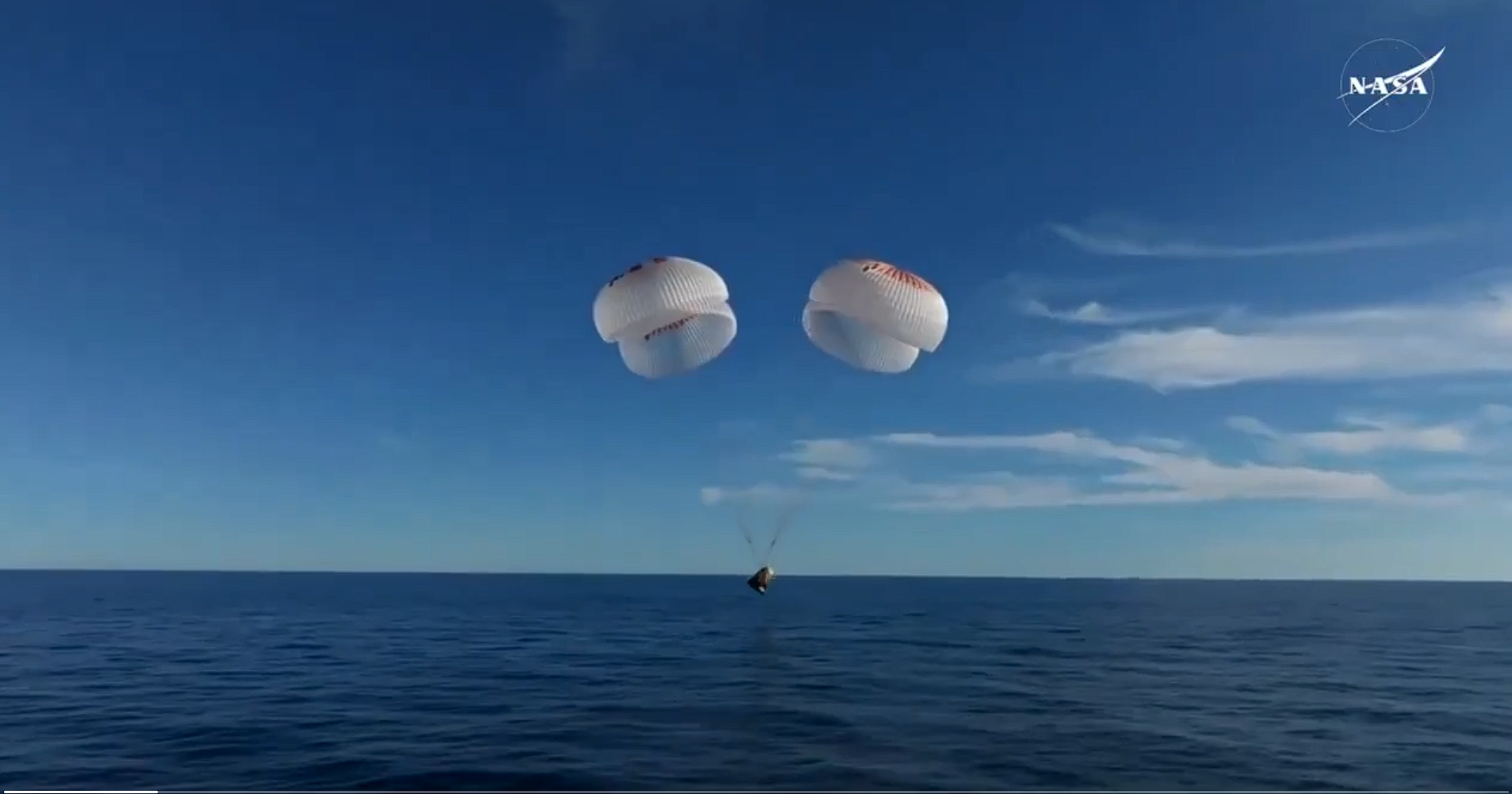
After nearly nine months in space, NASA’s Crew-9 astronauts made a triumphant return to Earth, splashing down safely in the Gulf of Mexico off the coast of Tallahassee, Florida, at 5:57 p.m. EDT on Tuesday, March 18. The SpaceX Dragon spacecraft "Freedom" carried NASA astronauts Nick Hague, Suni Williams, and Butch Wilmore, along with Roscosmos cosmonaut Aleksandr Gorbunov, back to solid ground, marking the end of an eventful and extended mission aboard the International Space Station (ISS).
The crew’s return journey began early Tuesday when the Dragon spacecraft undocked from the ISS’s Harmony module at 1:05 a.m. EDT, initiating a 17-hour descent. Following a successful deorbit burn at 5:18 p.m. EDT, the capsule re-entered Earth’s atmosphere, deploying its drogue parachutes at 18,000 feet and main parachutes shortly after, slowing its descent for a gentle splashdown. “What a ride. I see a capsule full of grins, ear to ear,” Commander Nick Hague radioed to mission control moments after landing, capturing the crew’s elation.
For astronauts Suni Williams and Butch Wilmore, this homecoming was particularly significant. Originally launched on June 5, 2024, aboard Boeing’s Starliner spacecraft for what was planned as a week-long test flight, the duo faced an unexpected extension of their mission due to technical issues with Starliner’s propulsion system. NASA opted to return the Starliner uncrewed in August, integrating Williams and Wilmore into the ISS’s Expedition 71/72 and scheduling their return with Crew-9. Their 286-day stay in space tested their resilience and adaptability, qualities they downplayed as part of their astronaut duties. “It’s just life,” Wilmore said during a March 4 news conference from orbit. “We’re here to do the job.”
Nick Hague and Aleksandr Gorbunov, who launched with Crew-9 on September 29, 2024, completed their planned six-month rotation, conducting over 900 hours of scientific research during their time aboard the ISS. The team’s experiments ranged from biological studies to technology demonstrations, contributing valuable data to NASA’s ongoing efforts to prepare for future deep-space missions.
The splashdown, broadcast live by NASA and SpaceX, showcased a textbook recovery operation. Recovery teams aboard a SpaceX vessel quickly retrieved the capsule, and the astronauts emerged smiling and waving, though standard procedure saw them exit on stretchers due to their prolonged exposure to microgravity. Initial medical checks were conducted on the ship before the crew was flown by Gulfstream jet to NASA’s Johnson Space Center in Houston for further evaluation and rehabilitation.
The Crew-9 mission, NASA’s ninth commercial crew rotation with SpaceX, underscored the reliability of the Dragon spacecraft, which completed its fourth flight with this journey. The spacecraft will now return to Florida for inspection and refurbishment at SpaceX’s Cape Canaveral facility, preparing it for future missions.
The return of Crew-9 follows the arrival of Crew-10 at the ISS on March 16, ensuring a seamless handover and maintaining the station’s full staffing. However, the mission was not without its share of external noise. In recent months, SpaceX CEO Elon Musk and political figures stirred controversy, with Musk suggesting the astronauts had been “abandoned” and framing their return as a rescue operation. NASA officials firmly rejected these claims, emphasizing that the timeline was part of a carefully planned rotation. “We always had a way for the crew to come home,” said Steve Stich, manager of NASA’s Commercial Crew Program, during a post-launch briefing for Crew-10.
As Williams, Wilmore, Hague, and Gorbunov readjust to Earth’s gravity, their return closes a chapter marked by scientific achievement, operational challenges, and a testament to international cooperation in space exploration. For Williams and Wilmore, who became the first astronauts to fly on two different commercial spacecraft in a single mission, it’s a milestone that highlights the evolving landscape of human spaceflight. “It’s been a wild ride,” Williams said with a smile as she waved to cameras, encapsulating the spirit of a mission that pushed boundaries both in space and on Earth.