The Secret to the Lorentz Force Law: Quantum Electrodynamics
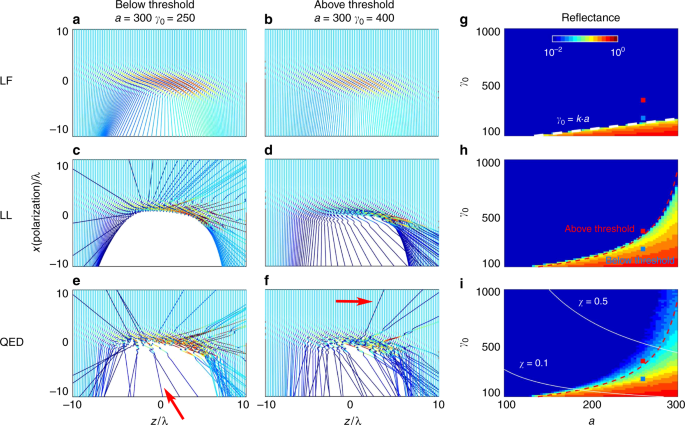
The Lorentz force law is one of the most important laws of physics. It describes the force that acts on a charged particle in the presence of an electric and magnetic field. The Lorentz force law is responsible for a wide range of phenomena, from the motion of electrons in atoms to the behavior of magnets.
Advertisement
Quantum electrodynamics (QED) is a quantum field theory that describes the interaction of light and matter. QED is one of the most successful theories in physics, and it has been experimentally verified to high precision.
QED provides a fundamental explanation of the Lorentz force law. In QED, the Lorentz force is caused by the exchange of photons between charged particles. Photons are the particles of light, and they carry momentum and energy.
Advertisement
When a charged particle interacts with an electric or magnetic field, it can emit or absorb photons. The emission or absorption of photons changes the momentum of the charged particle, and this gives rise to the Lorentz force.
QED is a very complex theory, but it can be used to calculate the Lorentz force law to high precision. QED calculations have been used to predict the behavior of charged particles in a wide range of environments, from accelerators to astrophysics.
Advertisement
Here is a simplified example of how QED explains the Lorentz force law:
Imagine a charged particle moving through a magnetic field. The magnetic field causes the charged particle to spiral around. This is because the magnetic field exerts a force on the charged particle that is perpendicular to its direction of motion.
In QED, the Lorentz force is caused by the exchange of photons between the charged particle and the magnetic field. The magnetic field is made up of photons that are moving in circles. When the charged particle interacts with these photons, it can emit or absorb them.
If the charged particle emits a photon, it will lose momentum. This momentum loss causes the charged particle to spiral inwards. If the charged particle absorbs a photon, it will gain momentum. This momentum gain causes the charged particle to spiral outwards.
Advertisement
The overall effect of the exchange of photons is to cause the charged particle to spiral around the magnetic field. The radius of the spiral depends on the strength of the magnetic field and the charge of the particle.
QED is a powerful theory that provides a fundamental explanation of the Lorentz force law. QED has been experimentally verified to high precision, and it is one of the most successful theories in physics.