Beyond the Beam: Unveiling the Mystery of Quantum Teleportation
How does the strange theory address the phenomenon of quantum teleportation?
Quantum teleportation, a concept often relegated to the realm of science fiction, has surprisingly solid roots in the strange and fascinating world of quantum mechanics. But how exactly does this theory, seemingly defying logic, explain the seemingly instantaneous transfer of information across vast distances?
Entanglement: The Spooky Connection at the Heart of Teleportation
Central to the phenomenon of quantum teleportation is the concept of entanglement. Imagine two coins, incredibly far apart, flipping simultaneously and always landing on the same side – heads or tails. This eerie correlation, defying classical explanation, is the essence of entanglement. In the quantum world, certain particles can become entangled, meaning their properties are linked, regardless of physical separation.
The Teleportation Dance: Transferring Information, Not Matter
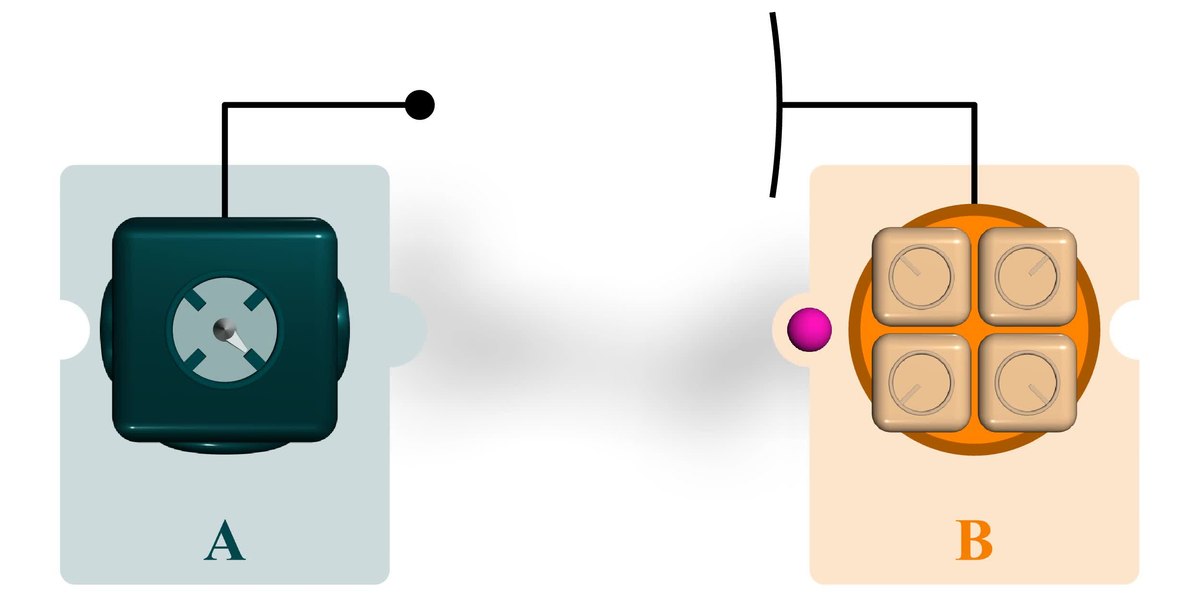
It's crucial to understand that quantum teleportation doesn't actually beam physical matter across distances. Instead, it focuses on transferring the quantum state, or the specific set of properties, of one particle to another entangled particle. Here's a simplified breakdown:
Advertisement
The Weirdness of Quantum Mechanics: Embracing Uncertainty
This process, though seemingly magical, hinges on the inherent strangeness of quantum mechanics. The unknown state of Charlie is encoded in the combined measurement of Alice and her entangled particle. This measurement, however, doesn't reveal Charlie's original state directly but collapses both entangled particles into a specific correlated state. It's only at Bob's end, upon measuring his particle, that Charlie's original state is revealed.
Beyond the Hype: The Realities of Quantum Teleportation
While the concept is mind-bending, it's important to note that current implementations of quantum teleportation are limited. They work primarily with single photons and require complex setups. Additionally, the teleportation process destroys the original quantum state, meaning it cannot be recovered.
Frequently Asked Questions:
- Does quantum teleportation violate the laws of physics? No. While seemingly instantaneous, information transfer in teleportation is limited by the speed of light. The entangled particles act as a correlated reference frame, not a means of exceeding the speed limit.
- Can we teleport humans or objects with quantum teleportation? Not with current technology. Teleportation applies to quantum states, not physical matter.
- What are the potential applications of quantum teleportation? Potential applications include developing ultra-secure communication networks and enabling advancements in quantum computing.