Why NASA's Europa Clipper Mission to Jupiter's Icy Moon is Such a Big Deal
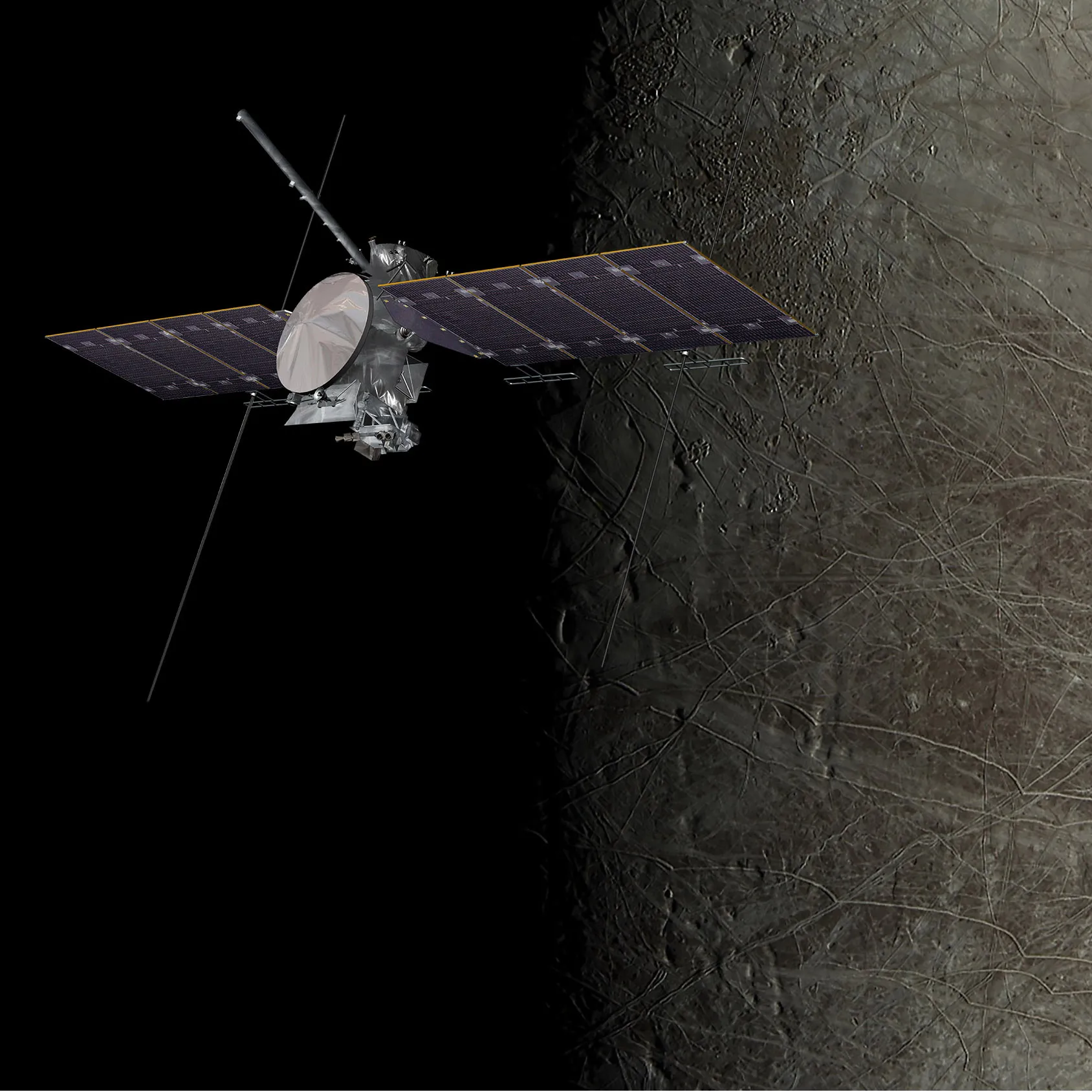
NASA's upcoming Europa Clipper mission, set to explore Jupiter's icy moon Europa, has been generating significant buzz in the scientific community. Scheduled for launch in 2024, this mission promises to provide groundbreaking insights into one of the most intriguing celestial bodies in our solar system.
Advertisement
Europa, slightly smaller than Earth's moon, has long captivated scientists due to its potential to harbor life. Beneath its icy crust lies a vast ocean of liquid water, making it a prime candidate in the search for extraterrestrial life. The Europa Clipper mission aims to investigate this moon's habitability and assess its potential for supporting life.
The mission's significance lies in its advanced suite of scientific instruments designed to conduct detailed reconnaissance of Europa's ice shell and subsurface ocean. These instruments will analyze the moon's ice and water composition, thickness, and surface features. By doing so, they aim to unravel the mysteries of Europa's geological activity, which could provide clues about the ocean's chemistry and its potential for sustaining life.
Advertisement
Europa Clipper will perform multiple flybys of Europa, capturing high-resolution images and collecting data on the moon's surface and atmosphere. The mission's findings could revolutionize our understanding of icy worlds and their potential for life, offering insights that extend beyond our solar system to exoplanets with similar conditions.
Moreover, the mission will pave the way for future exploration. Its data will help scientists design subsequent missions, including potential landers or subsurface probes, to further explore Europa's ocean and search for signs of life directly.
Advertisement
In summary, NASA's Europa Clipper mission is a monumental step in planetary science and astrobiology. By exploring Europa's icy surface and hidden ocean, it has the potential to answer fundamental questions about the existence of life beyond Earth, making it one of the most anticipated space missions of the decade.