Space Debris Mystery on Australian Beach Finally Solved
Space Debris Mystery on Australian Beach Finally Solved
August 2, 2023
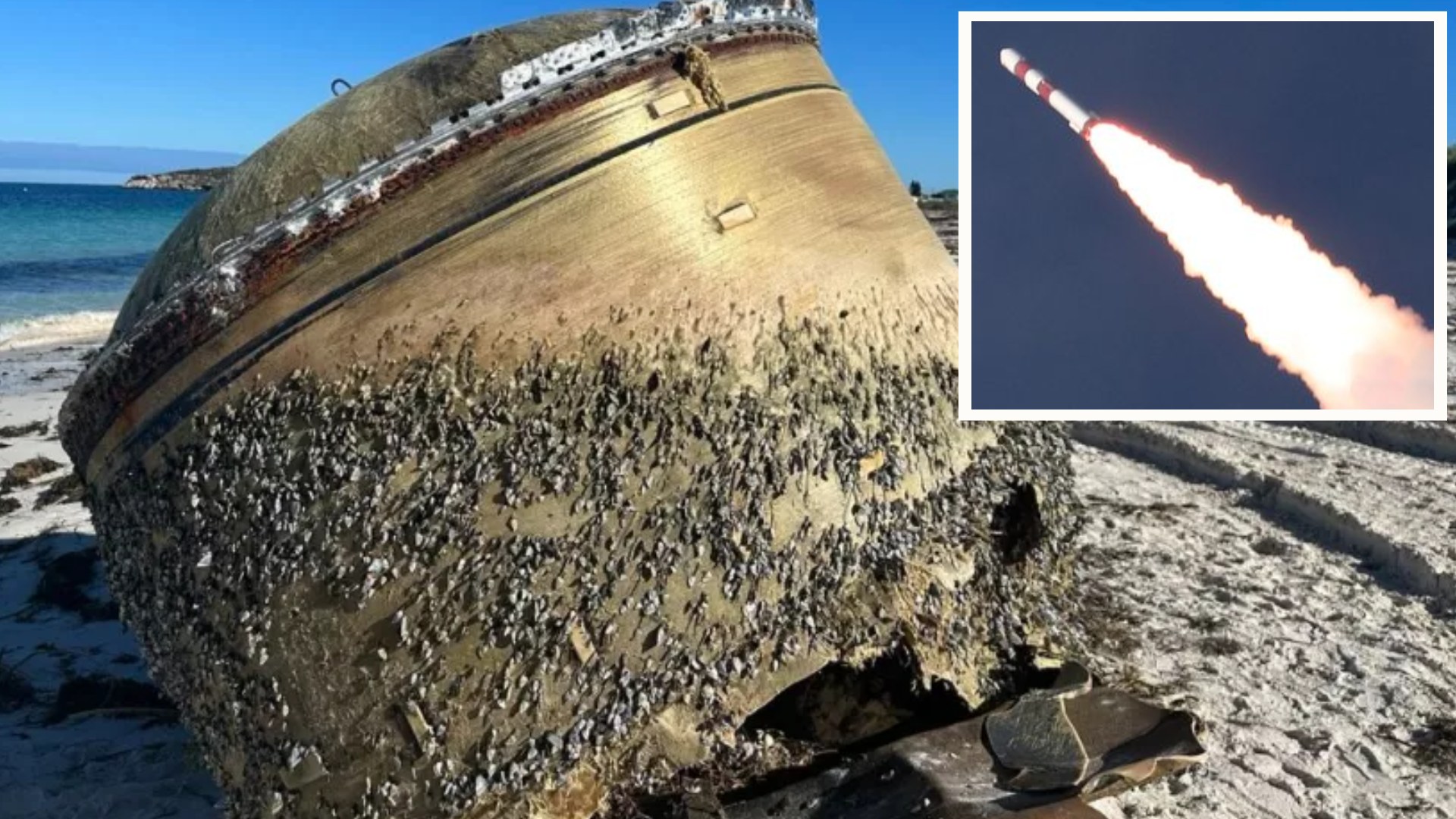
The mystery of a large piece of space debris that washed up on an Australian beach has finally been solved. The Australian Space Agency (ASA) has concluded that the object is most likely a section of the third stage of a Polar Satellite Launch Vehicle (PSLV) that was launched by the Indian Space Research Organisation (ISRO) on May 29, 2023.
The cylindrical metal object, which is about 2.5 meters high and partly made of a gold-colored woven material, was found on July 17 near Green Head, about 250 kilometers north of Perth. The discovery led to theories that it could have been part of a downed airliner or a piece of space junk from a previous launch.
However, the ASA's investigation found that the object is most likely a section of the PSLV's third stage. This stage is responsible for injecting the satellite into orbit, and it typically falls back to Earth after a few weeks. In this case, the stage appears to have landed in the ocean and then been washed up on the beach.
The ASA said that the object is not a hazard to public safety, but it has asked people to stay away from it so that it can be properly investigated. The agency is also working with ISRO to determine how the debris came to be in Australia.
The discovery of the space debris is a reminder of the growing problem of space junk. There are an estimated 7,500 tons of space debris orbiting Earth, and this number is expected to grow in the coming years. This debris poses a risk to satellites and spacecraft, and it could also pose a hazard to people on the ground if it falls back to Earth.
The ASA is working to address the problem of space junk. The agency is developing technologies to track and remove debris from orbit, and it is also working with other countries to develop international standards for space debris mitigation.
The mystery of the space debris on the Australian beach has been solved, but the problem of space junk remains. The ASA and other space agencies are working to address this problem, but it is a complex challenge that will require international cooperation.