NASA's Curiosity Mars rover reaches perilous ridge on Red Planet after 3 failed attempts
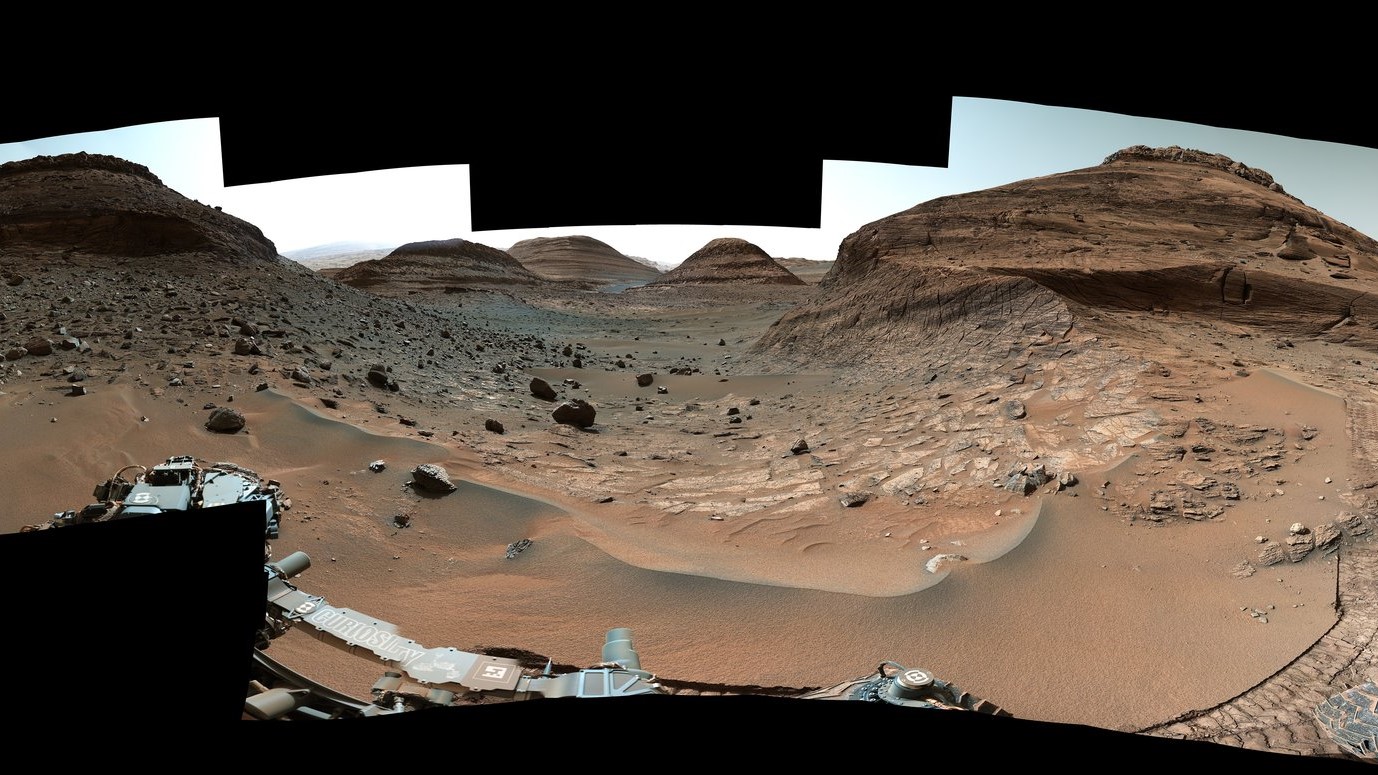
NASA's Curiosity Mars rover has finally reached the Gediz Vallis Ridge, a perilous terrain on the Red Planet, after three failed attempts. The rover arrived at the ridge on Monday, September 18, 2023, after a two-year journey.
Advertisement
The Gediz Vallis Ridge is a 5-kilometer-long ridge that rises 600 meters above the surrounding plain. It is thought to have been formed by a debris flow billions of years ago. Scientists are eager to study the ridge because it could provide insights into the ancient Martian climate and the possibility of life on Mars.
The Curiosity rover has been exploring Mars since 2012. It has made a number of important discoveries, including evidence that Mars was once much wetter than it is today. The Curiosity rover has also found organic molecules on Mars, which are the building blocks of life.
The Gediz Vallis Ridge is one of the most challenging terrains that the Curiosity rover has ever faced. The ridge is very steep and has many loose rocks. However, the Curiosity rover is equipped with a variety of tools to help it navigate difficult terrain.
Advertisement
The Curiosity rover will spend the next several months studying the Gediz Vallis Ridge. Scientists are hoping to learn more about the formation of the ridge and the possibility of ancient life on Mars.
The Curiosity rover's success in reaching the Gediz Vallis Ridge is a testament to the ingenuity and dedication of the NASA team. It is also a reminder of the incredible potential of Mars exploration.
FAQ
Q: What is the Gediz Vallis Ridge?
A: The Gediz Vallis Ridge is a 5-kilometer-long ridge that rises 600 meters above the surrounding plain on Mars. It is thought to have been formed by a debris flow billions of years ago. Scientists are eager to study the ridge because it could provide insights into the ancient Martian climate and the possibility of life on Mars.
Q: Why is the Gediz Vallis Ridge significant?
A: The Gediz Vallis Ridge is significant because it is one of the best places on Mars to study the ancient Martian climate. The ridge is thought to have been formed by a debris flow, which is a type of landslide that is caused by water. This suggests that Mars was once much wetter than it is today.
Q: What is the Curiosity Mars rover?
Curiosity Mars rover
A: The Curiosity Mars rover is a robotic rover that was launched by NASA in 2012. The rover landed on Mars in 2012 and has been exploring the planet ever since. The Curiosity rover is equipped with a variety of tools to help it study the Martian surface, including cameras, spectrometers, and a drill.
Q: What has the Curiosity Mars rover discovered?
A: The Curiosity Mars rover has made a number of important discoveries, including evidence that Mars was once much wetter than it is today. The Curiosity rover has also found organic molecules on Mars, which are the building blocks of life.
Q: How did the Curiosity Mars rover reach the Gediz Vallis Ridge?
A: The Curiosity Mars rover reached the Gediz Vallis Ridge after a two-year journey. The rover had to climb over several difficult obstacles, including steep slopes and loose rocks. However, the Curiosity rover is equipped with a variety of tools to help it navigate difficult terrain.
Q: What will the Curiosity Mars rover do now that it has reached the Gediz Vallis Ridge?
A: The Curiosity Mars rover will spend the next several months studying the Gediz Vallis Ridge. Scientists are hoping to learn more about the formation of the ridge and the possibility of ancient life on Mars.
Q: What does the Curiosity Mars rover's success in reaching the Gediz Vallis Ridge mean for Mars exploration?
A: The Curiosity Mars rover's success in reaching the Gediz Vallis Ridge is a testament to the ingenuity and dedication of the NASA team. It is also a reminder of the incredible potential of Mars exploration. The Curiosity rover's discoveries have helped us to better understand the Red Planet and its potential for life.