Moon Mysteries Solved: Why are Craters Circular?
why are almost all the craters we see on the moon circular?
Unveiling the Secrets of the Moon's Pockmarked Surface
The Moon's cratered surface is one of its most striking features. But have you ever wondered why these craters are almost always circular? Unlike Earth's diverse landscapes, the Moon seems dominated by these perfectly round depressions. The answer lies in the nature of impacts and the Moon's environment.
Cosmic Collisions and Circular Craters:
When a speeding asteroid or comet slams into the lunar surface, it creates a powerful explosion. This explosion sends shockwaves radiating outward in all directions, much like ripples from a pebble dropped in water. The force of the impact shatters and ejects surrounding rock and debris. Since the shockwave travels equally in all directions, the resulting cavity – the crater – takes on a circular shape.
The Moon's Unique Environment:
The Moon's lack of atmosphere plays a crucial role in crater shape. Here on Earth, an atmosphere can deflect or slow down incoming objects, leading to more irregular impact angles and potentially elongated craters. Additionally, Earth's weather, wind, and water constantly erode and reshape craters over time, further diminishing their circularity. In contrast, the Moon's airless and geologically inactive environment leaves craters virtually untouched, preserving their original circular form for millions of years.
Advertisement
The Occasional Exceptions:
Advertisement
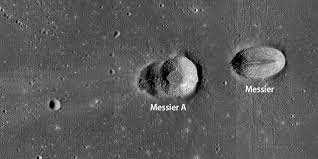
While most lunar craters are circular, there are a few exceptions. At very shallow angles, an impact might create an elliptical crater, shaped like an oval. These are relatively rare, however. Additionally, some large impacts can cause multiple, overlapping craters, creating a more complex, irregular shape.
Advertisement
Frequently Asked Questions (FAQ):
- Are there any other celestial bodies with circular craters?
Yes! The process of impact cratering is universal. We see circular craters on other planets, moons, and asteroids throughout the solar system, wherever there is a solid surface and a lack of atmospheric interference.
Advertisement
- Do all impacts create craters?
Smaller objects might not have enough energy to leave a permanent crater. The size of the crater depends on the size and speed of the impacting object, as well as the composition of the surface.
- Can we learn anything from studying lunar craters?