Mars Rover Perseverance Spots Its First Dust Devil
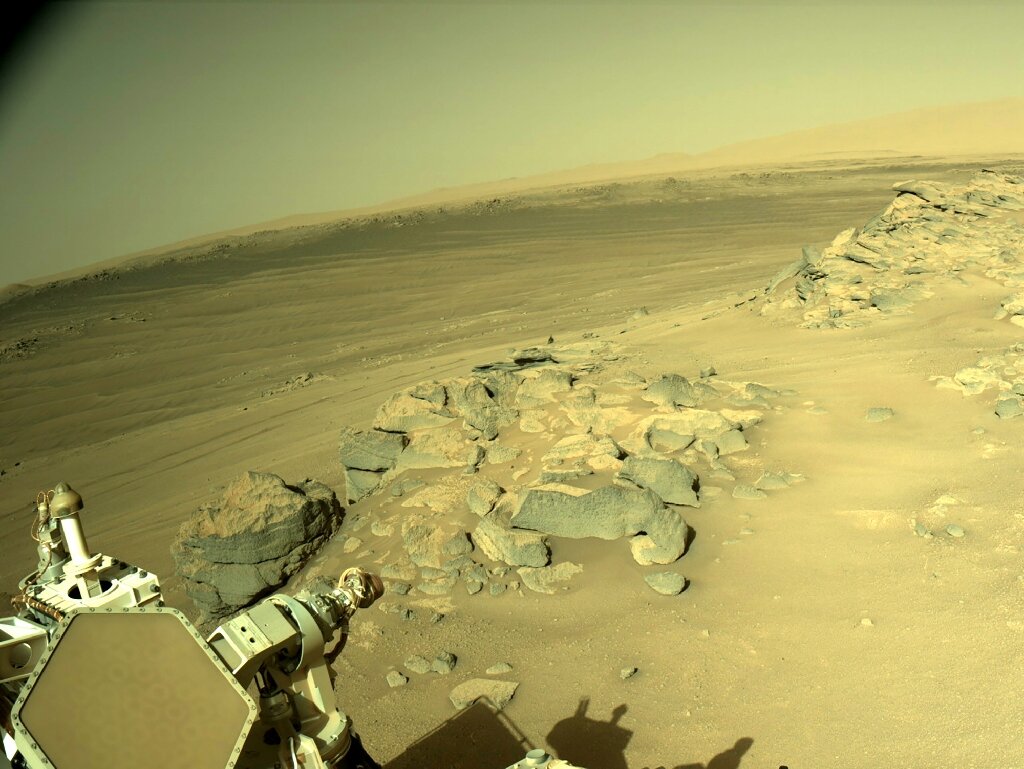
NASA's Perseverance rover has captured video of a dust devil swirling on the western rim of Jezero Crater on Mars. The dust devil is about 2.5 miles (4 kilometers) from Perseverance and is moving east to west at about 12 mph (19 kph). It is estimated to be roughly 200 feet (60 meters) wide and up to 1,000 feet (300 meters) tall.
Advertisement
Dust devils are common on Mars, especially during the summer months when the atmosphere is warmer and drier. They are formed when the sun heats up the ground, causing the air to rise. As the air rises, it cools and condenses, forming a column of swirling dust. Dust devils can range in size from a few feet to hundreds of feet in diameter and can reach speeds of up to 60 mph (97 kph).
Perseverance's video of the dust devil is the first ever captured from the surface of Mars. It provides scientists with a unique opportunity to study these phenomena up close. By studying dust devils, scientists can learn more about the Martian atmosphere and how it has changed over time.
Advertisement
The video also shows the dust devil passing over a large rock formation. This suggests that dust devils may be responsible for transporting rocks and other materials across the Martian surface. This could be important for understanding how the Martian landscape has evolved over time.
Perseverance is currently exploring Jezero Crater, which is thought to have been a lake billions of years ago. The rover is searching for signs of ancient life in the crater sediments. The discovery of dust devils in Jezero Crater suggests that the crater may have been a more active environment than previously thought. This could make Jezero Crater a more promising place to search for signs of ancient life.
Advertisement
The Perseverance rover is part of NASA's Mars 2020 mission, which also includes the Ingenuity helicopter. Ingenuity is the first helicopter to fly on another world. Perseverance and Ingenuity are working together to explore Jezero Crater and learn more about the Red Planet.
Implications for the Search for Life on Mars
The discovery of dust devils in Jezero Crater has important implications for the search for life on Mars. Dust devils can transport rocks and other materials across the Martian surface, including potential biosignatures, such as organic molecules and fossils. This means that dust devils could help to redistribute signs of ancient life across Jezero Crater, making them easier for Perseverance to find.
In addition, dust devils can also create microenvironments on Mars that may be more favorable for life. For example, dust devils can create pockets of warm, moist air that could provide a habitat for microbes.
Overall, the discovery of dust devils in Jezero Crater is a positive sign for the search for life on Mars. Dust devils could help to distribute signs of ancient life across the crater and create microenvironments that are more favorable for life. Perseverance's continued exploration of Jezero Crater could lead to the discovery of definitive signs of life on Mars.
FAQ
What is a dust devil?
A dust devil is a vortex of wind that lofts dust into the air. Dust devils are common on Mars, especially during the summer months when the atmosphere is warmer and drier.
How did Perseverance capture video of the dust devil?
Perseverance is equipped with a number of cameras, including the Mastcam-Z camera system. Perseverance uses Mastcam-Z to capture high-resolution images and videos of the Martian surface.
How big was the dust devil that Perseverance spotted?
The dust devil that Perseverance spotted was estimated to be about 200 feet (60 meters) wide and up to 1,000 feet (300 meters) tall.
Where was the dust devil spotted?
The dust devil was spotted on the western rim of Jezero Crater. Jezero Crater is a large crater on Mars that is thought to have been a lake billions of years ago.
What does the discovery of the dust devil mean for the search for life on Mars?
The discovery of the dust devil in Jezero Crater is a positive sign for the search for life on Mars. Dust devils can transport rocks and other materials across the Martian surface, including potential biosignatures, such as organic molecules and fossils. This means that dust devils could help to redistribute signs of ancient life across Jezero Crater, making them easier for Perseverance to find.
In addition, dust devils can also create microenvironments on Mars that may be more favorable for life. For example, dust devils can create pockets of warm, moist air that could provide a habitat for microbes.
Overall, the discovery of the dust devil in Jezero Crater suggests that the crater may be a more promising place to search for signs of ancient life than previously thought.