Living and Working at Breakneck Speed: Why Astronauts Don't Feel the ISS Zoom
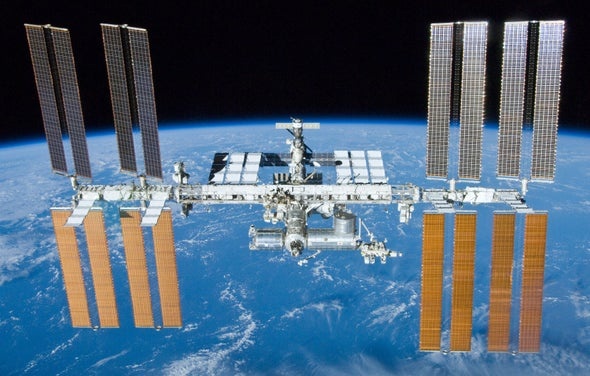
If the ISS travels at 40,000 km/h, how can an astronaut work in space?
Advertisement
This might seem counterintuitive, but the incredible speed of the International Space Station (ISS) doesn't hinder astronauts from carrying out their important work. Here's why:
Advertisement
Advertisement
-
The Myth of Feeling Speed in Space: We experience speed through the sensation of acceleration or friction against air. Since the ISS travels in a constant, near-frictionless vacuum, astronauts don't feel the immense velocity. It's like smoothly gliding on a frictionless surface – think air hockey, not a rollercoaster!
-
In Orbit, Not Propelling: The ISS isn't constantly accelerating; it's essentially falling around the Earth at a very specific speed. This controlled fall creates a state of weightlessness, allowing astronauts to move freely within the station.
-
A Designed Environment: The ISS is meticulously designed for microgravity. Workstations, tools, and living quarters all have features to counter the lack of gravity. Astronauts use straps, restraints, and specially designed tools to ensure they can perform tasks efficiently.
The Myth of Feeling Speed in Space: We experience speed through the sensation of acceleration or friction against air. Since the ISS travels in a constant, near-frictionless vacuum, astronauts don't feel the immense velocity. It's like smoothly gliding on a frictionless surface – think air hockey, not a rollercoaster!
Advertisement
In Orbit, Not Propelling: The ISS isn't constantly accelerating; it's essentially falling around the Earth at a very specific speed. This controlled fall creates a state of weightlessness, allowing astronauts to move freely within the station.
A Designed Environment: The ISS is meticulously designed for microgravity. Workstations, tools, and living quarters all have features to counter the lack of gravity. Astronauts use straps, restraints, and specially designed tools to ensure they can perform tasks efficiently.
Frequently Asked Questions (FAQ):
-
Can astronauts get dizzy in space? Space adaptation syndrome, sometimes called "space sickness," can occur during the first few days in space due to the inner ear adjusting to weightlessness. This usually resolves quickly.
-
How do astronauts sleep in space? They sleep in special sleeping bags secured to the walls to prevent them from floating around.
-
Is it dangerous to be in space? Space travel does carry inherent risks, such as exposure to radiation and the harsh environment. Astronauts undergo rigorous training and the ISS is equipped with safety measures to mitigate these risks.
Can astronauts get dizzy in space? Space adaptation syndrome, sometimes called "space sickness," can occur during the first few days in space due to the inner ear adjusting to weightlessness. This usually resolves quickly.
How do astronauts sleep in space? They sleep in special sleeping bags secured to the walls to prevent them from floating around.
Is it dangerous to be in space? Space travel does carry inherent risks, such as exposure to radiation and the harsh environment. Astronauts undergo rigorous training and the ISS is equipped with safety measures to mitigate these risks.