James Webb Space Telescope Detects Water and Methane in Atmosphere of a 'Warm Jupiter'
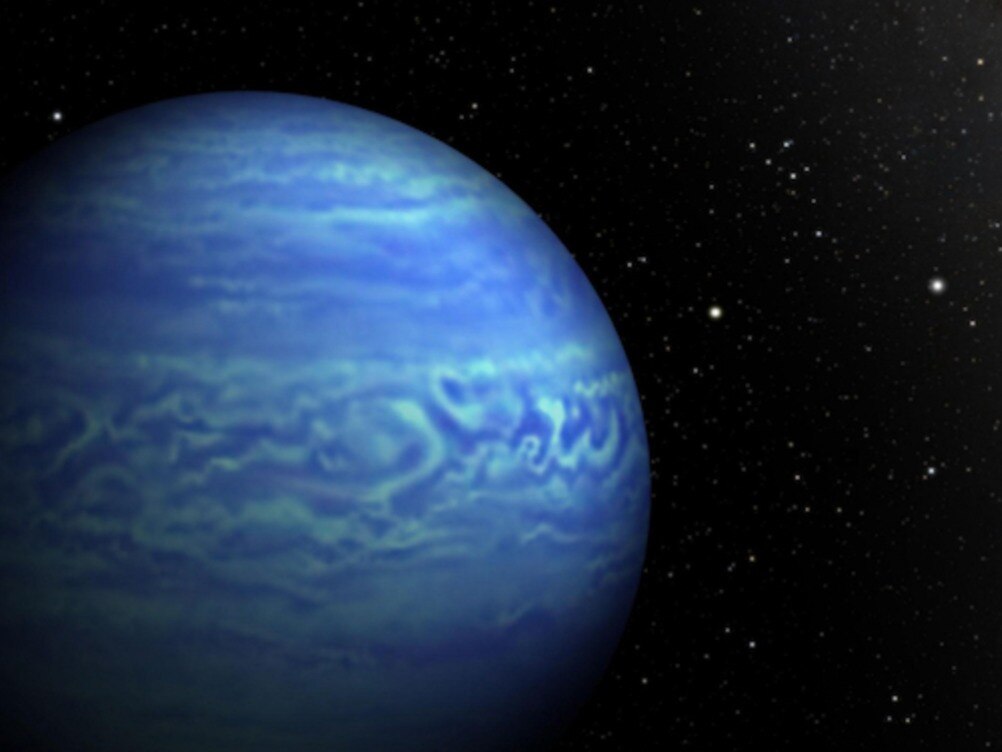
Scientists have used the James Webb Space Telescope (JWST) to detect water and methane in the atmosphere of an exoplanet called WASP-80b. WASP-80b is a 'warm Jupiter', meaning it is similar to Jupiter but is much closer to its star. The planet orbits its star every 3.7 days and is about 163 light-years from Earth.
Advertisement
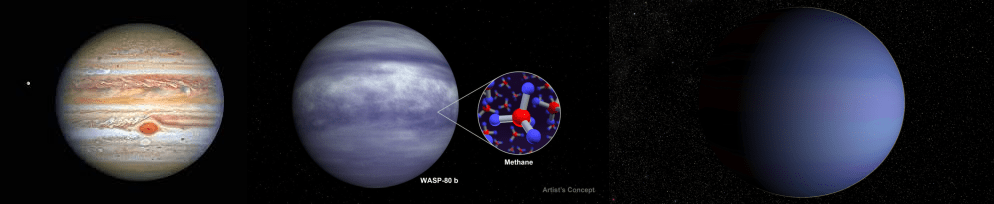
This is the first time that methane has been detected in the atmosphere of a 'warm Jupiter' using transit spectroscopy. Transit spectroscopy is a technique that involves observing the planet as it passes between its star and Earth. When the planet passes in front of its star, some of the starlight is absorbed by the planet's atmosphere. By analyzing the amount of starlight that is absorbed, scientists can determine which gases are present in the atmosphere.
Advertisement
The detection of water and methane in the atmosphere of WASP-80b is a significant discovery because it suggests that the planet could potentially support life. Water is essential for life as we know it, and methane is a molecule that can be produced by biological processes.
/https%3A%2F%2Ftf-cmsv2-smithsonianmag-media.s3.amazonaws.com%2Ffiler_public%2Ffc%2F45%2Ffc45b037-0caa-487d-9cad-49247f160952%2Fwebb_exoplanet.jpeg)
Advertisement
"These new results are just the beginning of Webb's amazing capabilities," said Serkan Sekercioglu, a Webb scientist at the Space Telescope Science Institute in Baltimore, Maryland. "With Webb, we can now study the atmospheres of exoplanets in more detail than ever before, and we are just starting to understand the diversity of exoplanets in our galaxy."
The detection of water and methane in the atmosphere of WASP-80b is a major milestone in the search for habitable exoplanets. It shows that the JWST is a powerful tool for studying exoplanets and could potentially lead to the discovery of life beyond Earth.