China’s Chang’e 6 Probe to Land on Moon’s Far Side This Weekend to Return Lunar Samples to Earth
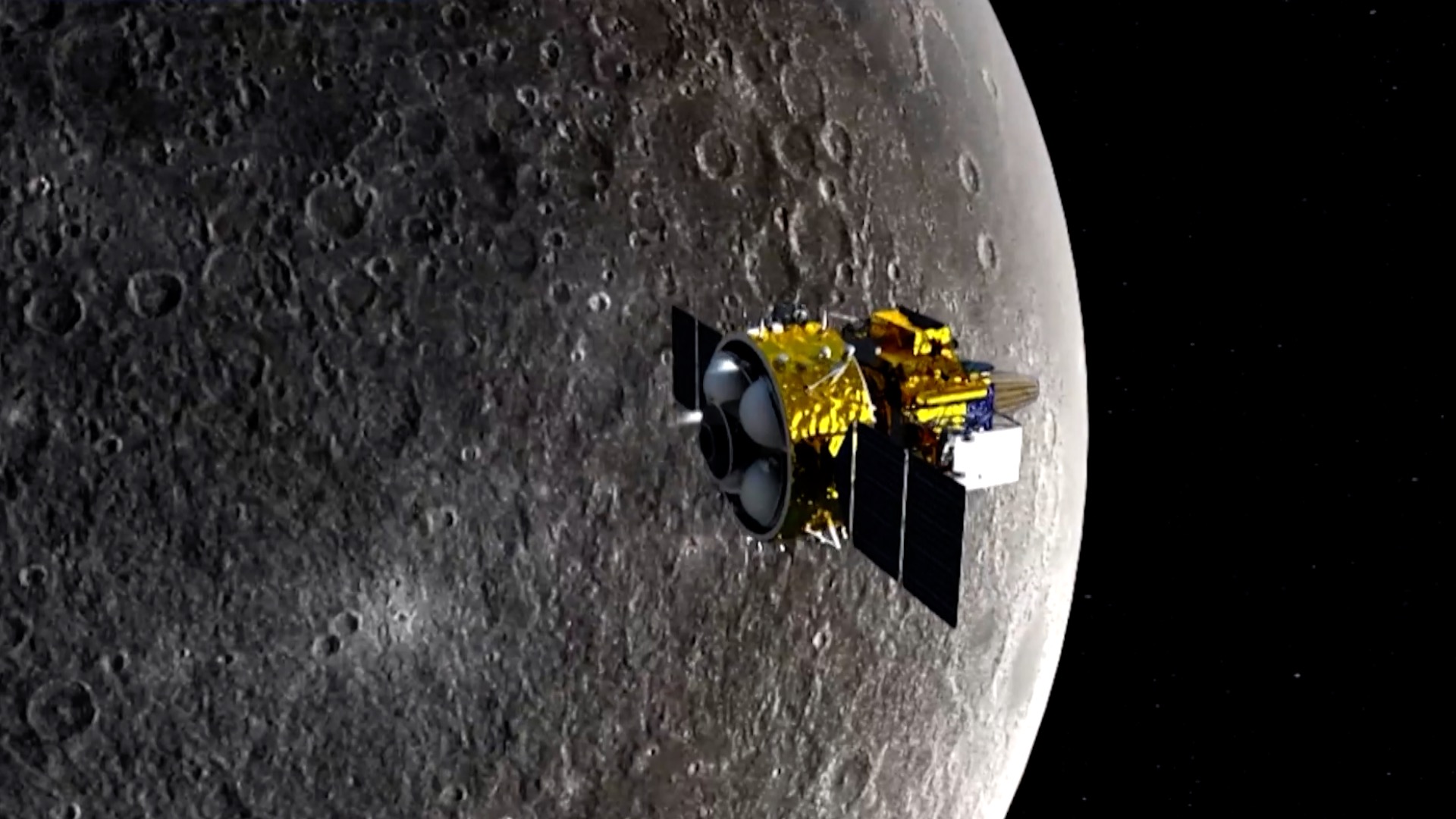
May 30, 2024 – This weekend marks a historic event in space exploration as China's Chang'e 6 probe prepares to land on the far side of the moon. This ambitious mission aims to collect and return lunar samples to Earth, building on the success of previous lunar missions and solidifying China's position as a leader in space exploration.
Advertisement
A Bold Mission to the Moon’s Far Side
The Chang'e 6 mission, part of China's expanding lunar exploration program, will be the first to retrieve samples from the moon's far side. Unlike the near side, which faces Earth and has been the target of many previous missions, the far side presents unique challenges due to its rugged terrain and lack of direct communication with Earth.
To overcome these challenges, China has deployed the Queqiao relay satellite, which will facilitate communication between the Chang'e 6 probe and mission control. The probe is expected to land in the South Pole-Aitken Basin, one of the largest and oldest impact craters in the solar system, offering scientists a valuable opportunity to study material from deep within the lunar crust.
Objectives and Scientific Goals
The primary objective of Chang'e 6 is to collect up to two kilograms of lunar soil and rock samples from the far side and return them to Earth for detailed analysis. These samples are expected to provide crucial insights into the moon's composition, geological history, and the processes that have shaped its surface.
Dr. Li Ming, a senior scientist at the China National Space Administration (CNSA), highlighted the mission's significance: "By analyzing the samples from the far side, we hope to gain a better understanding of the moon's formation and evolution. This mission could also shed light on the broader history of our solar system."
In addition to sample collection, Chang'e 6 will conduct a series of scientific experiments, including studying the moon's subsurface structure and measuring the space environment around the far side. These experiments will contribute to our knowledge of lunar geology and the potential for future human exploration.
Building on Past Successes
Chang'e 6 follows in the footsteps of its predecessor, Chang'e 5, which successfully returned samples from the moon's near side in December 2020. The success of Chang'e 5 demonstrated China's growing capabilities in lunar exploration and sample return missions. With Chang'e 6, China aims to build on this success and push the boundaries of what is possible in space exploration.
Zhang Kejian, head of the CNSA, emphasized the importance of international collaboration in space exploration: "Chang'e 6 is not just a mission for China, but a mission for the world. We look forward to sharing our findings with the global scientific community and working together to unlock the mysteries of the moon."
Looking Ahead
As Chang'e 6 prepares for its historic landing, anticipation is building among scientists and space enthusiasts around the world. The mission represents a significant milestone in lunar exploration and underscores China's commitment to advancing our understanding of the cosmos.
The successful return of lunar samples from the far side of the moon will provide invaluable data that could pave the way for future missions, including potential crewed landings and the establishment of a lunar research base. As humanity continues to explore the final frontier, missions like Chang'e 6 bring us one step closer to uncovering the secrets of our universe.
For live updates on the Chang'e 6 mission, stay tuned to the China National Space Administration’s official channels and join the conversation on social media using the hashtag ChangE6Mission.