Webb Space Telescope: Revealing Unknown Aspects of Our Solar System

Key Highlights
- The James Webb Space Telescope will peer back into the universe's early phases, capturing images of early star and galaxy formation and providing insights into the genesis of planetary systems, including our own solar system.
- The Webb telescope is equipped with a coronagraph, which enables direct imaging of exoplanets.
- Engineers overcame this obstacle by designing the telescope's mirror and sunshield to fold during launch.
- The sunshield, which measures 69.5 feet (21 metres) in length and 46.5 feet (14 metres) in width, is folded 12 times in the manner of origami to make it compact enough for launch.
- The Webb telescope will take around a month to reach its target and unfold its mirrors and sunshield.
Advertisement
Investigate the science and engineering behind the world's largest and most powerful space observatory, as well as methods for involving learners in the mission.
NASA is about to launch the world's largest and most powerful space telescope. The James Webb Space Telescope will peer back into the universe's early phases, capturing images of early star and galaxy formation and providing insights into the genesis of planetary systems, including our own solar system.
Continue reading to learn more about the space-based observatory's goal, how it will operate, and how educators may engage students in the science and engineering underlying the project.
Advertisement
What It Will Achieve
NASA and the European and Canadian space agencies collaborated to create the James Webb Space Telescope, or JWST. It will build on and extend the Hubble Space Telescope's discoveries to aid in unravelling the universe's mysteries. To begin, let us examine the scientific objectives of the Webb telescope.
The Evolution of Galaxies
It is unknown what the first galaxies looked like or when they originated, and the Webb telescope is intended to aid scientists in their quest to understand more about that formative epoch of the universe. To gain a better understanding of what the Webb telescope will research, it's necessary to comprehend what happened in the early cosmos, prior to the formation of the first stars.
The cosmos, time, and space all began with the Big Bang, approximately 13.8 billion years ago. For the first few hundred thousand years of the universe's existence, it was a hot, dense torrent of protons, electrons, and neutrons, the microscopic particles that comprise atoms. As the universe cooled, protons and neutrons joined to form positively charged ionised hydrogen and helium, which finally attracted all those negatively charged electrons. This process, dubbed recombination, took place approximately 240,000–300,000 years after the Big Bang.
 This image shows the temperature fluctuations (shown as color differences) in the cosmic microwave background from a time when the universe was less than 400,000 years old. The image was captured by the Wilkinson Microwave Anisotropy Probe, or WMAP, which spent nine years, from 2001 to 2010, collecting data on the early universe. Credit: NASA
Previously, light could not travel without being scattered by the thick ionised plasma of early particles. The very first kind of light that humans can observe originates from this time period and is referred to as cosmic microwave background radiation. It is simply a map of the universe's temperature fluctuations left behind by the Big Bang. The fluxuations provide information about the formation of galaxies and their large-scale structures. Because the universe was still devoid of stars at this point, the next several hundred million years are referred to as the cosmic dark ages.
According to current belief, the first stars were massive—30 to 300 times the size of our Sun—and exploded in supernova explosions after only a few million years. (By comparison, our Sun has a 10-billion-year lifespan and will not go supernova.) Observing these brilliant supernovae is one of the few methods available to scientists for studying the earliest stars. This is critical for comprehending the development of things such as galaxies.
By comparing the earliest galaxies to modern ones with the Webb telescope, scientists hope to gain a better understanding of how galaxies form, what shapes them, how chemical elements are distributed across galaxies, how central black holes influence their galaxies, and what happens when galaxies collide.
Advertisement
The Formation of Stars and Planetary Systems
Massive clouds of dust and gas generate stars and their planetary systems. Because visible light cannot penetrate these clouds, the Webb telescope is outfitted with research instruments that use infrared light to peek into the star nurseries' hearts. When these nurseries are viewed in the mid-infrared, as the Webb telescope is meant to do, the dust outside the concentrated star-making zones glows and may be directly investigated. This will enable astronomers to watch the birth of stars in detail and to investigate why the majority of stars develop in groups, as well as the formation and evolution of planetary systems.
 This mosaic image is the sharpest wide-angle view ever obtained of the starburst galaxy, Messier 82 (M82). The galaxy is remarkable for its bright blue disk, webs of shredded clouds and fiery-looking plumes of glowing hydrogen blasting out of its central regions.Throughout the galaxy's center, young stars are being born 10 times faster than they are inside our entire Milky Way Galaxy. Credit: NASA, ESA, and The Hubble Heritage Team (STScI/AURA); Acknowledgment: J. Gallagher (University of Wisconsin), M. Mountain (STScI), and P. Puxley (National Science Foundation)
The Evolution of Exoplanets and Our Solar System
The first exoplanet, or planet outside our solar system, was discovered in 1992. Since then, astronomers have discovered many more exoplanets and estimate that the Milky Way galaxy alone has hundreds of billions. Numerous exoplanets remain undiscovered, and there is still much to learn about them, such as what makes up their atmospheres and what their weather and seasons would be like. The Webb telescope will enable scientists to accomplish precisely that.
The Webb telescope will investigate planets and other objects in our own solar system to help us understand more about our solar neighbourhood. It will be able to supplement orbiter, lander, and rover studies of Mars by searching for chemicals that may represent indications of past or present life. It is sufficiently powerful to locate and describe ice comets in the outer solar system. Additionally, it can be used to investigate planets such as Saturn, Uranus, and Neptune that do not have current missions.
Advertisement
How It Operates
The Webb telescope possesses unique capabilities as a result of its unique perspective on the universe, its size, and the new technologies on board. How it works is as follows.
Examining the Infrared
The Webb telescope was developed with equipment sensitive to light at near-and mid-infrared wavelengths in order to observe old, distant galaxies.
Because light from these galaxies takes billions of years to reach Earth, when we see these objects, we are truly witnessing how they appeared in the distant past. The greater the distance between something and the Earth, the further back in time we perceive it. Thus, when we examine light that was emitted from objects 13.5 billion years ago, we gain insight into the early universe.
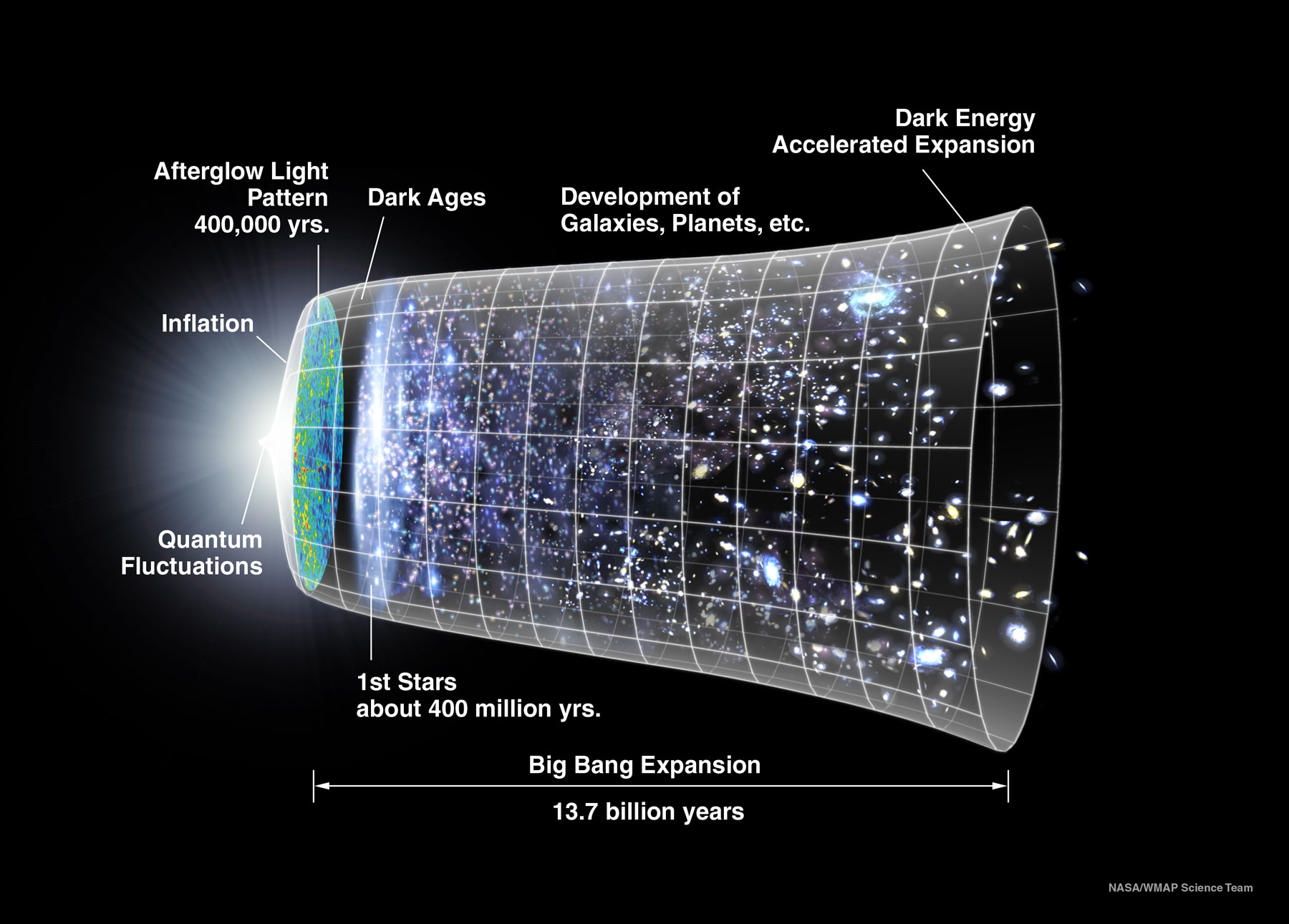
An illustrated timeline of the universe. Credit: WMAP
The cosmos continues to expand when light from faraway objects travels to Earth, as it has done since the Big Bang. As the universe expands, the waves that make up light are stretched. You can demonstrate this phenomenon by producing an ink mark on a rubber band and seeing how the mark expands out as the rubber band is pulled.
This means that light from distant galaxies has its visible lightwaves extended out to the point when the longer wavelengths transition from visible to infrared. This is referred to as "redshift" by scientists, and the further away an object is, the more redshift it experiences.
The infrared sensing capabilities of the Webb telescope will enable scientists to investigate some of the earliest stars that exploded in supernova explosions, generating the materials necessary to construct planets and form life.
Advertisement
The Gathering of Light
The early stars were enormous, and their lives culminated in supernova explosions. The light from these explosions has gone an incredible distance and is extremely weak. This is because of the law of inverse squares. This effect occurs when you move away from a light source and the room appears to darken.
To detect such faint light, the Webb telescope's sensitivity must be extraordinarily high. The sensitivity of a telescope, or its ability to detect faint signals, is proportional to the size of the mirror used to collect light. The 18 hexagonal mirrors combine to generate a huge primary mirror of 21 feet (6.5 metres) in diameter on the Webb telescope.
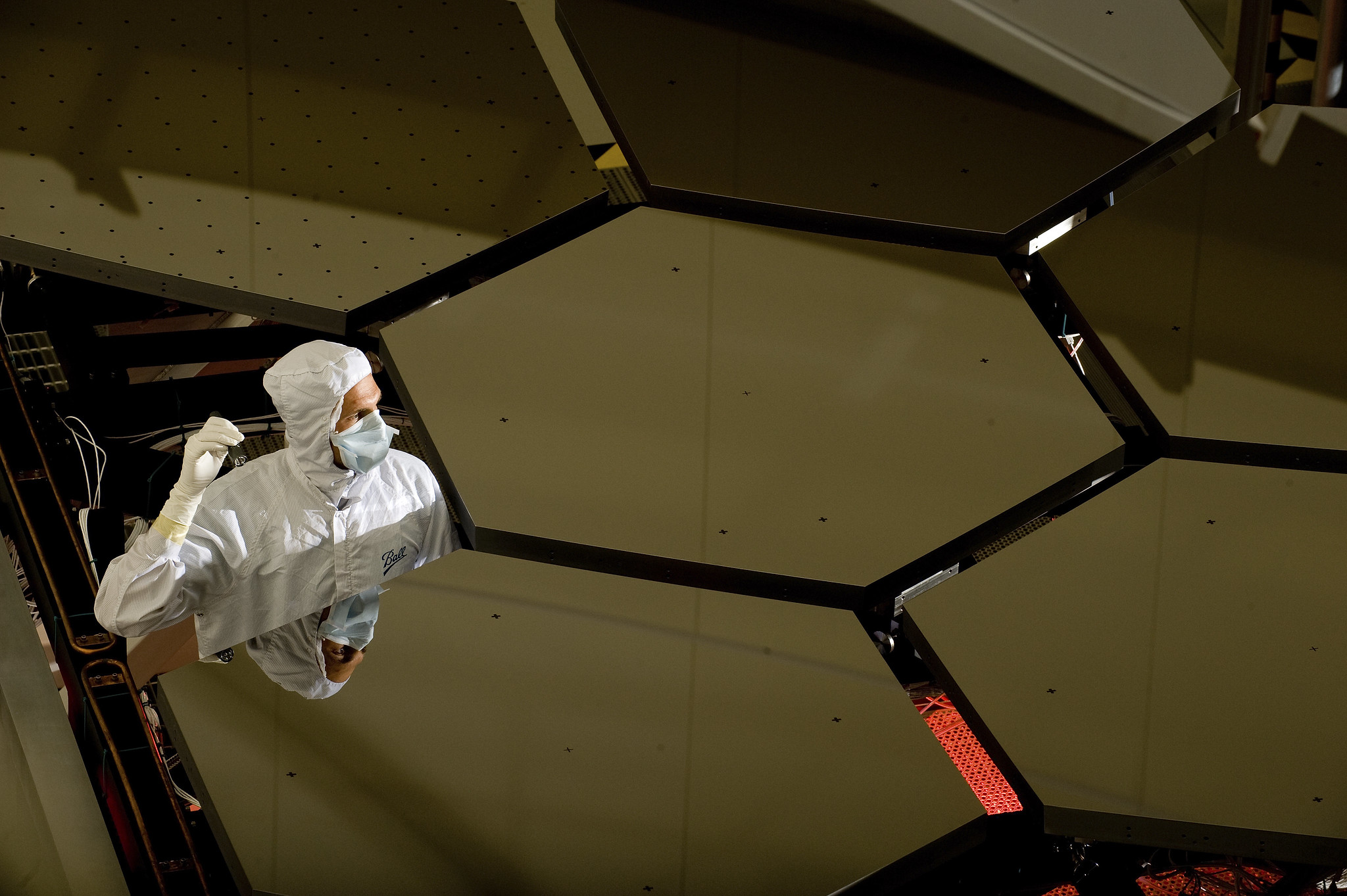 A technician inspects the Webb telescope's honeycomb-shaped mirror. The telescope's primary mirror is 21 feet (6.5 meters) across and is made up of 18 smaller hexagonal mirrors that must fold for launch and unfurl after the telescope reaches its orbit in space. Credit: NASA/MSFC/David Higginbotham/Emmett Given
In comparison to the Hubble Space Telescope's eight-foot (2.4 metre) diameter mirror, the Webb telescope has a surface area of more than six times that of the Hubble. Hubble's famed Ultra Deep Field survey obtained photographs of extremely faint, distant galaxies by pointing at a seemingly empty area in space for 16 days, but the Webb telescope will be able to accomplish the same thing in just seven hours.
Keeping a Cool Head
The Webb Telescope acquires scientific data in the form of infrared light. To detect small signals from billions of light years away, the instruments inside the telescope must be kept extremely cold, otherwise the infrared signals will be lost in the telescope's heat. Engineers compensated for this by using a couple of devices meant to cool and maintain the equipment.
The Webb telescope's orbit around the Sun – approximately 1 million miles (1.5 million kilometres) from Earth at Lagrange point 2 – keeps the spacecraft relatively cool, but even that is insufficient. To further cool the sensors, the spaceship will unfold a tennis-court-sized sunshield made of five layers of specially coated material that will block light and heat from the Sun, Earth, and Moon. Each layer acts as a barrier to incoming heat, and any heat that does pass through is diverted away from the sunshield's sides. Additionally, the vacuum created between the layers acts as an insulator.
 The sunshield is made up of five layers of specially coated material designed to block the Webb telescope's sensitive instruments from incoming heat from the Sun, Earth, and Moon. This photo, taken in the cleanroom at Northrop Grumman in Southern California in December 2020, shows the sunshield fully deployed and tensioned as it will be in space. Credit: NASA/Chris Gunn
The sunshield is so effective that temperatures on the sun-facing side of the telescope can reach boiling point, while temperatures on the instrument-facing side can reach as low as 394 degrees Fahrenheit (-237 degrees Celsius, 36 K).
That is cold enough to operate the near-infrared equipment, but the mid-infrared instrument, or MIRI, requires considerably colder temperatures. To cool MIRI, the Webb telescope is outfitted with a special cryocooler that pumps chilled helium into the instrument, lowering its operational temperature to around 448 degrees Fahrenheit (-267 degrees Celsius, 6 K).
Advertisement
Identifying Exoplanets
The Webb telescope will conduct two types of searches for exoplanets.
The Webb telescope will search for a regular pattern of dimming that occurs when an exoplanet transits its star, or passes between the star and the telescope, using the transit method. The level of darkening can reveal a great deal about the passing exoplanet, including its size and distance from the star.

This animation shows how the transit method is used to hunt for planets outside our solar system. When exoplanets transit their parent star, the Webb telescope (like the Kepler space telescope, depicted here) will be able to detect the dip in the star’s brightness, providing scientists with key information about the transiting exoplanet. Students can see this technique in action with this transit math problem. Credit: NASA/JPL-Caltech
The Webb telescope's second way of searching for exoplanets will be direct imaging – obtaining actual photographs of worlds outside our solar system. The Webb telescope is equipped with a coronagraph, which enables direct imaging of exoplanets. Just as your hand might be used to obscure a bright light, a coronagraph prevents starlight from reaching a telescope's equipment, enabling the detection of a dark exoplanet orbiting a star.
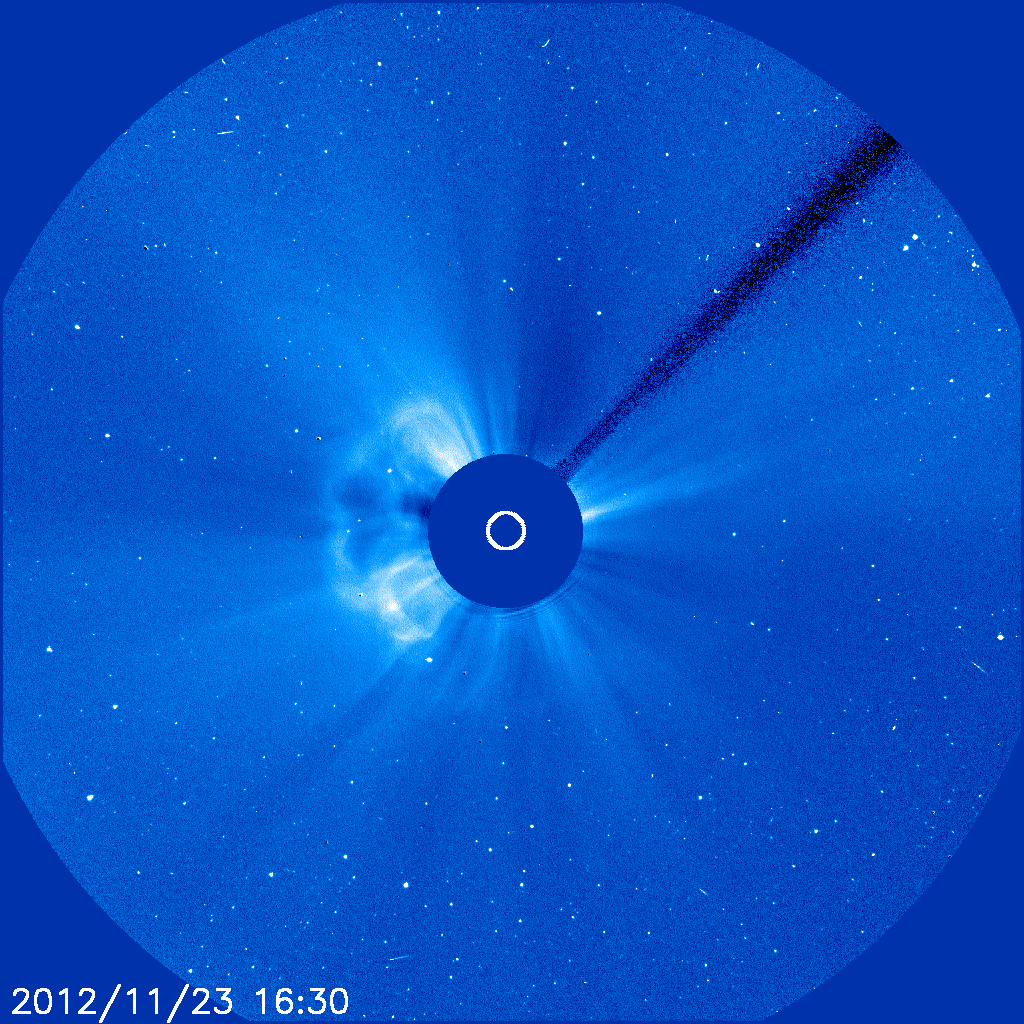
This “coronagraph” image taken by the Solar and Heliospheric Observatory, or SOHO, shows dim features around our Sun. Similarly, direct images of exoplanets captured by the Webb telescope will reveal details normally washed out by the brightness of stars. Credit: ESA&NASA/SOHO
Spectroscopy on the Webb telescope can reveal far more. A star's light forms a spectrum, which illustrates the intensity of light at various wavelengths. When a planet passes in front of its star, some of the star's light is absorbed by the planet's atmosphere before reaching the Webb telescope. Because all elements and molecules, including methane and water, absorb energy at specific wavelengths, the spectra of light that has travelled through the atmosphere of a planet may have dark lines called absorption lines that indicate the presence of various elements.
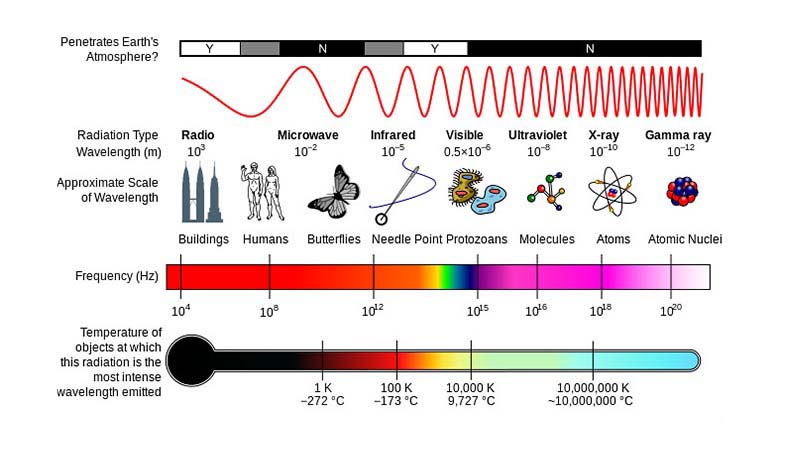
Using direct imaging and spectroscopy, scientists can discover even more about an exoplanet's characteristics, such as its colour, seasons, rotation, weather, and, if any, flora.
All of this might point scientists toward the ultimate exoplanet discovery: an Earth-sized planet with a similar atmosphere to ours located within its star's habitable zone—a region capable of supporting liquid water.
Advertisement
Space Establishment
The Webb telescope will be launched from French Guiana atop an Ariane 5 rocket, a huge rocket capable of bringing the telescope to its destination, which weighs about 14,000 pounds (6,200 kilogrammes).
The enormous mirror and giant sunshield of the telescope are too large to fit inside the 18-foot (5.4-meter) diameter rocket fairing that shields the spacecraft during launch. Engineers overcame this obstacle by designing the telescope's mirror and sunshield to fold during launch.
Two sides of the mirror assembly fold back to fit within the fairing during launch. The sunshield, which measures 69.5 feet (21 metres) in length and 46.5 feet (14 metres) in width, is folded 12 times in the manner of origami to make it compact enough for launch. These are just two of the numerous folding mechanisms required to put the big telescope into its launch rocket.
The Webb telescope will take around a month to reach its target and unfold its mirrors and sunshield. Scientists will need another five months to cool the devices to operating temperatures and properly position the mirrors.
Checkouts should be completed approximately six months following launch, at which point the telescope will begin its first science campaign and operations.
On the James Webb Space Telescope website, you can learn more about the mission and follow its progress from launch to science observations and find announcements.
Advertisement